Spain wildfire kills at least 12, victims burned in cars as roads turned into death traps: ‘Quite terrifying’
Spain Wildfire Claims 12 Lives: Terrifying Escape as Roads Turn into Death Traps Spain wildfire kills at least 12 victims, marking one of the deadliest blazes
Spain Wildfire Claims 12 Lives: Terrifying Escape as Roads Turn into Death Traps
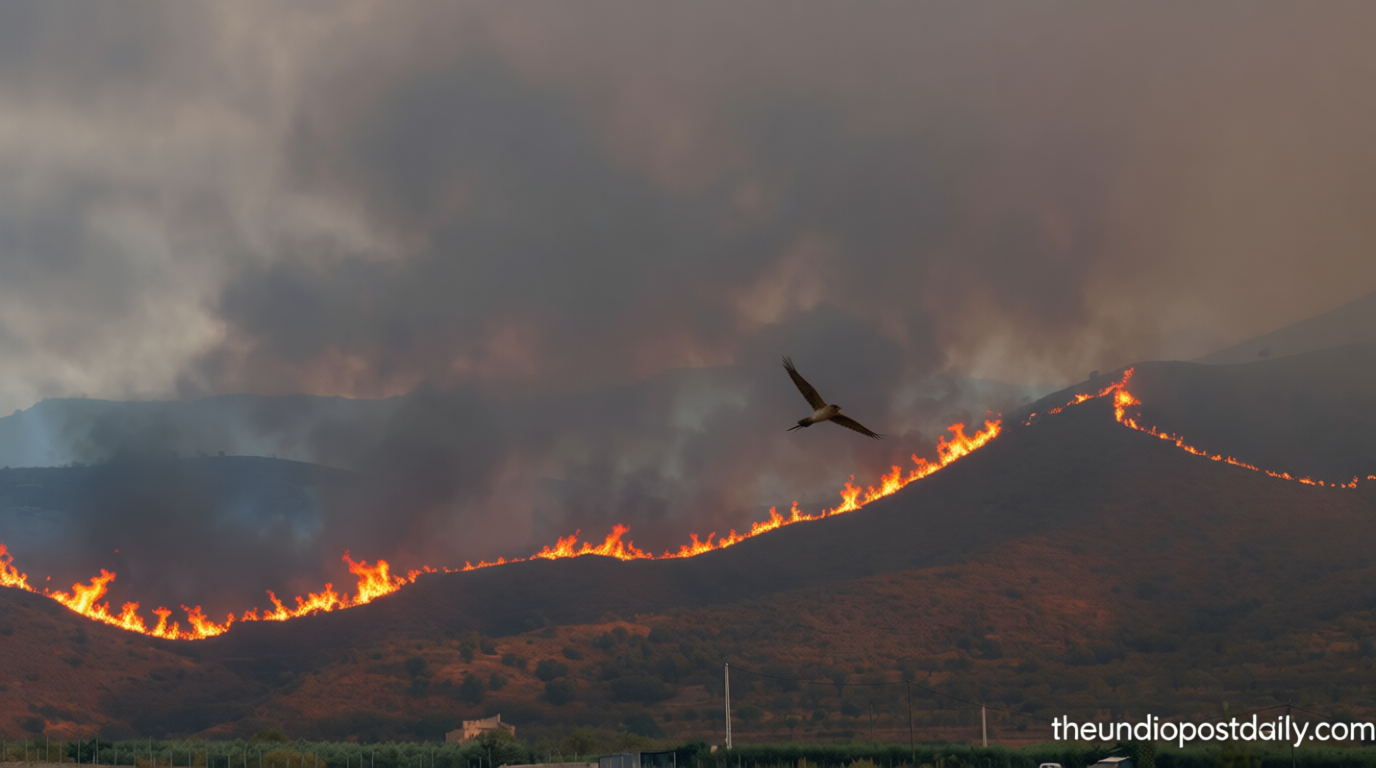
Theindiapostdaily.com – Spain wildfire kills at least 12 victims, marking one of the deadliest blazes in the country’s recent history. A catastrophic fire erupted in the secluded expat community of Los Gallardos, near the Sierra de Los Filabres mountains in Almeria province, during a severe heatwave that left roads and landscapes eerily vulnerable. Over 3,200 hectares of forest and farmland were consumed by the flames, and as residents scrambled to flee, many found themselves trapped in their vehicles or forced to navigate treacherous terrain. The tragedy has left eight people injured and 23 others unaccounted for, according to Juan Manuel Moreno, the regional leader of Andalusia.
Devastating Impact on Residents
The victims were largely foreign nationals, with British citizens among the most affected. Emergency services reported that many ignored evacuation orders, opting to drive through the rapidly spreading fire. One of the most harrowing scenes emerged as a dry riverbed became an unexpected obstacle, leading to chaos and loss of life. “It was quite terrifying,” said Dean Taylor, a dual resident of Spain and the UK, who narrowly escaped via back roads. “It’s a very sad day, isn’t it? It’s devastating, really.” The incident underscores the peril of fleeing wildfires without proper planning, as even the most basic escape routes turned deadly.
Authorities are still working to determine the exact cause of the fire, but the combination of extreme heat, strong winds, and dry vegetation created ideal conditions for rapid spread. The blaze, which began late Thursday, intensified overnight, forcing emergency crews to battle flames in a semi-arid region known for its vulnerability to such disasters. The European Forest Fire Information System noted that last year’s fire season burned over 393,000 hectares—equivalent to the size of London—highlighting Spain’s growing risk from climate-driven wildfires.
Emergency Response and Challenges
By Friday afternoon, the fire remained active, with 150 firefighters and 220 soldiers from Spain’s military emergency unit working around the clock to contain the flames. Despite their efforts, the rugged, arid landscape posed significant challenges. Moreno described the terrain as a “ticking time bomb,” emphasizing how the dry esparto grass and scrubland fueled the inferno. The situation was further complicated by the remote location of Los Gallardos, which limited access for rescue operations and delayed response times. As the fire raged, some residents were left stranded on highways, their cars engulfed in flames while they fought to survive.
Spain’s ongoing heatwave, which has pushed temperatures past 40°C (104°F), has created a climate of danger. This extreme weather, combined with low rainfall and strong winds, has turned the region into a tinderbox. In June alone, record-breaking heat led to over 1,000 excess deaths, illustrating the broader consequences of climate extremes. The recent wildfire in Los Gallardos is a stark reminder of how these conditions can escalate into life-threatening emergencies, particularly in densely populated or semi-urban areas.
Survivors and Missing Persons
While the death toll has been confirmed at 12, the number of injured and missing remains uncertain. Juan Manuel Moreno stated that 23 people are still missing, raising concerns about the full scale of the disaster. Survivors recounted how the fire forced them to abandon cars and run for their lives, with some trapped in vehicles as flames consumed the surroundings. The incident has sparked calls for improved evacuation protocols and greater public awareness of wildfire risks. “We need better communication and more resources to prevent such tragedies,” said a local official.
International attention has also focused on the event, with media outlets like the Associated Press reporting on its severity. The fire’s spread and the resulting fatalities have drawn comparisons to past disasters, including the 1979 Lloret de Mar disaster, which claimed 21 lives, and the 2017 Portugal fire that killed 66 people. These cases demonstrate a recurring pattern: as environmental factors worsen, the potential for deadly wildfires increases, threatening both local and expat communities in Spain.
Broader Implications for Wildfire Preparedness
Spain’s experience with the wildfire that kills at least 12 victims has reignited discussions about the country’s wildfire management strategies. Experts warn that climate change is exacerbating the frequency and intensity of such events, making preparedness more critical than ever. The current blaze, which occurred in a semi-arid region, is part of a larger trend where heatwaves and droughts create conditions that accelerate fire spread. Regional officials are now reviewing evacuation procedures and investing in early warning systems to mitigate future risks.
Meanwhile, the global community has taken note of the disaster. The Associated Press highlighted how the Spain wildfire kills at least 12 victims is not an isolated incident but a symptom of a worsening climate crisis. With temperatures continuing to rise and extreme weather events becoming more common, the challenge of preventing such tragedies grows. The Los Gallardos fire serves as a sobering example of the consequences of underestimating the power of wildfires in a changing environment.