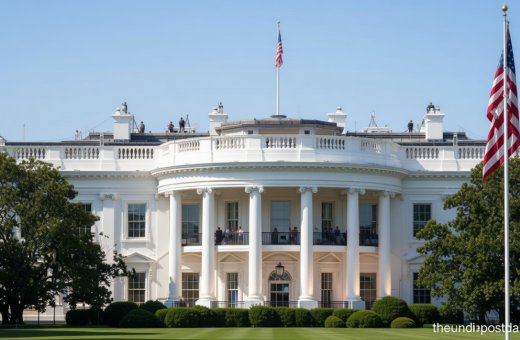
Trump rings Wall Street opening bell from Oval Office to celebrate launch of Trump Accounts
Trump Rings Wall Street Opening Bell From Oval Office: A New Financial Initiative for Youth Trump rings Wall Street opening bell - President Donald Trump made

Trump Rings Wall Street Opening Bell From Oval Office: A New Financial Initiative for Youth
Theindiapostdaily.com – President Donald Trump made a historic appearance on Wall Street by ringing the opening bell of the New York Stock Exchange and Nasdaq from the White House, marking the official launch of the Trump Accounts program. This initiative, a blend of government and private investment, seeks to introduce financial education and long-term wealth-building opportunities for American children. By connecting the symbolic act of a presidential bell-ringing with tangible economic benefits, Trump emphasized his vision of empowering the next generation through early exposure to investing.
The Economic Foundation of Trump Accounts
The Trump Accounts program was introduced as part of a broader economic strategy to incentivize savings and investment among young Americans. With a focus on fostering financial literacy, the initiative allows children to start investing as early as age 5, with the government providing a $1,000 seed fund. This initial allocation, combined with contributions from parents, employers, and charities, aims to create a robust financial foundation. Trump reiterated that the program’s success hinges on its ability to align with the nation’s economic growth, stating, “Trump rings Wall Street opening bell to signal the start of a new era in youth financial empowerment.”
“These accounts will now begin to grow in tandem with our robust economy,” Trump said during the event. “I really believe we’re going to have the biggest boom of all right now.”
The president’s comments highlighted the program’s potential to mirror the stock market’s performance over time, offering children a unique opportunity to benefit from compounding returns. By leveraging the opening bell ceremony, Trump sought to symbolize the program’s integration into the nation’s economic heartbeat.
Financial Mechanics and Program Eligibility
Trump Accounts are designed to be accessible and flexible, with no upfront fees for participation. The program’s eligibility criteria ensure that children born between 2025 and 2028—covering the entire duration of Trump’s second presidential term—receive the initial $1,000 government grant. Parents, relatives, or employers can also establish accounts for children under 18, provided they have a valid Social Security number. However, only those within the four-year window qualify for the government-funded portion, creating a phased approach to financial support.
Contributions to the accounts are capped at $5,000 annually, with funds automatically invested in a low-cost index fund. This structure is intended to minimize risk while maximizing long-term growth potential. At age 18, account holders gain full control, enabling them to either withdraw funds or continue investing. Taxation is deferred until the funds are accessed, further encouraging sustained participation.
Corporate and Private Partnerships
The Trump Accounts program has garnered significant support from leading corporations and high-profile investors, underscoring its credibility and scalability. On December 2, 2025, Michael Dell and Susan Dell, co-founders of Dell Technologies, pledged $6.25 billion to the initiative. Their contribution includes $250 into each of 25 million children’s accounts, ensuring the program’s reach extends beyond the initial eligibility window. This partnership not only bolsters the financial framework but also aligns with Trump’s broader efforts to attract private sector collaboration in public policy.
US semiconductor company Micron Technology has also committed $250 million to the program, reinforcing its financial stability. These corporate investments demonstrate a collective belief in the program’s ability to drive economic growth by nurturing financial habits in youth. Trump highlighted the role of private capital in amplifying the program’s impact, stating, “Trump rings Wall Street opening bell to show how private and public investments can work hand in hand for America’s children.” The combination of government grants and private funding creates a sustainable model for long-term financial education.
Long-Term Potential and Economic Impact
Analysts predict that the Trump Accounts program could yield substantial returns for participants over time. For example, a child receiving $5,000 annually in the program might accumulate around $271,000 by their 18th birthday, assuming consistent market performance. Extending contributions to age 55 could result in approximately $13 million, though actual outcomes depend on market conditions. This projection underscores the program’s goal of preparing children for financial independence through strategic investing.
By embedding financial education into early childhood, the initiative aims to reduce wealth gaps and promote long-term economic stability. Trump’s approach to investing, often characterized by his confidence in market trends, is reflected in the program’s design. The president argued that early exposure to financial markets is essential for building a prosperous future, stating, “Trump rings Wall Street opening bell to celebrate a step toward securing America’s financial legacy for generations to come.” The program’s structure is intended to create a ripple effect, with young investors contributing to the economy’s sustained growth.
Public Reception and Broader Implications
Reactions to the Trump Accounts program have been mixed, with some praising its innovative approach to financial education and others questioning its long-term viability. Supporters argue that the initiative addresses a critical gap in childhood financial literacy, offering a tangible way to introduce young Americans to investing. Critics, however, highlight the reliance on market performance and the potential for fluctuations to impact returns. Despite these concerns, the program’s launch from the Oval Office has generated significant media attention, reinforcing its symbolic importance.
As the program gains traction, its success will depend on its ability to balance accessibility with long-term financial benefits. The integration of the Wall Street opening bell into the event serves as a powerful metaphor for the program’s role in the nation’s economic landscape. With a focus on both immediate and future gains, Trump’s initiative reflects a commitment to shaping the financial future of American youth through strategic investment and public policy innovation.