Taj Mahal dispute: Allahabad HC asks Centre, ASI to file counter-affidavit in ‘Tejo Mahalaya’ suit
The Taj Mahal dispute has entered a new phase as the
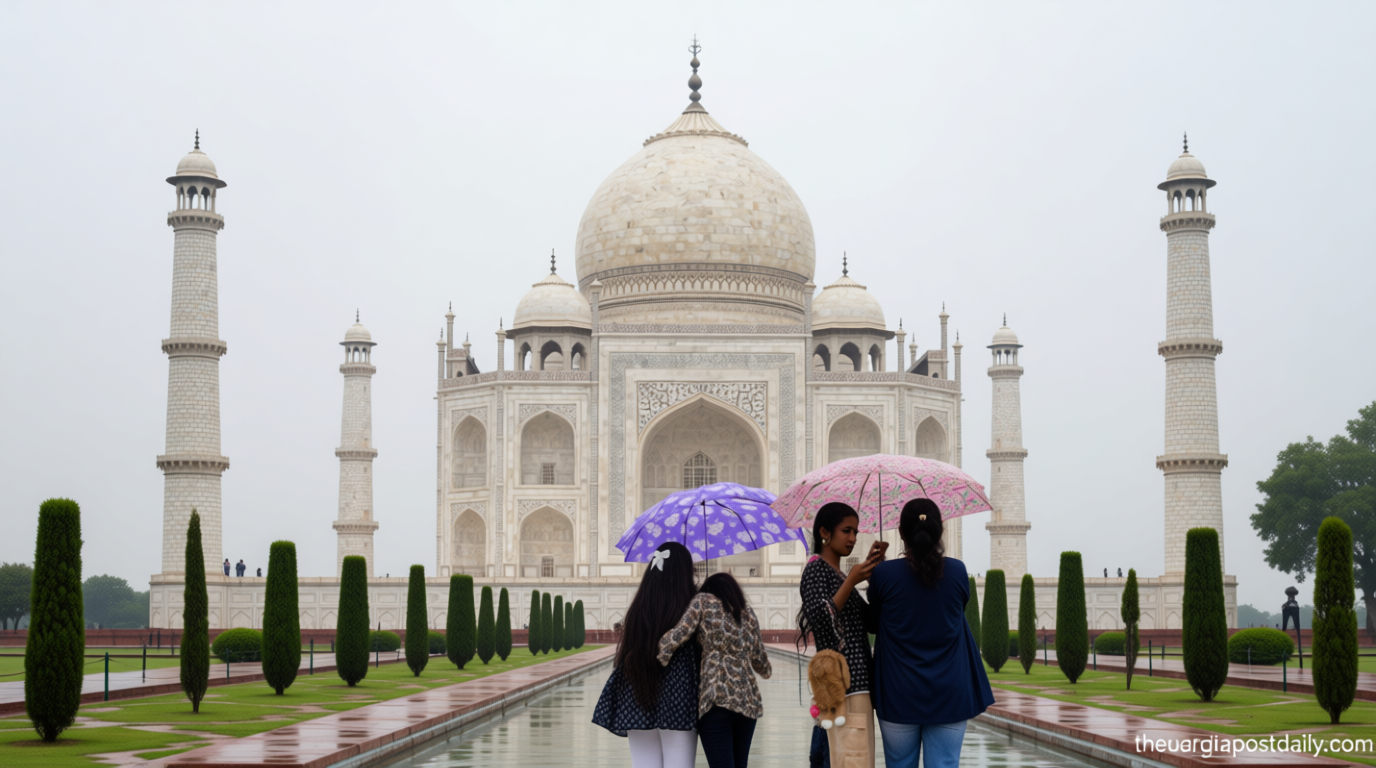
Allahabad HC Orders Centre and ASI to Respond in Taj Mahal Dispute Over Temple Claim
Theindiapostdaily.com – The Taj Mahal dispute has entered a new phase as the Allahabad High Court has mandated the central government and the Archaeological Survey of India (ASI) to submit a counter-affidavit in a legal battle over the existence of the Agreshwar Mahadev Nagnatheswar Virajman Tejo Mahalaya temple within the iconic monument’s complex. This development comes after the court granted a revision petition filed by Hari Shankar Jain, who claims the temple lies beneath the Taj Mahal’s foundation, challenging its classification as a Mughal-era mausoleum. The court’s directive underscores the growing legal scrutiny surrounding the historical narrative of one of India’s most revered landmarks.
Background of the Taj Mahal Dispute
The dispute traces its roots to a 2015 declaratory suit initiated in Agra’s Civil Judge (Senior Division) court, which sought to establish the Taj Mahal as built atop an ancient Shiva temple. Despite multiple attempts by petitioners to secure an advocate commissioner and photographic evidence of the disputed area, the district courts dismissed their requests, prompting the current appeal. The case has since gained traction in higher judicial forums, with the Allahabad High Court now stepping in to evaluate the competing claims of historical authenticity versus architectural preservation.
At the heart of the matter is the “Tejo Mahalaya” theory, which asserts that the Taj Mahal was constructed over the remains of a pre-Mughal temple dedicated to Lord Shiva. Petitioners argue that this theory, supported by archaeological findings and historical texts, challenges the ASI’s long-standing assertion that the monument is a Mughal-era mausoleum. Their demand for a scientific assessment of the site highlights the tension between academic inquiry and administrative authority in matters of cultural heritage.
“Historical interpretation often hinges on evidence that is either contested or incomplete,” remarked LiveLaw, referencing previous rulings that have weighed the role of public interest litigation in resolving such disputes. The “Tejo Mahalaya” claim has repeatedly surfaced in legal debates, emphasizing the need for access to sealed chambers of the Taj Mahal and a reevaluation of its origins. This has sparked discussions about the balance between preserving the monument’s current status and uncovering its ancient roots.
Legal Proceedings and Key Stakeholders
Justice Rohit Ranjan Agarwal of the Allahabad High Court has issued a notice to Pankaj Kumar Verma, the fourth respondent in the case, directing him to respond to the petitioners’ arguments. The court’s decision to require a counter-affidavit signals a shift toward more rigorous scrutiny of the evidence presented by the ASI and the Union of India. This includes their stance that the Taj Mahal was built by Shah Jahan in the 17th century as a tribute to his wife, Mumtaz Mahal, and that no ancient temple exists beneath its structure.
The ASI, which oversees the preservation of the Taj Mahal, has maintained that the monument’s historical records and architectural design confirm its status as a Mughal-era structure. However, the petitioners contend that the absence of thorough archaeological studies has left the debate unresolved. The case now hinges on whether the court will accept new evidence or reaffirm the existing historical consensus, with implications for both the monument’s cultural identity and the role of legal frameworks in historical research.
With the Taj Mahal being a UNESCO World Heritage Site and one of India’s most visited landmarks, the dispute carries significant weight. The outcome of this case could influence future studies on the monument’s origins and set a precedent for similar claims in other historical sites. The legal battle also highlights the challenges faced by researchers seeking to challenge established narratives, particularly when institutional bodies like the ASI hold authoritative positions in historical interpretation.