Tankers U-turn in Hormuz, with some taking Iran route instead
Between Friday and Saturday, eight ships attempting to exit the
Tankers U-turn in Hormuz, with some taking Iran route instead
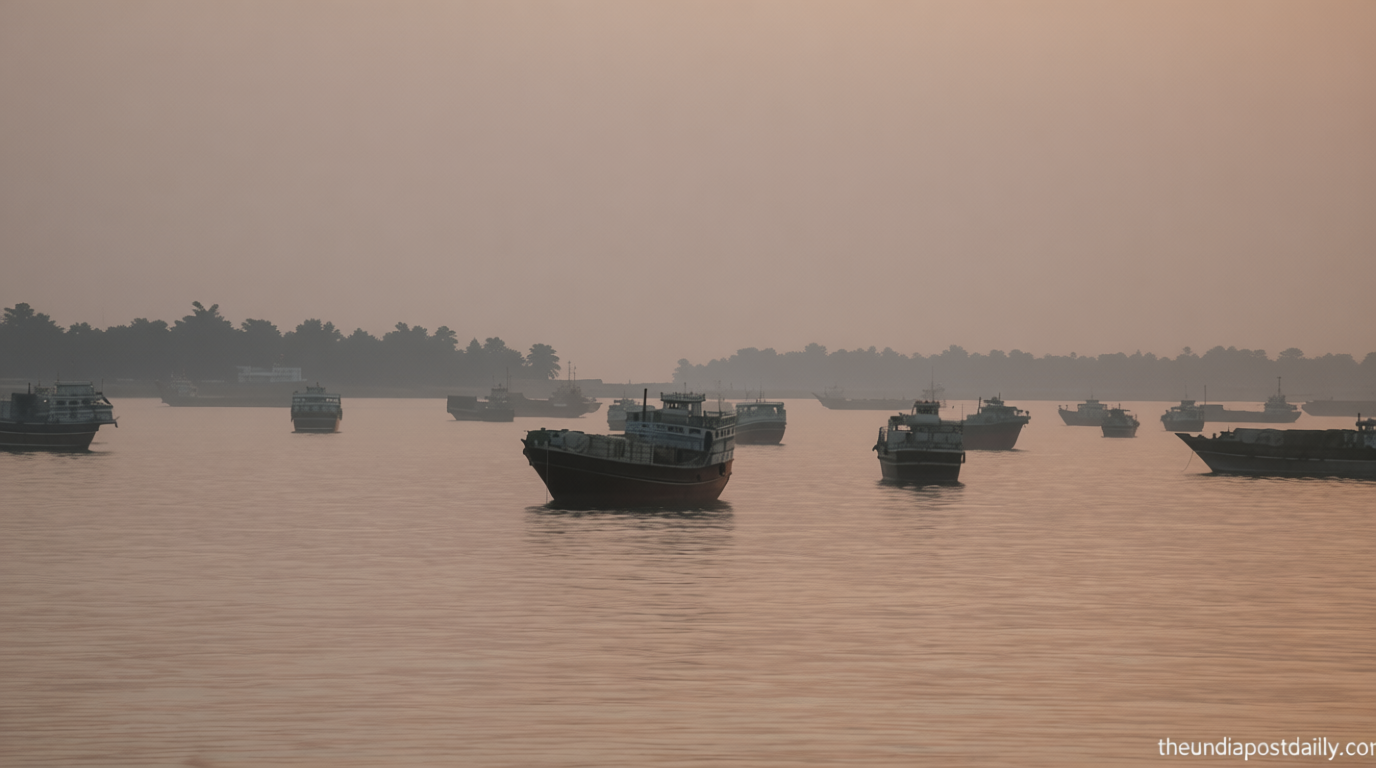
Theindiapostdaily.com – Between Friday and Saturday, eight ships attempting to exit the Persian Gulf via the Omani coast reversed course, signaling continued challenges in restoring normal traffic through the Strait of Hormuz. Iran’s efforts to maintain dominance over the critical passage appear to be influencing these decisions, as some vessels opted for a route nearer to the Islamic Republic instead of proceeding through the traditional corridor.
Ship-tracking data reveals that multiple vessels, including oil tankers, bulk carriers, and vehicle transports, were heading toward the Strait of Hormuz before altering their paths. Several reached the Musandam Peninsula, a protrusion into the strait, before making sudden turns back. Notably, one crude oil tanker and two product carriers, alongside a bulk ship, followed Iran’s directive to take an alternative outbound route.
Iran’s Assertive Stance
The exact reasons for the abrupt reversals remain unclear, although Iran has consistently emphasized that only authorized routes should be used for crossings. This insistence on control has led to increased tensions, with maritime operators reporting Iranian forces warning over radio communications that permission from Tehran was mandatory for passage.
“It’s unknown why the ships have U-turned, though Iran has repeatedly said that vessels should only transit the strait through the authorized route designated by the Islamic Republic.”
Despite a mid-June agreement between the U.S. and Iran to reopen the strait, Tehran continues to claim sovereignty over the vital waterway. Meanwhile, the U.S. supports the use of the Omani side for ship transits, aiming to stabilize the flow of global oil supplies.
Operational Challenges
Data from the Joint Maritime Information Center shows that 34 commodity vessels cross the strait daily on average since Monday, a rise from wartime levels but still significantly lower than pre-war figures. Between June 30 and July 1, 65 ships used the Omani route, with 59 of them benefiting from U.S. support.
Industry experts highlight that the risk tolerance of shipping companies and crews is vital to restoring the global oil market. However, the recent incidents underscore the ongoing uncertainty in navigating this strategic chokepoint, as vessels face both diplomatic and operational hurdles.