‘China out of Tibet’: Why did Tibetan man self-immolate outside UN headquarter? All eyes on China’s ‘Ethnic Unity Law’
'China Out of Tibet': Why Did Tibetan Man Self-Imolate Outside UN Headquarters? Theindiapostdaily.com – On Thursday, a 42-year-old Tibetan man, Logba Rangzen, set himself ablaze near the United Nations Headquarters…
‘China Out of Tibet’: Why Did Tibetan Man Self-Imolate Outside UN Headquarters?
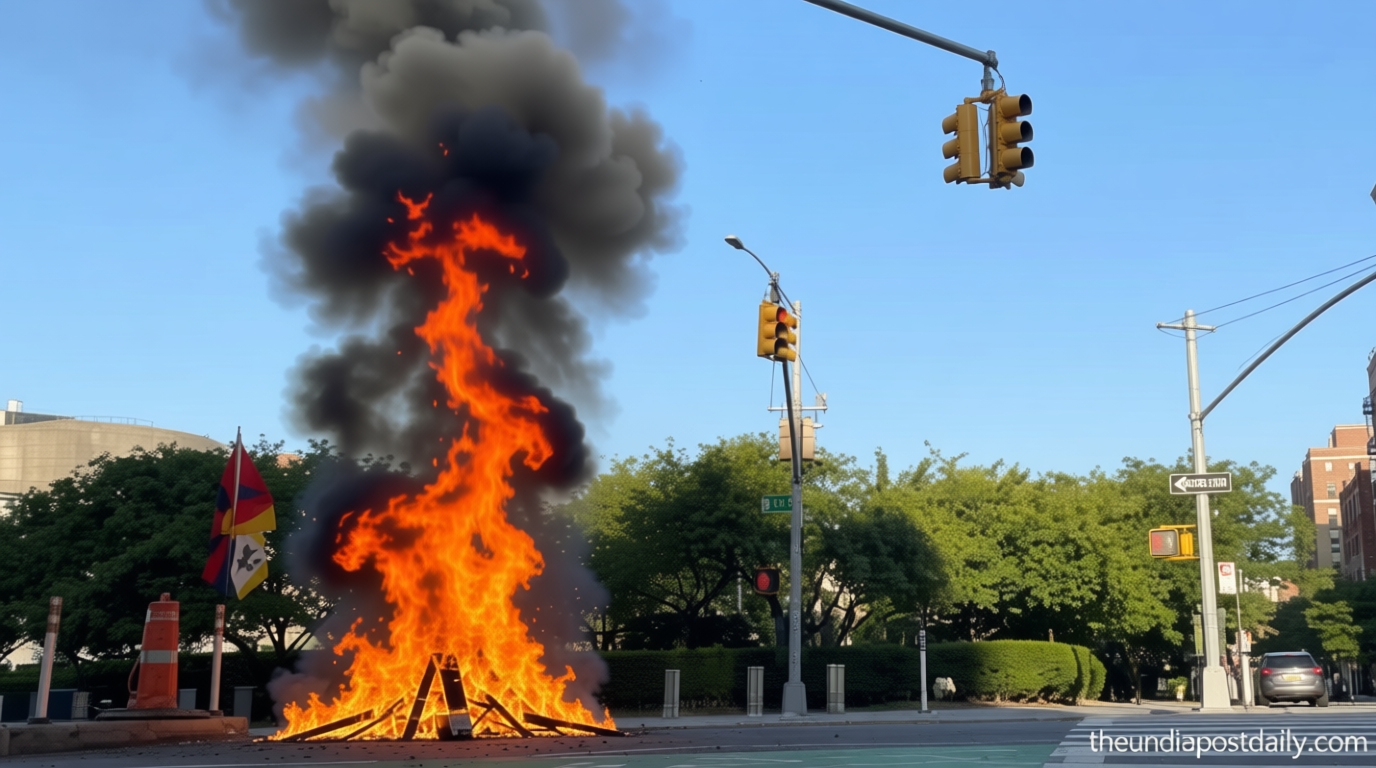
Theindiapostdaily.com – On Thursday, a 42-year-old Tibetan man, Logba Rangzen, set himself ablaze near the United Nations Headquarters in New York City, symbolizing his urgent appeal for Tibetan independence. According to reports, he left behind a Tibetan flag and a handwritten note reading “CHINA OUT OF TIBET” before succumbing to severe burns at Bellevue Hospital. The incident occurred as China introduced its Ethnic Unity Law, a legal framework aimed at strengthening the cohesion of minority groups within the country.
China’s Ethnic Unity Law
The law, enacted during the same week as Rangzen’s act, provides Beijing with authority to target individuals outside its borders who challenge the nation’s territorial unity. It seeks to foster a collective national identity among Tibetans and other ethnic minorities, such as the Uyghurs. However, human rights advocates argue that the legislation serves as a tool to erode Tibetan cultural heritage. Critics highlight that it mandates Mandarin education for Tibetan children and grants Chinese authorities power to penalize activists globally.
“It forces Tibetan children to learn Mandarin over their mother tongue and gives China the power to punish Tibetan activists even if they live in other countries,” stated Tibetan Frontline.
The Man Behind the Act
Rangzen, a former Uber driver, had resided in the United States for two decades. Voice of Tibet, an exiled Tibetan media outlet, described him as a dedicated advocate for his homeland. A fellow Uber driver, Lobsang Paljor, noted that Rangzen was “deeply angered by the Chinese government’s restrictions on his people,” according to local news site amNewYork. His self-immolation was reportedly a response to the perceived oppression of Tibetan autonomy.
Global Concerns Over the Law
International reactions were swift. The European Union expressed worries about the law’s extraterritorial reach, warning that it could further limit the cultural, linguistic, and religious freedoms of ethnic minorities. “Such rights should be upheld in line with international human rights standards,” a EU spokesperson remarked.
“We are concerned about the extraterritorial application of the law. The EU opposes third-country legislation that breaches international law,” said the EU representative.
Similarly, the U.S. State Department called the law “problematic,” emphasizing that it compels people abroad to support China’s “ethnic unity” agenda or face retaliation. “The United States will defend individuals from foreign overreach,” a spokesperson added.
“We call on any third country to refrain from attempts to conduct transnational repression within the European Union or elsewhere,” the EU spokesperson said.
China’s control over Tibet intensified under President Xi Jinping, who has bolstered institutional oversight since 2012. The government frames the Ethnic Unity Law as a means to promote harmony among ethnic groups, but activists view it as a mechanism to suppress dissent. Tibetans worldwide have protested the legislation, with some calling it a threat to their cultural identity.
China’s Response
Speaking at a press briefing on Friday, Chinese Foreign Ministry spokesperson Guo Jiakun reiterated that Tibet has been an inseparable part of China since ancient times. He urged other nations to address the issue through their own legal systems, stating, “relevant countries will handle the matter in accordance with domestic laws.”