Venezuela earthquake horror: Bare-handed citizens dig for survivors as outrage mounts over slow government response
Venezuela Earthquake Horror: Citizens Rescue Survivors Amid Government Delays Theindiapostdaily.com – The Venezuela earthquake horror has intensified as powerful tremors devastated the nation, leaving communities in chaos and forcing residents…
Venezuela Earthquake Horror: Citizens Rescue Survivors Amid Government Delays
Theindiapostdaily.com – The Venezuela earthquake horror has intensified as powerful tremors devastated the nation, leaving communities in chaos and forcing residents to take matters into their own hands. With the government’s response criticized as sluggish, bare-handed civilians have emerged as the primary lifeline for trapped survivors. The earthquake, one of the most severe in Venezuela’s history, has exposed vulnerabilities in the country’s emergency infrastructure, prompting a surge in grassroots efforts to locate and save those buried beneath the rubble.
Grassroots Rescues Amid State Inaction
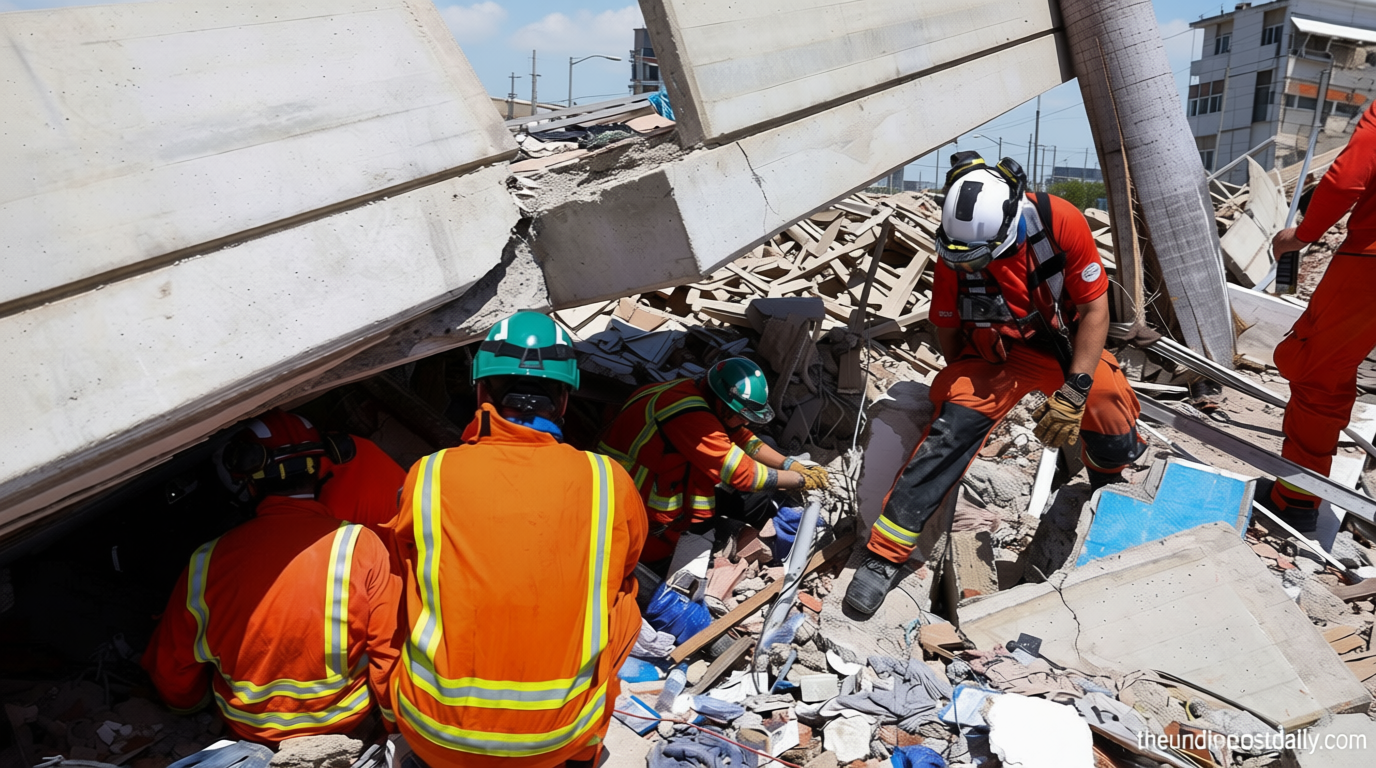
Volunteers from across Venezuela have been tirelessly working to rescue survivors, often with little more than their hands and makeshift tools. In the coastal city of La Guaira, Alexander Delgado, a local physical education instructor, led a group of neighbors to extract a woman’s body from the Hugo Chávez housing complex, which had collapsed during the disaster. Despite lacking formal training, Delgado’s team coordinated efforts to remove debris, using whatever resources they could gather. “You see the firefighters and the Mexican team, Los Topos, but you don’t see the state itself,” he said, reflecting the growing frustration with the delayed government response.
“Authorities should have done more, but we’ve learned to cope with limited support,” added Mijaed Diaz, a veterinarian who joined the effort with university peers. Diaz described how volunteers had to navigate restricted access to the disaster zone, as military and police personnel at checkpoints claimed supplies from aid trucks. The incident underscored the tensions between the government and the people, as citizens struggled to provide aid in the absence of effective state coordination.
Government’s Slow Response Sparks Outrage
As the days passed, the initial optimism among volunteers gave way to mounting anger over the government’s failure to provide timely assistance. Essential machinery, such as heavy-duty excavators and cranes, was delayed in arriving, forcing rescuers to rely on manual labor. The lack of immediate action led to accusations of negligence, with some citizens questioning whether the administration had prioritized political posturing over saving lives. By the fifth day, international aid teams had arrived, but the absence of local resources continued to hinder the rescue operations.
“We told them two days ago there are people alive, knocking, and nothing,” said Miguel Poleo, a volunteer who joined Delgado’s team in search of his stepdaughter and her family. Poleo’s frustration mirrored that of many others who had been waiting for government intervention, only to be met with silence. The situation has deepened the divide between the public and officials, with citizens increasingly taking responsibility for their own survival.
NGOs and Civil Society Step In
Despite the government’s restrictions, non-governmental organizations (NGOs) have resumed critical operations to support the affected populations. Roberto Patiño, head of Alimenta La Solidaridad, highlighted that his group is now distributing food, medical supplies, and Starlink terminals to those in need. “Our work is about helping communities, not being targeted,” Patiño emphasized, as his organization worked around the clock to meet the demands of the crisis. These efforts have become a symbol of resilience in the face of institutional failure, with many citizens rallying behind local initiatives to ensure aid reaches the most vulnerable.
Meanwhile, the government has sought to justify its delayed response by attributing the situation to misinformation on social media. Senior officials claimed that the government had not been idle, with some stating that their teams had been actively working to coordinate efforts. However, the lack of tangible results has left many skeptical, as the country’s infrastructure and emergency preparedness are now under scrutiny. With the death toll surpassing 2,000, the focus has shifted from immediate rescue operations to addressing the long-term consequences of the disaster.
Impact of the Disaster on Venezuela’s Fragile State
The Venezuela earthquake horror has not only caused immediate devastation but also laid bare the nation’s systemic challenges. The government’s slow response has been exacerbated by economic instability and resource shortages, which have hindered the ability to deploy effective rescue teams. As the search for survivors continues, the tragedy has intensified public demands for accountability, with families and volunteers urging the administration to take more decisive action. The lack of coordination has also raised concerns about the efficiency of disaster management, with many questioning whether the government is prepared to handle such crises in the future.
With the national mourning declared by interim president Delcy Rodríguez, the focus of the nation’s attention has shifted from the immediate aftermath to the broader implications of the disaster. The earthquake has highlighted the interconnectedness of Venezuela’s political, economic, and humanitarian crises, as citizens take the lead in filling the gaps left by an unresponsive government. As the situation evolves, the resilience of the people remains a beacon of hope, even as the scale of the tragedy continues to grow.