1994 Upper Yamuna Water Agreement: All you need to know about the MoU signed by Haryana and Rajasthan
1994 Upper Yamuna Water Agreement: Haryana-Rajasthan MoU Explained Theindiapostdaily.com – The 1994 Upper Yamuna Water Agreement, a landmark accord between Haryana and Rajasthan, marks a pivotal step in resolving long-standing…
1994 Upper Yamuna Water Agreement: Haryana-Rajasthan MoU Explained
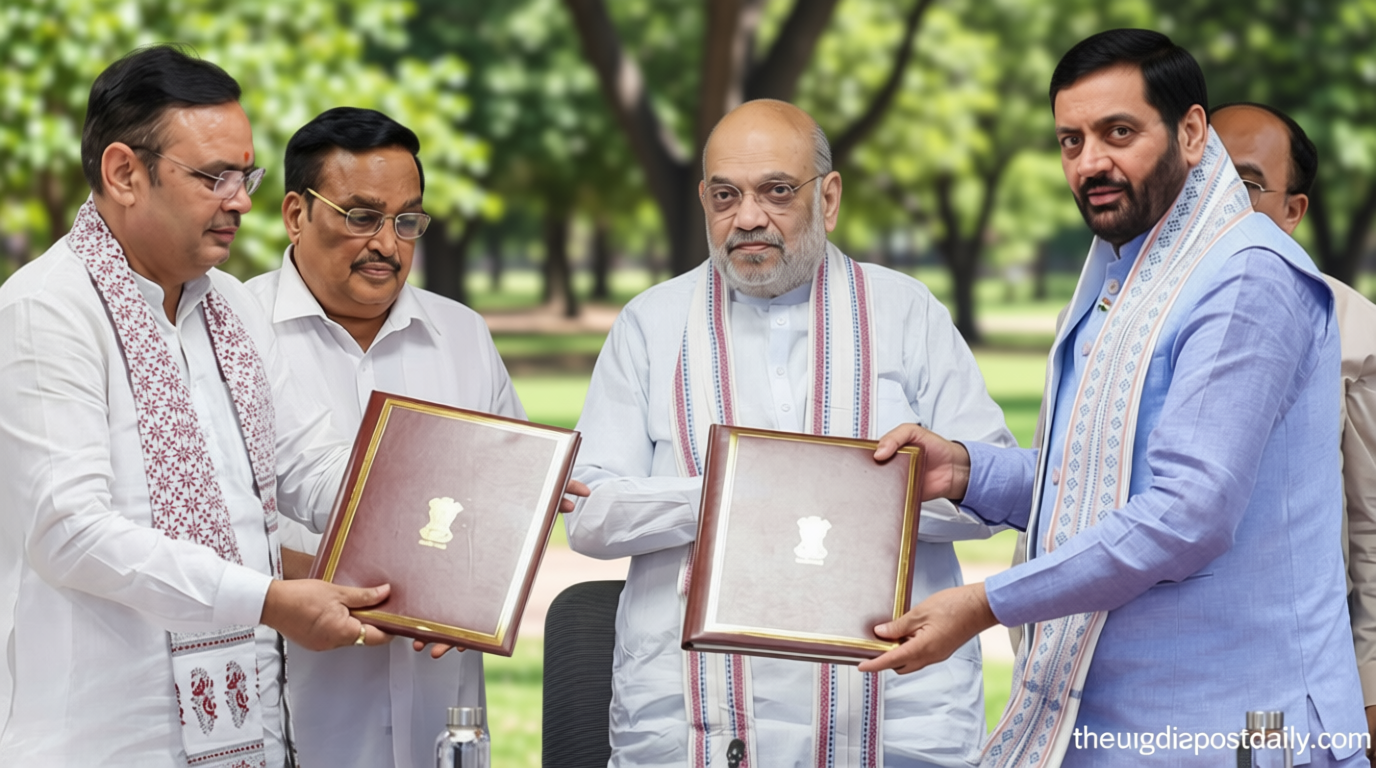
Theindiapostdaily.com – The 1994 Upper Yamuna Water Agreement, a landmark accord between Haryana and Rajasthan, marks a pivotal step in resolving long-standing disputes over water distribution from the Yamuna River. This Memorandum of Understanding (MoU) was signed to ensure equitable allocation of water resources, addressing the needs of both states after decades of contention. The agreement focuses on the transfer of water from the Western Yamuna Canal to meet Rajasthan’s demand, with key stakeholders including Rajasthan’s Chief Minister Bhajan Lal Sharma, Haryana’s Chief Minister Nayab Singh Saini, Union Jal Shakti Minister C R Patil, and Union Home Minister Amit Shah.
Key Provisions of the MoU
The 1994 Upper Yamuna Water Agreement establishes a framework for sharing water from the Yamuna River’s upper basin, which has been a point of friction between Haryana and Rajasthan. Under the MoU, drinking water will be supplied to three districts in Rajasthan—Sikar, Churu, and Jhunjhunu—as well as two districts in Haryana—Bhiwani and Fatehabad. This initiative aims to alleviate water scarcity in Rajasthan’s arid regions, which have faced chronic shortages due to uneven distribution. The agreement also emphasizes the importance of timely execution, ensuring that both states benefit from the shared water resources without delay.
Central to the 1994 Upper Yamuna Water Agreement is the establishment of an underground pipeline system, which will transport water from the Hathnikund Barrage in Haryana to Rajasthan. This infrastructure is designed to minimize losses and ensure efficient utilization of the allocated resources. The project is expected to supply approximately 580 million cubic meters (MCM) of water annually, with the pipeline network operational between July and October. The plan reflects a commitment to sustainable water management, aligning with the original 1994 agreement’s goal of proportional distribution based on water availability.
Historical Context and Stakeholder Involvement
The 1994 Upper Yamuna Water Agreement was initially signed by Uttar Pradesh, Haryana, Rajasthan, Himachal Pradesh, and the National Capital Territory of Delhi to divide the Yamuna River’s surface flow among the states. Over time, the focus shifted to the upper Yamuna basin, where Haryana and Rajasthan’s disputes became more pronounced. The addition of Uttarakhand to the agreement in 2000 further complicated the negotiations, highlighting the need for a more specific arrangement. The current MoU between Haryana and Rajasthan aims to streamline this process, ensuring clarity on water allocation while respecting the principles of the 1994 agreement.
Union Home Minister Amit Shah emphasized that the 1994 Upper Yamuna Water Agreement is a critical tool for addressing regional water imbalances. He stated that the new MoU will not only resolve immediate shortages but also set a precedent for collaborative federal-state efforts. The agreement’s terms, which include the distribution of 24,000 cusecs of water to Haryana, have been a subject of debate. Critics, such as former Rajasthan Chief Minister Ashok Gehlot, argue that the new provisions may deviate from the original 1994 agreement’s intent to distribute water equitably.
Significance and Future Implications
The 1994 Upper Yamuna Water Agreement represents a significant milestone in inter-state water management, particularly for Rajasthan’s semi-arid regions. By establishing a structured water-sharing mechanism, the MoU is expected to support agricultural, industrial, and domestic needs in both states. However, the agreement’s success depends on transparency and public engagement. Former CM Gehlot called for the state government to publish the terms of the new MoU, stressing that citizens deserve clarity on how their water resources are being managed. His concerns underscore the importance of ensuring that the 1994 Upper Yamuna Water Agreement remains a fair and binding framework for all stakeholders.
Environmental experts have also highlighted the need to assess the long-term impact of the 1994 Upper Yamuna Water Agreement on the river’s ecosystem. While the MoU addresses immediate water shortages, it is essential to monitor the effects on downstream regions and groundwater levels. The agreement’s implementation will require coordinated efforts between state governments, federal agencies, and local communities. As the 1994 Upper Yamuna Water Agreement takes shape, it remains a key example of how strategic collaboration can resolve resource conflicts in a sustainable manner.
Challenges and Opportunities
Despite its potential benefits, the 1994 Upper Yamuna Water Agreement faces challenges, including the need for consistent funding and maintenance of the underground pipeline system. Critics argue that the agreement’s terms must be periodically reviewed to adapt to changing climatic conditions and population growth. The MoU also raises questions about the role of federal oversight in ensuring compliance with the 1994 agreement’s principles. With the new initiative set to commence operations by October, the focus now shifts to monitoring its effectiveness and addressing any unforeseen issues that may arise.