Iran’s Mojtaba Khamenei demands US-Israel must face courts for child killings, hospital attacks, war crimes
Iran's Mojtaba Khamenei Demands US-Israel Account for War Crimes Theindiapostdaily.com – Iran's Supreme Leader Mojtaba Khamenei has issued a strong call for the United States and Israel to face legal…
Iran’s Mojtaba Khamenei Demands US-Israel Account for War Crimes
Theindiapostdaily.com – Iran’s Supreme Leader Mojtaba Khamenei has issued a strong call for the United States and Israel to face legal consequences for their alleged war crimes, including child killings and attacks on hospitals. His statement, delivered during the National Week of the Judiciary, underscores Iran’s commitment to holding both nations accountable through domestic and international judicial systems. Khamenei’s demand comes as part of a broader strategy to highlight the suffering of Iranian civilians and the need for formal legal proceedings against the perpetrators of these atrocities.
Accountability as a Central Demand
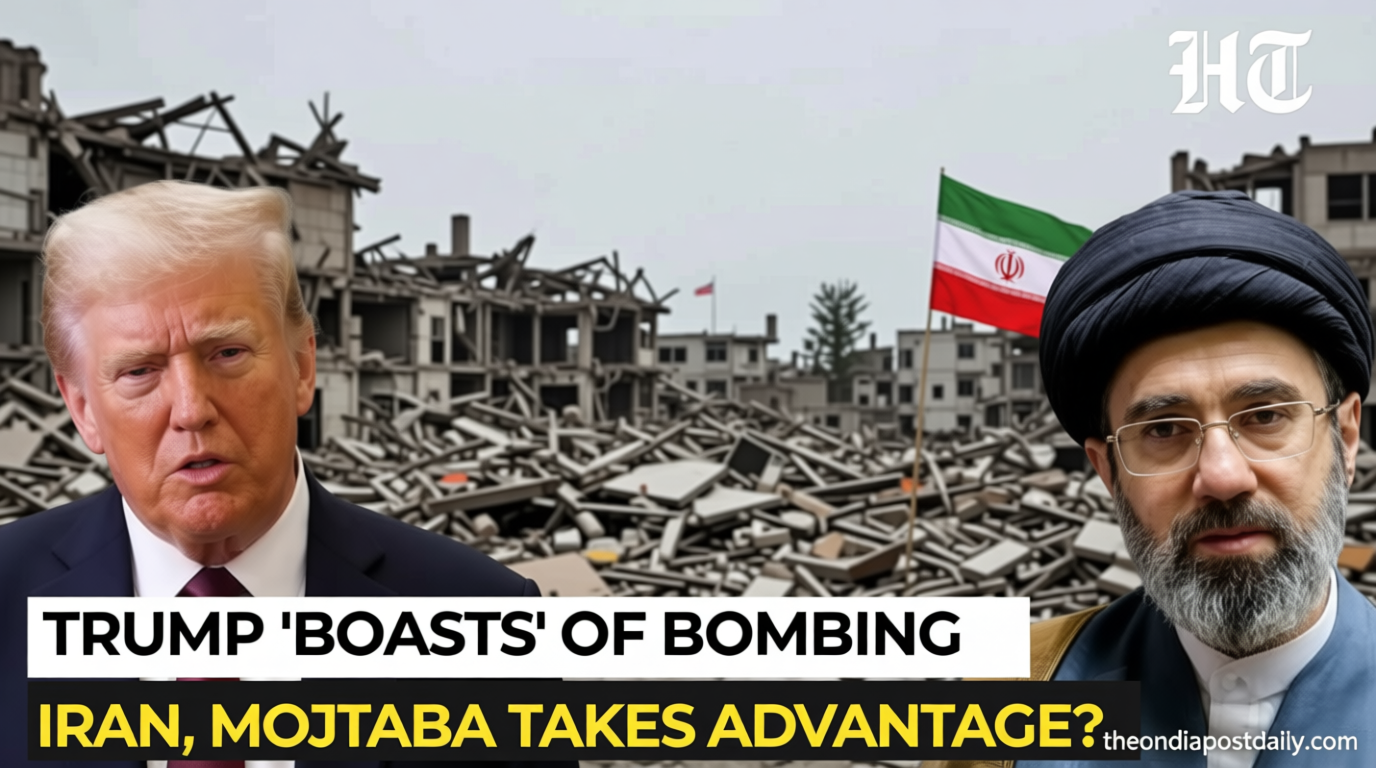
Khamenei framed his statements as a direct response to the perceived impunity of US and Israeli leaders, who he argued had openly acknowledged their military actions. “The confessions and even brazen boasting of some of the leaders of the US-Zionist enemy regarding these crimes are indisputably an admission of crime,” Khamenei emphasized in a post on X. This sentiment aligns with his belief that the attacks on Iranian territory, including the targeted destruction of medical facilities, have caused irreversible harm to innocent lives. He reiterated that each incident, from the killing of children to the damage inflicted on hospitals, must be documented and pursued through legal channels.
The Supreme Leader specifically cited recent strikes in Minab and Lamerd, which he described as “thousands of major legal cases.” These attacks, according to Khamenei, have not only targeted infrastructure but also symbolized a systematic assault on Iran’s civilian population. By linking these events to the broader context of the war, he aims to frame the US and Israel as key actors in a global conflict that demands justice. The call for legal action is part of a narrative that positions Iran as the aggrieved party in a struggle for accountability.
International Repercussions and Diplomatic Tensions
In the wake of Khamenei’s demands, Iran’s Ministry of Foreign Affairs intensified its criticism of the recent US airstrikes on southern coastal monitoring installations. The ministry accused the United States of violating international law and undermining the ongoing ceasefire, a move that aligns with the Supreme Leader’s broader campaign for justice. Meanwhile, US Central Command (CENTCOM) confirmed that the strikes were part of Trump’s administration’s efforts to retaliate against Iran’s alleged breaches of the agreement.
The conflict has escalated further as the Islamic Revolutionary Guard Corps (IRGC) launched a coordinated missile and drone operation targeting US military bases in Kuwait and Bahrain. This retaliation, which destroyed eight facilities, was presented by Iran as a “decisive response” to the US’s aggressive actions. The exchange highlights the deepening divide between the two nations, with Khamenei’s legal demands serving as a symbolic and strategic counter to military retaliation.
Khamenei’s focus on war crimes has also drawn attention to the psychological toll on Iranian society, where the loss of children and the destruction of hospitals have fueled public outrage. He argued that such incidents must be treated as crimes under international law, not just military operations. “Every victim is a legal case,” he stated, reinforcing the idea that the US and Israel are responsible for the suffering they have inflicted on Iran’s people.
Historical Context and Legal Framework
The Supreme Leader’s call for legal action is rooted in Iran’s long-standing emphasis on justice, particularly in the context of the Iran-Iraq War and subsequent conflicts with Western powers. By invoking international legal mechanisms, Khamenei seeks to legitimize Iran’s position on the global stage. His argument is bolstered by the fact that the US and Israel have previously been accused of similar offenses, including the use of prohibited weapons and targeting of civilian populations in Syria and Gaza.
Khamenei also highlighted the importance of transparency in the legal process, urging investigators to thoroughly examine the evidence of war crimes. He criticized the lack of accountability in past conflicts, emphasizing that the current situation demands a more rigorous approach to justice. This focus on legal proceedings reflects a strategic shift in Iran’s diplomatic strategy, combining military retaliation with a push for international recognition of its grievances.
Global Response and Legal Implications
While Khamenei’s demands have garnered support within Iran, the international community has yet to respond definitively. Some analysts note that the legal cases he outlines could be brought before the International Criminal Court (ICC), which has the authority to investigate and prosecute crimes against humanity. However, the effectiveness of such legal actions depends on the cooperation of the US and Israel, both of whom have historically resisted external judicial oversight.
Khamenei’s emphasis on war crimes also serves as a reminder of the broader humanitarian impact of the conflict. By focusing on specific incidents, such as the attacks on hospitals and the killing of children, he aims to humanize the victims and pressure global powers to take action. This approach has the potential to influence public opinion and sway international legal bodies to recognize Iran’s right to seek justice for the atrocities committed on its soil.