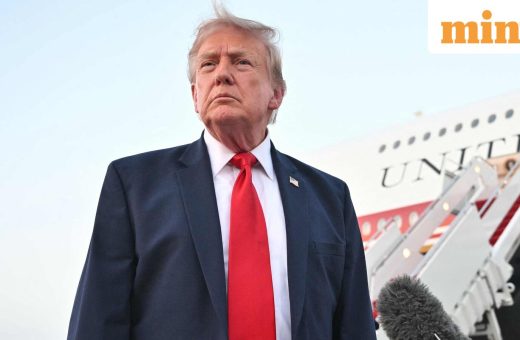
What is birthright citizenship? Understanding Trump’s executive order and the US Supreme Court case
What is Birthright Citizenship? Understanding Trump's Executive Order and the US Supreme Court Case The Constitutional Question at Hand Theindiapostdaily.com – The U.S. Supreme Court is now addressing a pivotal…
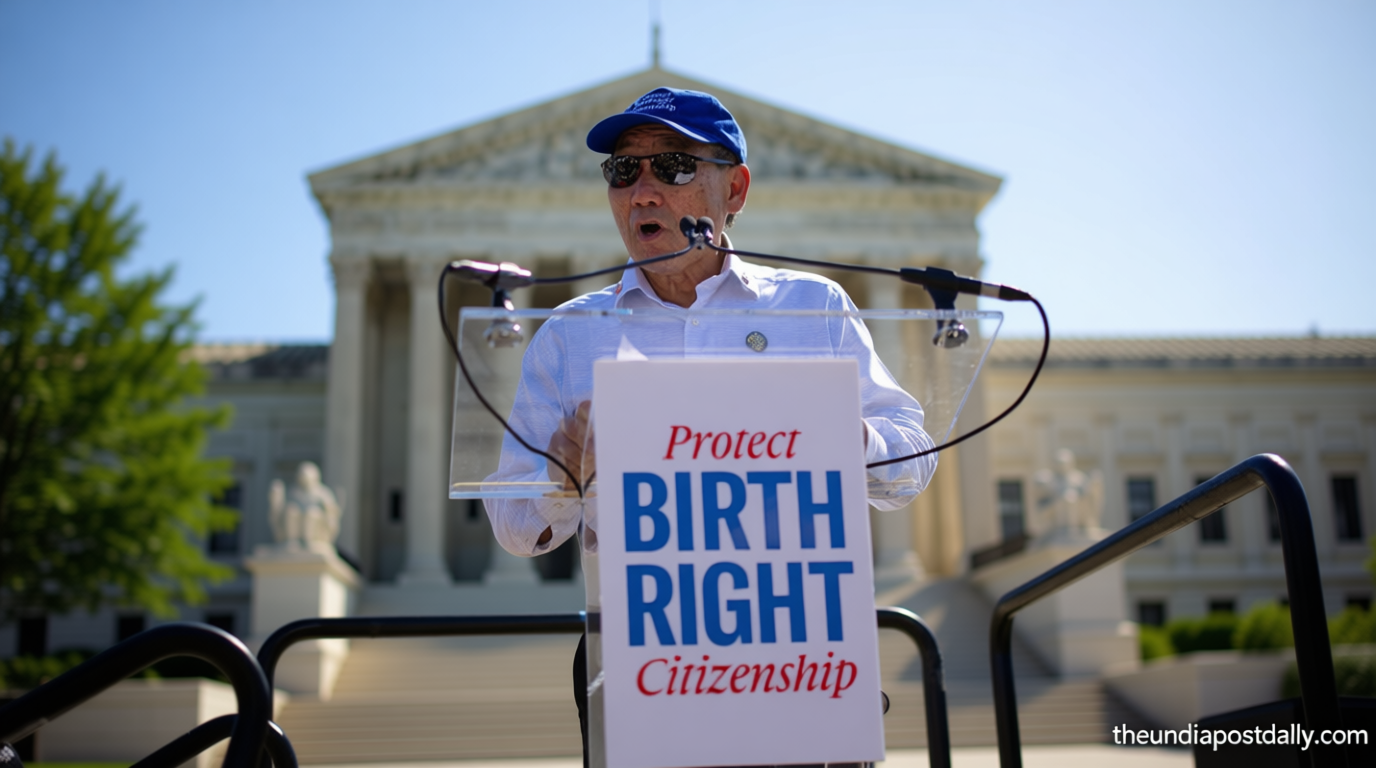
What is Birthright Citizenship? Understanding Trump’s Executive Order and the US Supreme Court Case
The Constitutional Question at Hand
Theindiapostdaily.com – The U.S. Supreme Court is now addressing a pivotal constitutional issue: whether President Donald Trump’s executive order, which limits automatic citizenship for children born in the United States, complies with the Fourteenth Amendment. The case, Trump v. Barbara, hinges on a core debate about the interpretation of birthright citizenship and its implications for immigration policy.
Details of Trump’s Executive Order
On January 20, 2025, President Trump issued Executive Order 14160, titled *Protecting the Meaning and Value of American Citizenship*. This directive instructs federal agencies to cease granting automatic U.S. citizenship to children born in the country under specific conditions:
- If the child’s mother was in the U.S. unlawfully and the father was not a citizen or lawful permanent resident.
- If the mother was in the U.S. temporarily, such as on a visa, and the father was also not a citizen or permanent resident.
The policy aims to restrict birthright citizenship for children of undocumented or temporary immigrants.
The Citizenship Clause and Its Interpretation
Central to the case is the Citizenship Clause of the Fourteenth Amendment, which states:
“All persons born or naturalized in the United States, and subject to the jurisdiction thereof, are citizens.”
For over a century, courts have broadly interpreted this clause to mean that nearly all individuals born on U.S. soil automatically qualify for citizenship, irrespective of their parents’ immigration status.
Why the Supreme Court is Involved
Multiple states and immigrant advocacy groups contested the executive order, claiming it conflicts with both the Fourteenth Amendment and the Immigration and Nationality Act. The Supreme Court heard oral arguments on April 1, 2026, and is set to deliver its decision before the conclusion of its current term.
The Legal Conflict
The case revolves around a fundamental disagreement:
- Plaintiffs’ stance: They argue the issue was settled in 1898 by the Supreme Court’s landmark decision in *United States v. Wong Kim Ark*, which affirmed that a child born in the U.S. to non-citizen parents is automatically a citizen, with exceptions like children of diplomats.
- Administration’s position: The Trump team asserts it is not overturning *Wong Kim Ark* but clarifying its application. They claim the ruling relied on the parents being lawfully domiciled, meaning they had established a permanent home in the U.S., and that this condition reflects the “direct and immediate allegiance” required by the Constitution.
The crux of the dispute lies in whether the Constitution’s “subject to the jurisdiction” clause encompasses lawful domicile or if the executive order introduces a new standard.
Key Legal Points
During the oral arguments, justices emphasized the significance of “domicile” in determining citizenship. The administration contended that birthright citizenship should depend on whether parents had established lawful residency, while challengers argued this interpretation adds a requirement not mentioned in the Constitution.
Practical Challenges Raised by the Court
Several justices questioned how the order would be implemented in real-world scenarios. Justice Amy Coney Barrett asked how officials would assess parents’ intent to remain in the U.S. permanently at the time of a child’s birth. Justice Ketanji Brown Jackson raised concerns about whether hospitals or government staff would demand immediate immigration documentation after a child is born.
Potential Implications
The Court’s ruling could significantly impact immigration policy and constitutional law. If the order is upheld:
- Automatic birthright citizenship may be restricted for certain children born in the U.S.
- Federal agencies would enforce new rules for determining citizenship at birth.
The decision could redefine longstanding interpretations of the Fourteenth Amendment, reshaping how citizenship is understood for generations to come.