Venezuela earthquake LIVE: 32, dead, number of casualties is expected to rise, says Delcy Rodriguez
Venezuela Earthquake LIVE: 32 Dead, Casualties Likely to Increase, Announces Delcy Rodriguez Theindiapostdaily.com – A Venezuela earthquake LIVE update has confirmed that a 7.5-magnitude tremor struck the north-central region of…
Venezuela Earthquake LIVE: 32 Dead, Casualties Likely to Increase, Announces Delcy Rodriguez
Theindiapostdaily.com – A Venezuela earthquake LIVE update has confirmed that a 7.5-magnitude tremor struck the north-central region of Venezuela, near Caracas, causing significant structural damage. The US Geological Survey (USGS) reported the initial quake occurred approximately 160 kilometers west of Caracas at a depth of 13 kilometers, with a subsequent stronger 7.5-magnitude tremor recorded 16 kilometers southwest of Morón. This powerful seismic event has prompted emergency alerts and raised concerns about potential tsunamis, as the region braces for further impact. With rescue operations underway, the government has acknowledged that the casualty toll may continue to rise, underscoring the severity of the situation.
Initial Impact and Casualty Reports
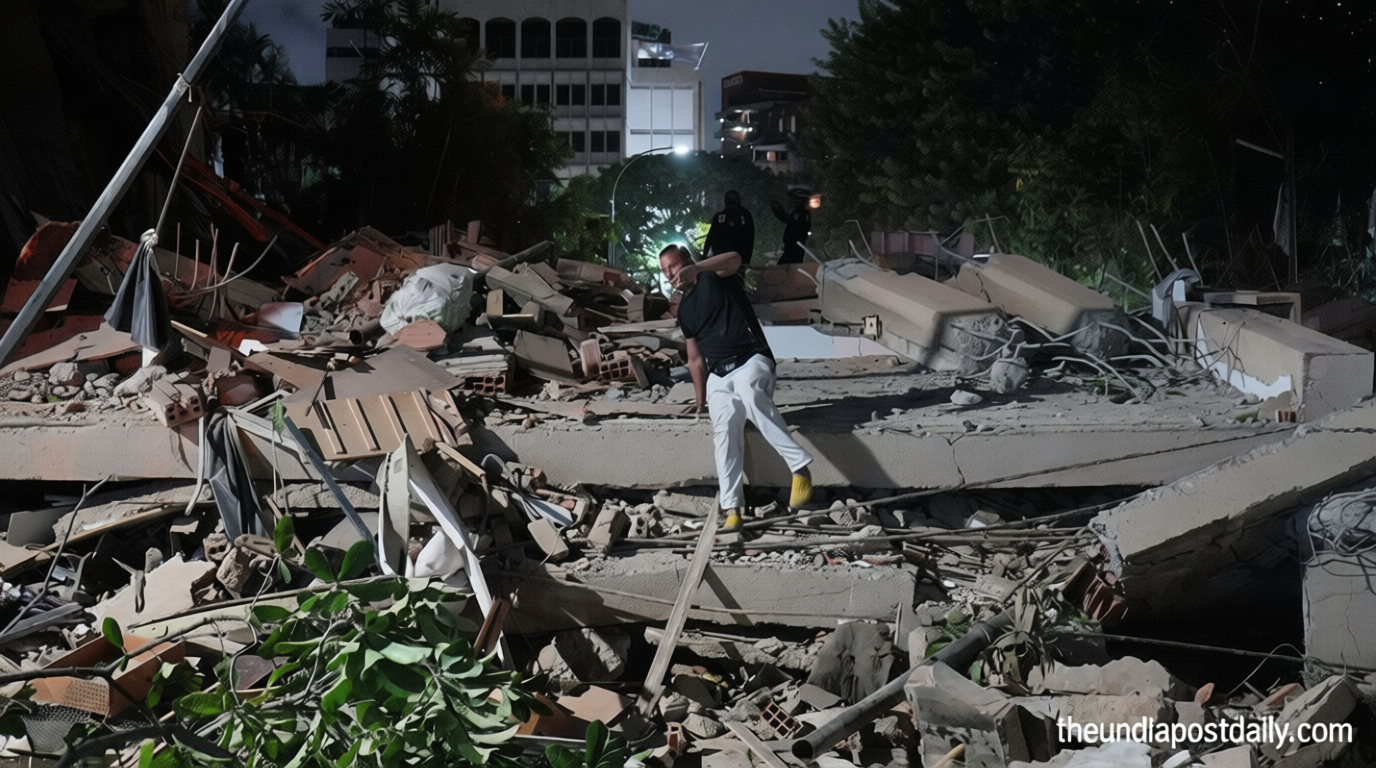
The 7.5-magnitude earthquake, which hit Venezuela on Wednesday, triggered immediate panic among residents in the capital and surrounding areas. Initial reports indicate that the tremor has caused widespread damage, particularly in densely populated urban zones. Structural collapses have been reported in several neighborhoods, with at least 32 confirmed fatalities as of the latest update. Delcy Rodriguez, Venezuela’s Vice President, confirmed these numbers during a live address, emphasizing the need for coordinated efforts to locate and rescue those still trapped under debris. The affected regions include Trujillo, Yaracuy, Carabobo, Miranda, Aragua, and La Guaira, where reports of damaged infrastructure and disrupted services have flooded in.
Tsunami Warning and Its Reassessment
Following the 7.5-magnitude tremor, the USGS activated the Tsunami Warning System for Puerto Rico, the U.S. Virgin Islands, and the British Virgin Islands. The warning also extended to the islands off Venezuela’s coast—Aruba, Curacao, and Bonaire—due to the potential for dangerous waves. However, within an hour, the warning was rescinded as preliminary assessments indicated that the earthquake’s epicenter was not directly over the ocean, reducing the likelihood of a significant tsunami. Despite the warning’s withdrawal, officials remain cautious, noting that secondary effects such as landslides or coastal flooding could still pose risks to vulnerable areas.
“Some buildings have been brought down (in Caracas), houses have collapsed,” stated Diosdado Cabello, Venezuela’s Interior Minister, during a televised address. He confirmed that multiple states were affected by the disaster, with emergency crews working around the clock to clear rubble and assist survivors. The government has also activated disaster response protocols, coordinating with local authorities and international partners to evaluate the scale of damage and allocate resources effectively.
Structural Damage and Rescue Operations
The earthquake’s epicenter near Morón has led to severe structural damage, particularly in Caracas, where the capital’s airport was one of the first locations to report major destruction. Video footage shared on social media shows parts of the airport’s roof collapsing, creating dense clouds of dust and debris that blanketed the area. In addition to the airport, residential buildings, commercial structures, and public facilities have sustained damage, with reports of broken windows, cracked walls, and collapsed roofs. Rescue teams are working in challenging conditions, using heavy machinery to access trapped individuals and evacuate the injured. The National Guard and fire department have been deployed to the hardest-hit zones, with officials urging residents to remain alert and avoid entering damaged buildings until safety assessments are complete.
Regional Response and Government Statements
As the situation unfolds, regional leaders have expressed concern over the quake’s impact on Venezuela’s already fragile infrastructure. The government has established temporary shelters for displaced families and distributed emergency supplies to affected communities. Delcy Rodriguez reiterated the need for swift action, stating that the number of casualties is expected to rise as search and rescue teams continue their efforts. In a live update, she highlighted the government’s commitment to providing aid and support to victims, while also calling for international assistance to aid in recovery. The Interior Minister, Diosdado Cabello, added that the disaster has exposed vulnerabilities in Venezuela’s disaster preparedness, prompting a review of emergency response strategies.
Meanwhile, the USGS has provided additional details about the earthquake’s characteristics, noting that its depth of 10 kilometers made it more damaging to surface structures compared to deeper quakes. The tremor’s epicenter in the north-central region, which is home to several industrial and commercial hubs, has raised questions about the long-term economic consequences. Analysts warn that the destruction could disrupt transportation networks, power grids, and communication systems, affecting both daily life and recovery efforts. As the situation continues to develop, updates on the Venezuela earthquake LIVE will be crucial for informing the public and guiding relief operations. The event also serves as a reminder of the country’s susceptibility to natural disasters, highlighting the importance of strengthening infrastructure and emergency response systems.