‘Respect issues of core concern’: What NSA Ajit Doval told Chinese FM Wang Yi during Delhi talks
India's National Security Advisor Ajit Doval emphasized the importance of "respect issues of core concern" during discussions with
India-China Rebuilding Ties
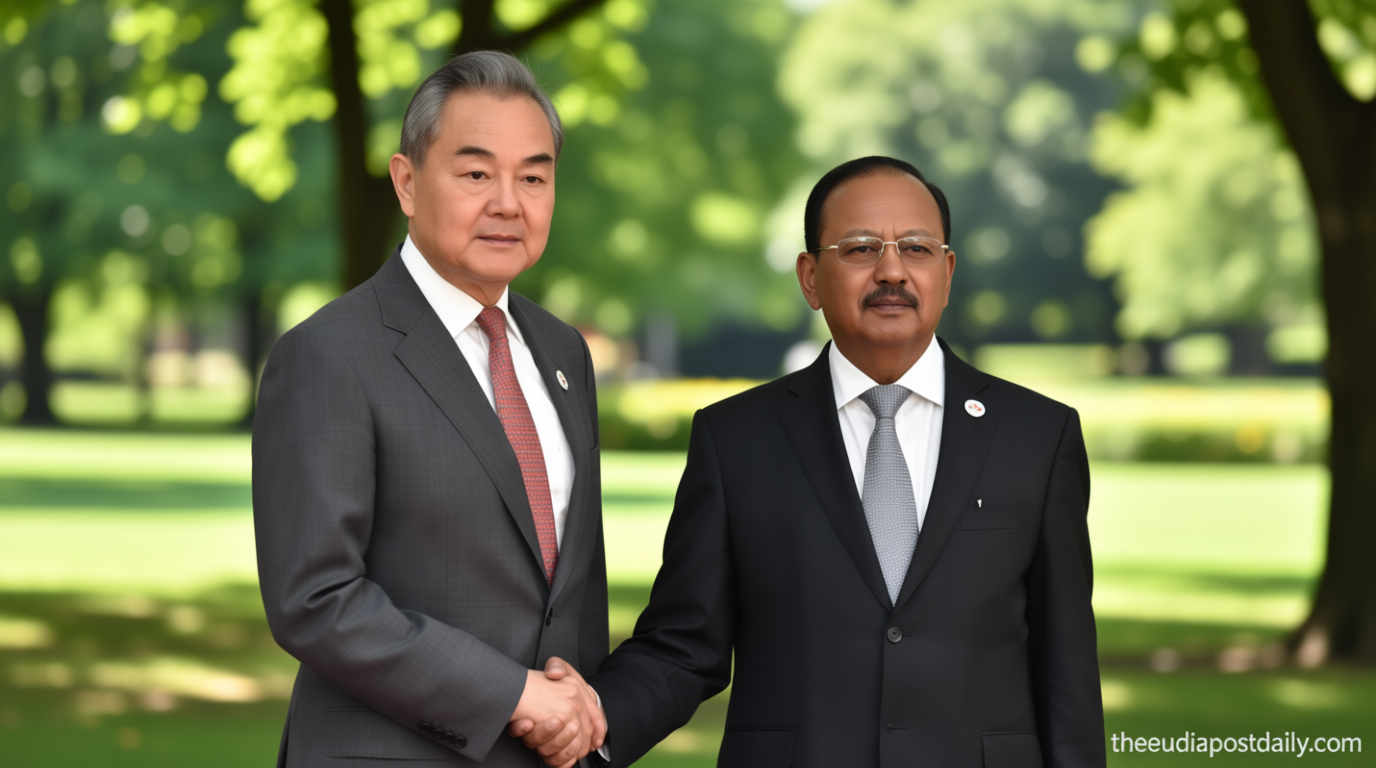
Theindiapostdaily.com – India’s National Security Advisor Ajit Doval emphasized the importance of “respect issues of core concern” during discussions with Chinese Foreign Minister Wang Yi in New Delhi. The talks, held as part of the BRICS National Security Advisors and High Representatives meeting, aimed to address mutual sensitivities and restore trust between the two neighboring nations. This exchange marked a critical step in the ongoing efforts to ease tensions that have persisted since the 2020 military standoff in eastern Ladakh, where both countries faced significant challenges in maintaining stability along the Line of Actual Control (LAC).
Doval’s message underscored the need for India and China to demonstrate mutual respect, particularly in resolving disputes that could impact their broader strategic relationship. The National Security Advisor highlighted that such respect would not only help in de-escalating immediate conflicts but also in fostering long-term cooperation. While the exact nature of the core issues discussed remained unspecified, the focus was on creating a framework for dialogue that prioritizes shared interests over diverging priorities. This approach is seen as vital for preventing future confrontations and ensuring that bilateral ties remain resilient.
BRICS Summit Context
The 16th BRICS National Security Advisors and High Representatives meeting took place against a backdrop of global geopolitical shifts, with India serving as the rotating chair of the BRICS bloc. This summit provided an ideal platform for India and China to engage in high-level diplomacy, as both nations seek to strengthen their economic and political collaborations. BRICS, comprising Brazil, Russia, India, China, and South Africa, plays a pivotal role in shaping international policies, making the summit a key opportunity to align on shared goals.
During the meeting, Wang Yi and Doval exchanged views on how to leverage BRICS as a forum for advancing regional and global initiatives. The emphasis on mutual respect extended to their collaboration within the bloc, with both sides recognizing the importance of addressing core concerns without undermining their collective aspirations. This discussion coincided with India’s active role in promoting the interests of the Global South, a theme that resonated strongly in the context of the summit. The talks also highlighted the need for a balanced approach to handle sensitive issues while maintaining momentum in bilateral cooperation.
Core Concerns and Border Dynamics
“It is imperative to respect each other’s core interests, properly handle sensitive issues, and place the China-India border issue in an appropriate position,” Xu Feihong, the Chinese ambassador, noted on social media. His remarks emphasized the importance of maintaining a steady and predictable diplomatic rhythm to prevent localized disputes from spilling into broader conflicts.
The Line of Actual Control (LAC) remains a focal point of India-China relations, with both nations engaging in regular dialogue to manage the situation. The recent discussions in New Delhi were part of a series of efforts to ensure that the border issue is viewed as a bilateral concern rather than a strategic obstacle. Xu Feihong also highlighted that as the world’s two most populous economies, India and China must adopt a long-term perspective in their interactions, aligning their policies to foster global stability and cooperation.
The dialogue extended beyond the LAC, addressing other areas of mutual interest such as trade, technology, and regional security. Doval reiterated that India would continue to advocate for its core concerns while remaining open to compromise. This approach reflects India’s commitment to maintaining a stable and constructive relationship with China, even as it navigates complex geopolitical challenges. The conversations also aimed to build on previous agreements, such as the 2023 agreement to reduce tensions along the LAC, by translating words into actionable steps for sustained peace.
Modi’s Engagement with Wang Yi
Prime Minister Narendra Modi’s meeting with Wang Yi further reinforced the shared vision for India-China relations. Modi emphasized the historical and cultural ties between the two nations, noting that they have long been pillars of global influence. His comments highlighted the importance of strategic partnerships in a rapidly evolving international landscape, where cooperation is essential for addressing common challenges such as climate change, economic growth, and global security.
“Both sides should take concrete actions to implement the important consensus reached by the leaders of the two countries, promote their respective development and revitalization through cooperation, and accelerate the modernization process of the Global South,” Xu Feihong added, underscoring the collaborative spirit of the talks. The emphasis on mutual respect and shared objectives was a clear signal that India and China are committed to working together, even as they address differences in their core interests. The discussions also touched on the need for a more integrated economic relationship, with both nations exploring opportunities to expand trade and investment ties.
The summit’s discussions were seen as a positive development for the India-China relationship, as they provided a structured environment for dialogue. Both sides expressed optimism about the potential for progress, with the hope that their collaboration within BRICS would serve as a model for other multilateral partnerships. This meeting marks a renewed commitment to the principles of respect, understanding, and cooperation that underpin their bilateral engagement.
In addition to the border issue, the talks addressed broader geopolitical concerns, including the Indo-Pacific region and the role of both nations in shaping global economic and security frameworks. Doval and Wang Yi agreed that a stable relationship between India and China would have far-reaching benefits, not only for their own populations but also for the stability of the international order. This consensus is expected to guide future interactions, with both sides prioritizing dialogue over confrontation in their efforts to build a more cooperative relationship.