‘Fair chance…’: After NEET ‘paper leak’ row, over 20 lakh appear for reexam; NTA shares ‘thank you’ note
After the original NEET (UG) 2026 exam was canceled on May 3 due to allegations of a paper leak, over 20 lakh students took part
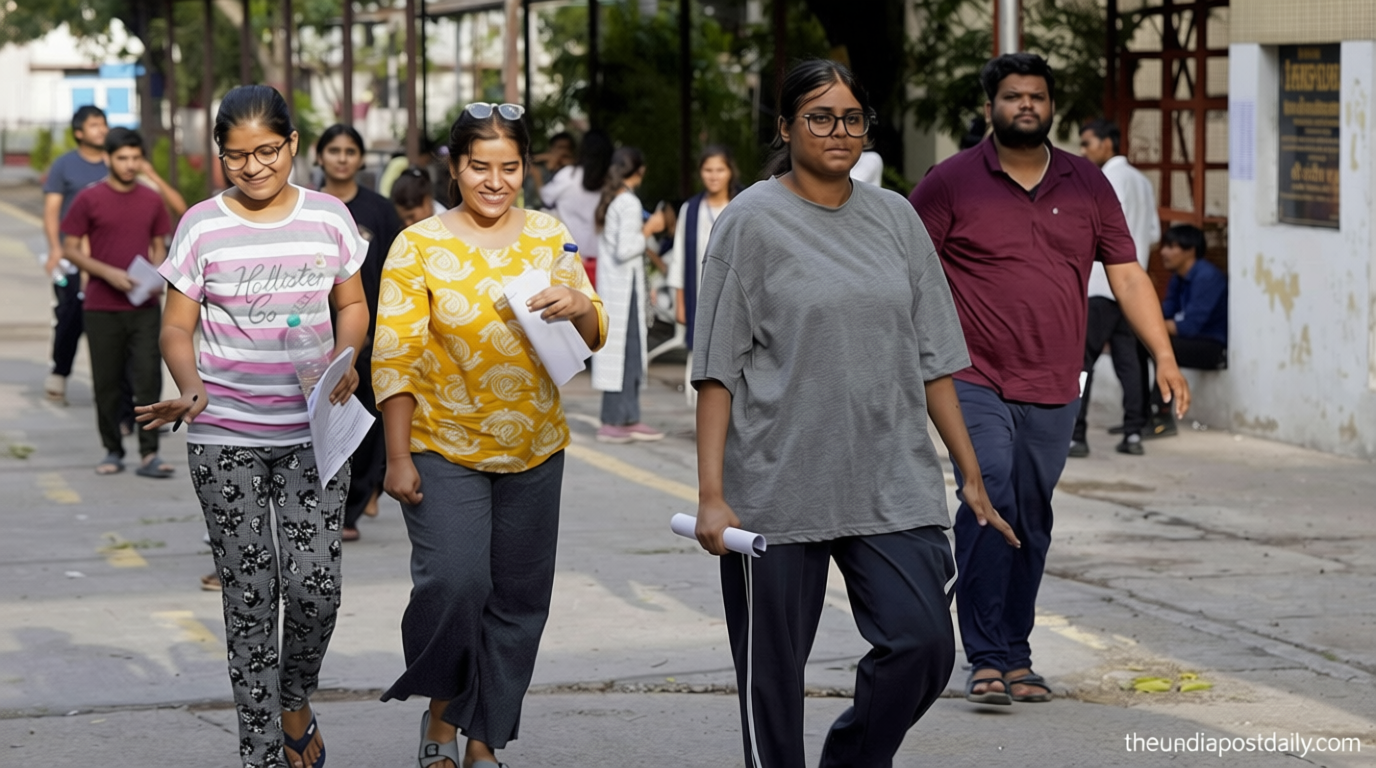
Fair Chance Achieved: NEET Reexamination Resumes with 20 Lakh Candidates
Theindiapostdaily.com – After the original NEET (UG) 2026 exam was canceled on May 3 due to allegations of a paper leak, over 20 lakh students took part in a rescheduled reexamination on June 21. This massive effort was orchestrated by the National Testing Agency (NTA) to restore fairness and ensure candidates had a second opportunity to demonstrate their knowledge. The reexam was conducted across 5,440 domestic centers and 14 international locations, reflecting the agency’s commitment to delivering a transparent and equitable testing environment. Despite the challenges posed by the leak, the NTA managed to complete the process in just 37 days, showcasing its agility in maintaining the integrity of the exam.
NTA’s ‘Thank You’ Note: A Testament to Collective Dedication
“This was not the National Testing Agency acting alone. It was Team Bharat—a chain of people across the country who showed up so that, for each candidate, the only thing that mattered that morning was the paper in front of them,” the NTA stated in its press note.
The reexamination relied on the collaboration of 7 lakh personnel, including police teams, exam observers, and support staff, to ensure a secure and stress-free environment for students. The agency highlighted the seamless execution, attributing it to strict security protocols and the backing of multiple government departments. From the moment the exam was announced, the focus on providing a fair chance for all participants became the driving force behind every decision, underscoring the importance of trust in the system.
Technological and Logistical Safeguards for Enhanced Security
To address concerns over the paper leak, the NTA implemented advanced measures such as Aadhaar-based biometric verification, facial recognition technology, and CCTV surveillance at all centers. These tools were designed to minimize the risk of malpractice and ensure the authenticity of the examination process. Additionally, signal jammers were deployed to prevent unauthorized communication, and two-layer frisking procedures were conducted with state police forces to maintain discipline and prevent cheating.
State governments played a vital role in supporting the reexamination by providing essential amenities like shaded seating, water, and food to candidates. Emergency medical services, including ambulances, were on standby to handle any health-related issues during the test. Several states even arranged free transportation for students, demonstrating a unified approach to ensure every aspirant could access the exam without logistical barriers. The NTA praised this collaboration, calling it a “national protocol translated into local care, centre by centre.”
Collaboration Across Government Departments and Partners
The reexamination process extended beyond the NTA and state governments, involving key agencies such as the Central Armed Police Forces, Ministry of External Affairs, and Department of Posts. The Indian Air Force and other departments like Health and Family Welfare, NIC, and MeitY provided critical support in logistics and security. Banking partners including SBI, Canara Bank, and PNB also contributed by facilitating smooth payment processes for candidates.
The NTA emphasized that the reexamination was a landmark effort, proving that a fair chance for students could be achieved through coordination and determination. The agency acknowledged the role of academic experts who volunteered to create multiple question papers, ensuring redundancy and reducing the risk of future leaks. This collective effort not only restored confidence in the NEET process but also set a benchmark for handling large-scale examinations under pressure.
Impact of the Leak and Reexamination Outcomes
The paper leak incident sparked widespread debates about transparency and accountability in competitive exams. Over 20 lakh students, representing a significant portion of medical aspirants in India, were affected by the disruption. The reexamination on June 21 was a crucial step in rectifying the situation, allowing candidates to regain their confidence in the system. The NTA’s prompt response and efficient execution of the reexam served as a reminder of its dedication to upholding the fair chance principle.
Feedback from candidates and stakeholders indicated that the reexamination process was largely successful, with minimal disruptions and a sense of satisfaction among participants. The agency’s fair chance initiative not only mitigated the consequences of the leak but also reinforced its commitment to excellence in examination management. As the results approach, the NTA continues to emphasize the importance of this collective effort in ensuring that every student receives an equitable opportunity to succeed.
With the reexamination complete, the NTA’s journey to deliver a fair chance for NEET aspirants has been recognized as a model of crisis management. The agency’s ability to organize such a large-scale event in a short timeframe has been lauded as a testament to its efficiency and the unwavering support of government bodies and partners. The reexam’s success has also bolstered the credibility of the NEET process, offering hope that similar challenges can be swiftly addressed in the future.