Quote of the Day by ex-US Sec of State Dean Acheson – ‘Negotiation in the classic diplomatic sense assumes parties…’
Dean Acheson’s Quote of the Day — “Negotiation in the classic
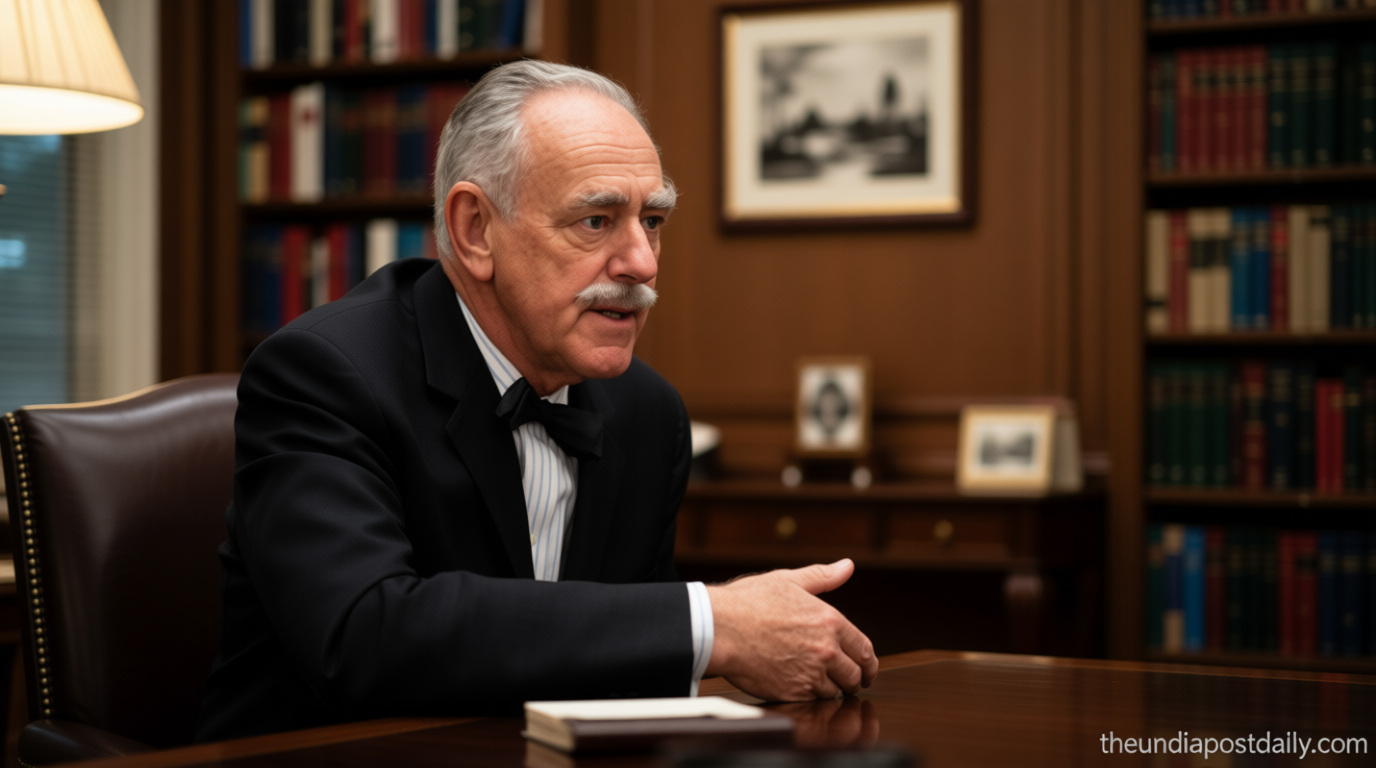
Dean Acheson’s Quote of the Day: The Power of Diplomatic Compromise
Theindiapostdaily.com – Dean Acheson’s Quote of the Day — “Negotiation in the classic diplomatic sense assumes parties are more anxious to agree than to disagree” — encapsulates his enduring belief in the art of diplomacy as a process of mutual understanding. This statement, attributed to the former U.S. Secretary of State, underscores the importance of prioritizing consensus over contention, a principle that shaped his approach to international relations during pivotal moments in history. As a key architect of postwar American foreign policy, Acheson’s words remain relevant in today’s complex geopolitical landscape, where diplomacy often balances idealism with pragmatism.
Dean Acheson: A Diplomatic Visionary
Dean Gooderham Acheson, born in 1893 in Middletown, Connecticut, was a figure whose career spanned both public service and private practice. After studying at Groton School and Yale University, he became a law clerk for Supreme Court Justice Louis Brandeis, laying the groundwork for his future role as a legal and political strategist. His early career in Washington, D.C., at the prestigious law firm Covington & Burling, honed his skills in negotiation and policy analysis, which would later define his tenure as a U.S. Secretary of State.
Under President Franklin D. Roosevelt, Acheson served as Under Secretary of the Treasury from 1933 to 1935, where he developed a reputation for his strategic thinking and ability to navigate complex international challenges. His return to government in 1941 as Assistant Secretary of State for Economic Affairs marked the beginning of his influence on global affairs, as he played a critical role in shaping U.S. policies during World War II and the early Cold War. By 1949, he had ascended to the position of Secretary of State under Harry S. Truman, a role that solidified his legacy as a master of diplomatic engagement.
The Essence of Acheson’s Diplomatic Philosophy
“Negotiation in the classic diplomatic sense assumes parties are more anxious to agree than to disagree,” Acheson once asserted, reflecting his conviction that effective diplomacy is rooted in the pursuit of common ground. This perspective stood in contrast to the adversarial tone often seen in international disputes, where nations may adopt rigid positions to assert dominance. Acheson believed that the success of any negotiation hinged on the participants’ willingness to seek solutions that satisfied all sides, rather than allowing ideological or strategic disagreements to overshadow progress.
His philosophy emphasized collaboration over competition, a mindset that influenced U.S. foreign policy during the Truman administration. Acheson’s approach to negotiation was not merely transactional but deeply strategic, recognizing that long-term stability required more than temporary victories. He championed dialogue as a means to build trust and address underlying interests, a method that remains a cornerstone of modern diplomatic practice. This quote, therefore, serves as a reminder that diplomacy is not just about winning arguments but about fostering enduring partnerships.
Impact on Postwar Policy and Global Alliances
Acheson’s contributions to postwar international frameworks were instrumental in shaping the U.S. role on the global stage. His work on the Truman Doctrine, which aimed to contain communist expansion in Greece and Turkey, demonstrated his ability to translate theoretical ideals into actionable policies. Similarly, his involvement in the Marshall Plan — a massive economic aid initiative to rebuild Europe after World War II — highlighted his commitment to using diplomacy to promote prosperity and security.
One of Acheson’s most enduring legacies is his role in the creation of NATO. As Secretary of State, he advocated for the alliance as a means of collective defense, ensuring that member nations could pool resources and strength to deter Soviet aggression. His leadership during the Korean War further underscored his belief in the power of negotiation to resolve conflicts, even in the face of intense global rivalries. These efforts cemented his reputation as a diplomat who valued flexibility and cooperation in an era defined by ideological divides.
Criticism and the Challenge of Ideological Conflicts
While Acheson’s diplomatic strategies were widely admired, they were not without criticism. Some contemporaries, particularly Republicans and McCarthy-era opponents, questioned his handling of U.S. relations with China and his perceived alignment with Soviet interests. These critiques often focused on his failure to prevent communist dominance in Asia, yet they did not diminish the effectiveness of his broader containment strategy. Acheson’s ability to navigate these challenges while maintaining the U.S.’s position as a global leader illustrates the nuanced nature of his diplomatic approach.
His belief in the classic diplomatic model also clashed with the more aggressive tactics of the Cold War, where nations frequently prioritized confrontation over compromise. Acheson’s emphasis on mutual interests over rigid ideology provided a counterbalance to this trend, offering a framework for resolving disputes without escalating into full-scale conflict. This philosophy, though sometimes at odds with the prevailing strategies of his time, laid the groundwork for more collaborative international relations in the decades that followed.
Legacy in Modern Diplomacy
Today, Acheson’s Quote of the Day continues to resonate in an age of rising global tensions and complex negotiations. His assertion that parties must be “more anxious to agree than to disagree” is a timeless reminder of the importance of open communication in diplomacy. In an era where trade agreements, climate accords, and international coalitions are often shaped by political posturing, Acheson’s principles offer a valuable alternative: a focus on shared goals and the iterative process of building consensus.
His memoir, Present at the Creation, remains a seminal work in understanding the dynamics of Cold War diplomacy. Published in 1969, the book provides insight into the challenges of negotiating peace and stability in a fragmented world. By examining his experiences, modern policymakers can draw lessons from his emphasis on patience, strategic foresight, and the power of dialogue — all essential elements of a successful Quote of the Day by ex-US Secretary of State.
Enduring Relevance of Acheson’s Words
Acheson’s quote is not only a reflection of his personal philosophy but also a guiding principle for contemporary diplomats. In a world where disagreements are often framed as battles for supremacy, his words encourage a more collaborative spirit. By prioritizing agreement, nations can avoid the pitfalls of zero-sum thinking and create lasting partnerships that address shared challenges. This mindset is particularly crucial in today’s multipolar world, where alliances and international agreements require careful negotiation and mutual respect.
Moreover, Acheson’s approach to diplomacy is a testament to the value of adapting strategies to changing circumstances. His ability to balance ideological convictions with pragmatic solutions ensured that the U.S. could maintain its influence without alienating key allies. As the Quote of the Day by ex-US Secretary of State, his words remain a powerful reminder that the essence of diplomacy lies not in dominance, but in the pursuit of common solutions through dialogue and compromise.