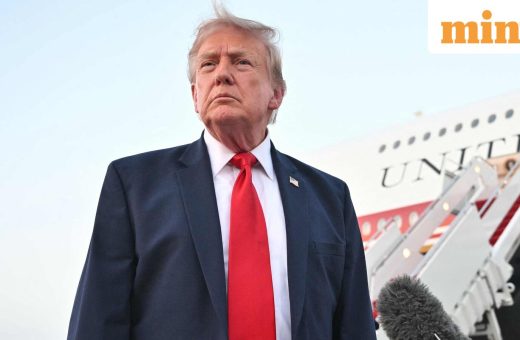
‘Flying White House’: Donald Trump unveils new ‘Air Force One’ gifted by Qatar — all you need to know
Donald Trump’s vision of a “flying White House” took flight on Friday as he unveiled a
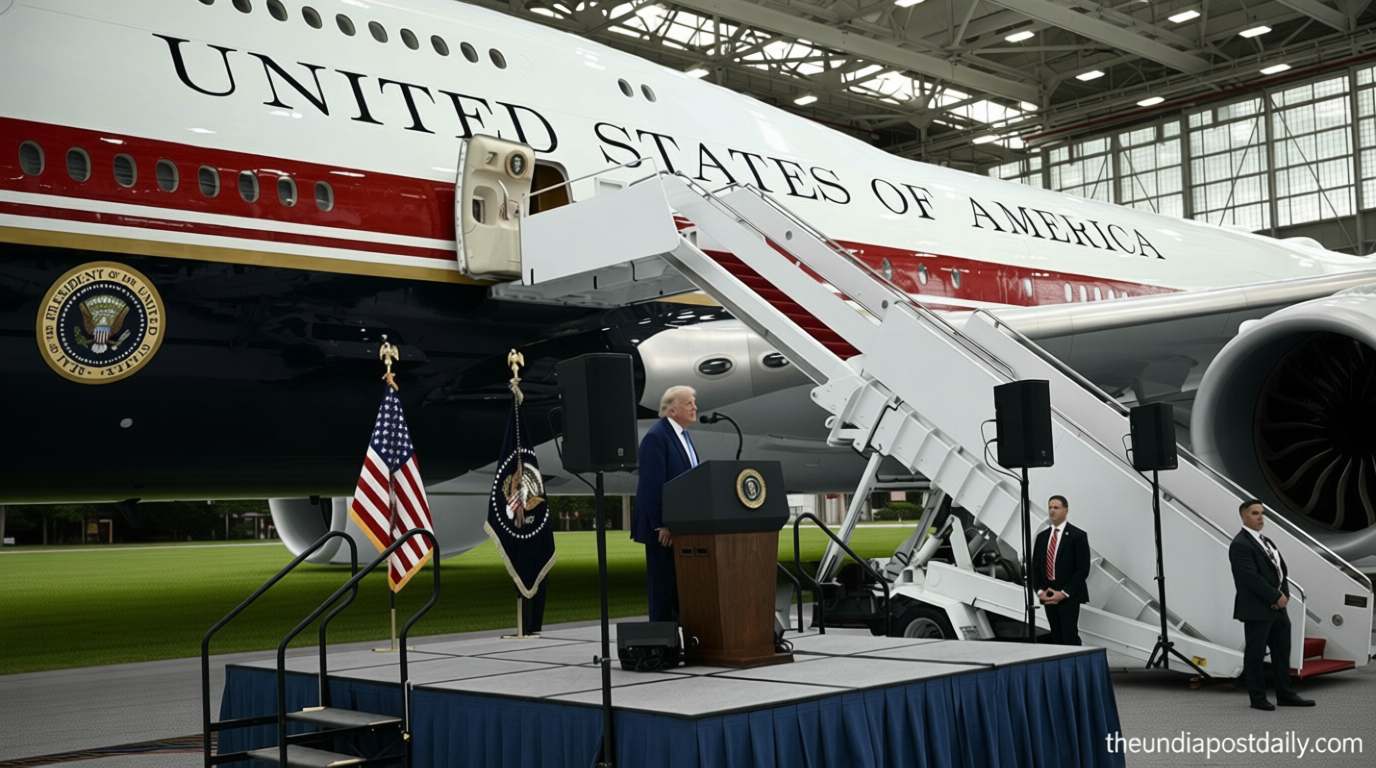
Flying White House: Trump’s New Aircraft Gifted by Qatar
Theindiapostdaily.com – Donald Trump’s vision of a “flying White House” took flight on Friday as he unveiled a newly modified Boeing 747 gifted by Qatar. The aircraft, officially designated as the VC-25B Bridge, was presented at Joint Base Andrews in Maryland, where the president praised its opulence and advanced capabilities, calling it the most technologically sophisticated presidential jet in US history. The aircraft’s rapid development—completed in just 10 months—has sparked both admiration and debate, as it combines luxury with state-of-the-art security features to redefine the role of the executive transport.
Details of the Presidential Aircraft
The VC-25B is not only the largest Air Force One ever built but also boasts a redesigned interior that merges presidential comfort with military-grade functionality. Its streamlined construction, which incorporates high-tech materials and enhanced fuel efficiency, allows for extended range and faster travel speeds compared to the previous VC-25A models. Trump emphasized that the plane’s unique design, featuring a new red, white, and blue livery, would make it a symbol of American prestige on the global stage. The Air Force confirmed that the aircraft will undergo rigorous testing before being officially integrated into the Presidential Airlift Group’s fleet.
Qatar’s Role and the Gift’s Significance
Qatar’s contribution to the project has drawn attention for its diplomatic and strategic implications. The Gulf nation, known for its wealth and global influence, provided the aircraft as a gesture of goodwill, underscoring its close ties with the US under Trump’s administration. While the gift was celebrated as a remarkable symbol of international cooperation, it also raised questions about the political motivations behind the donation. Critics pointed out that the aircraft’s value, estimated at over $200 million, represents one of the most expensive foreign gifts ever received by the US government, further fueling discussions about transparency and accountability in presidential travel expenses.
Features and Security Upgrades
The VC-25B is equipped with cutting-edge technology to ensure the President’s safety and operational readiness. It includes advanced radar systems, secure satellite communications, and reinforced blast-resistant structures, making it a mobile command center during global crises. The aircraft’s luxurious amenities, such as a state-of-the-art conference room, a presidential suite with private sleeping quarters, and a dedicated dining area, were highlighted as a testament to its dual role as a symbol of power and a functional military asset. Secretary of the Air Force Troy Meink stated,
“The safety and security of the commander in chief is our highest priority.”
The upgrades also focus on sustainability, with energy-efficient systems reducing the aircraft’s environmental footprint.
Historical Context and Operational Impact
The concept of a “flying White House” is not new, but the VC-25B marks a significant evolution in presidential air travel. Previous Air Force One models, such as the VC-25A, have served as essential tools for diplomacy and leadership since the 1990s. However, the new aircraft introduces a level of modernization that aligns with the Trump administration’s focus on innovation and global leadership. With the aging VC-25A fleet nearing its operational limits, the addition of the VC-25B is expected to ease the burden on current resources and ensure the President has a reliable and advanced transport for both domestic and international missions. Air Force Chief of Staff Gen. Ken Wilsbach noted,
“Many thought it could not be done, but the United States Air Force was able to execute and provide a secure, reliable airborne command post on an accelerated timeline.”
Public Reaction and Political Implications
The unveiling of the “flying White House” has elicited a mixed response from the public and media. Supporters praised Trump’s ability to secure high-profile gifts that enhance the President’s capabilities, while opponents questioned the prioritization of luxury over cost-effectiveness. Analysts suggested that the aircraft’s symbolism—representing both American leadership and international partnerships—could bolster Trump’s image as a global figurehead. Meanwhile, the gift has reignited debates about the ethics of foreign donations to the US government, with some calling for greater oversight of such transactions. Despite the scrutiny, Trump reiterated his confidence in the decision, stating,
“This is one of the best things that could have happened to the White House, and it’s a gift that no one could refuse.”
Looking Ahead: The Future of Presidential Air Transport
As the VC-25B prepares for service, officials are optimistic about its long-term benefits for national security and diplomacy. The aircraft’s introduction is part of a broader effort to modernize the US Air Force’s presidential assets, ensuring they meet the demands of a rapidly changing world. With its advanced capabilities, the “flying White House” could serve as a model for future upgrades, potentially setting a new standard for executive air travel. While challenges remain in balancing cost, functionality, and symbolism, the success of this project underscores the importance of investing in high-quality infrastructure for the nation’s highest office. The next phase will involve integrating the aircraft into routine operations and assessing its impact on both domestic and international travel logistics.