I asked ChatGPT to suggest 5 yoga poses for corporate employees: AI gives me 12-minute reset routine
The International Day of Yoga, celebrated globally on June 21, prompted a
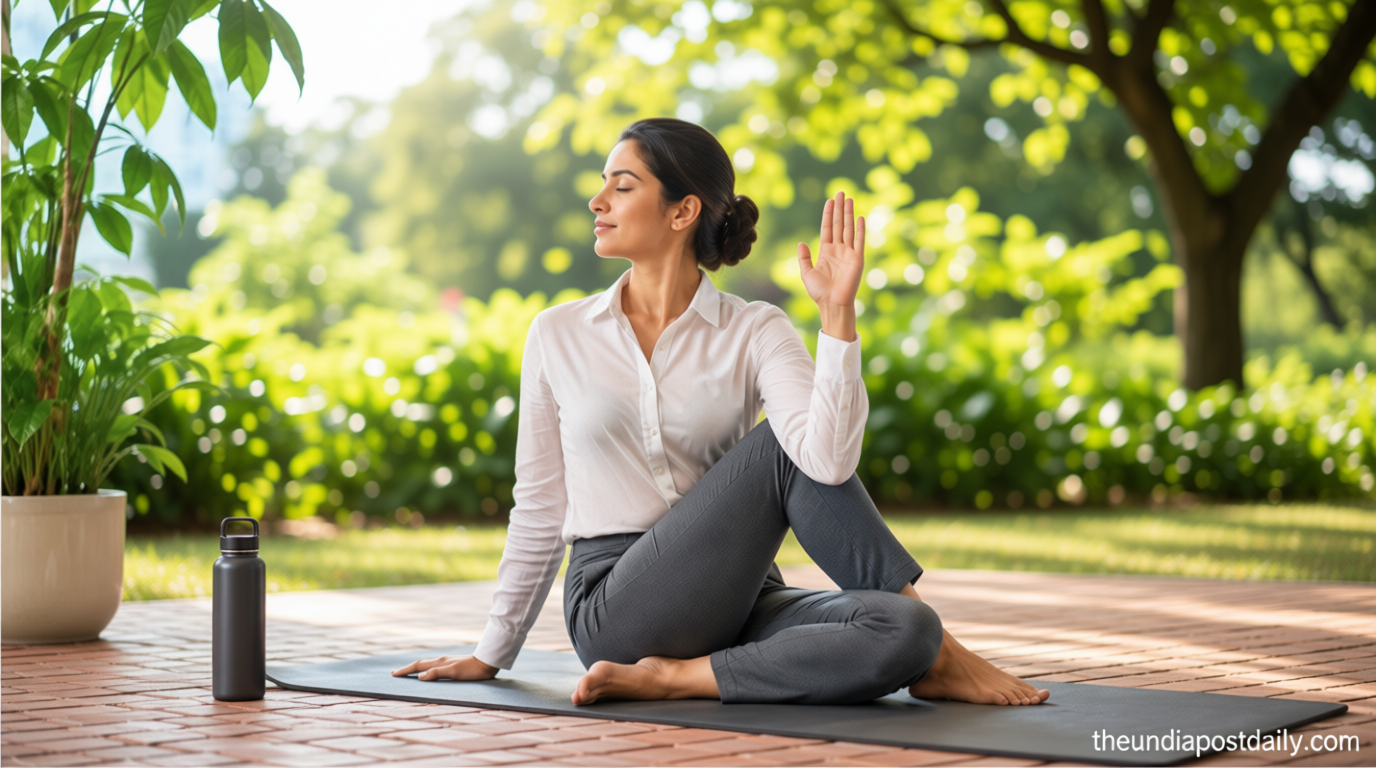
AI-Generated 12-Minute Yoga Routine for Office Workers
Theindiapostdaily.com – The International Day of Yoga, celebrated globally on June 21, prompted a reflection on the effects of prolonged sitting. For those who spend 8–10 hours daily hunched over laptops, the routine offers a practical solution to common discomforts tied to sedentary work.
The Prompt: A Workplace Wellness Quest
Requesting a concise, evidence-based approach to yoga for office workers, the user specified a need for a routine that addresses physical strain without demanding advanced flexibility or lengthy sessions. They emphasized:
“I want ChatGPT to act as a workplace wellness coach, ergonomics specialist, movement educator and realistic habit designer. Help me answer a question that feels small but quietly affects work, energy and long-term health: If I spend most of my day sitting in front of a laptop, which yoga positions actually make the biggest difference?”
The response focused on decompression over intense exercise, targeting recurring symptoms like tight necks, upper-back tension, rounded shoulders, and lower-back discomfort.
Why Decompression Matters
ChatGPT explained that extended sitting compresses the body, stiffening the spine and reducing breath depth. This leads to exhaustion from prolonged static postures, not physical fatigue. The 12-minute routine was crafted to counteract these effects, prioritizing accessibility and sustainability for busy professionals.
Key Poses for Laptop Workers
Below are five movements designed to alleviate tension and restore balance to the body:
Cat-Cow Pose
Target: Neck, upper back, lower back, core Why it works: Desk work limits spinal movement, so this pose reintroduces flexibility and circulation. How to do: Begin on hands and knees. Inhale to arch the spine, exhale to round it. Move slowly and deliberately. Common mistakes: Rushing through the motion or overextending the neck. Duration: 90 seconds Difficulty: 1/10 Relief expected: Within 2–3 minutes
Thread the Needle Pose
Target: Rear shoulders, thoracic spine Why it works: Rounded shoulders from laptop posture create tightness in areas rarely moved. How to do: Start on all fours. Slide one arm under the body, rest the shoulder and head. Maintain breath and relaxation. Common mistakes: Twisting the lower back or holding the breath. Duration: 60 seconds per side Difficulty: 2/10 Relief expected: 5–10 minutes post-practice
Low Lunge
Target: Hip flexors, glutes Why it works: Sitting shortens hip muscles and overworks the lower back. This pose stretches the hips while easing tension in the lumbar region. How to do: Step one foot forward, lower the rear knee, keep the torso upright, and gently shift the hips forward. Common mistakes: Leaning too far forward or arching the lower back excessively. Duration: 90 seconds per side Difficulty: 4/10 Relief expected: Immediate
Standing Forward Fold
Target: Hamstrings, lower back Why it works: This pose interrupts the rigid posture of sitting, promoting blood flow and relieving afternoon stiffness. How to do: Stand tall, hinge from the hips, and let arms hang naturally. Common mistakes: Locking the knees or forcing the head to touch the knees. Duration: 60–90 seconds Difficulty: 3/10 Relief expected: Almost instant
Viparita Karani
Target: Nervous system, calves, lower body recovery Why it works: This restorative pose addresses both physical fatigue and mental overactivity. How to do: Sit beside a wall, lie down, and raise legs vertically. Stay relaxed and focused. Common mistakes: Checking the phone or moving too quickly. Duration: 3–5 minutes Difficulty: 0/10 Relief expected: Excellent for evening resets
When to Practice
For optimal results, the routine can be integrated into: – Morning: To ease stiffness and establish consistency. – Midday: To boost productivity and prevent the 3 PM slump. – After work: To unwind and support recovery.
This approach ensures that even small, regular movements make a meaningful impact on long-term health and daily energy levels.