US-Iran peace deal: Is Switzerland meeting between both nations confirmed as Trump signs agreement? What we know
A historic US-Iran peace deal has taken shape as President Donald
US-Iran Peace Deal: Trump Signs Agreement in Switzerland Amid Tensions
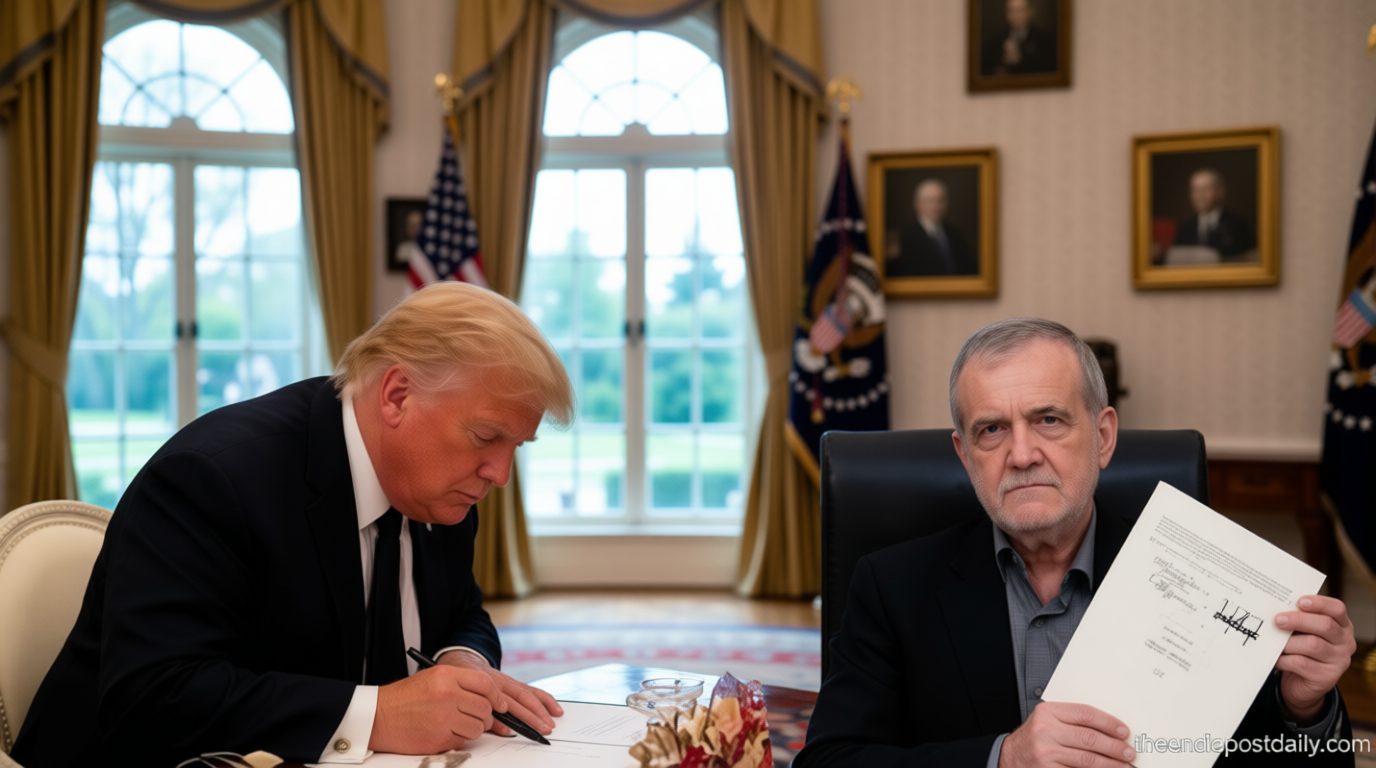
Theindiapostdaily.com – A historic US-Iran peace deal has taken shape as President Donald Trump finalized a memorandum of understanding (MoU) with Iran during a signing ceremony in Switzerland. While the US-Iran peace deal has sparked global interest, questions remain about its scope, timeline, and implications for the long-standing conflict between the two nations. Reports suggest the agreement was inked after negotiations that shifted from virtual to in-person, with the presidents of both countries affixing their signatures in a move that could mark a pivotal moment in bilateral relations.
Signing Process and Ambiguities
According to a White House official, the US-Iran peace deal was confirmed during the meeting at the Swiss embassy in Washington, D.C., where Trump and Iranian President Masoud Pezeshkian exchanged signatures. This followed earlier speculation that the deal would be signed in Switzerland, with Trump and Vice President JD Vance electronically endorsing it on Sunday. However, the US-Iran peace deal was finalized at Versailles, a site historically associated with peace treaties, which added symbolic weight to the agreement.
“The Friday meeting was confirmed until a few hours ago, but when it was decided that the presidents of the two sides would sign the agreement, it was decided to pause consideration of the Friday meeting for now,” Reuters cited Iran’s Foreign Ministry spokesperson Esmaeil Baghaei.
The shift in the signing location highlights the evolving dynamics of the negotiations. Although the US-Iran peace deal was signed in person, the nature of the document remains unclear. Some analysts suggest it may serve as a framework for broader negotiations, while others argue it could signal a more concrete resolution to ongoing hostilities. The decision to finalize the agreement at Versailles, rather than in Switzerland, has also raised questions about the role of the neutral country in the process.
Trump’s Strategic Objectives and Diplomatic Shift
During the press briefing, Trump emphasized that the US-Iran peace deal aims to address key issues including Iran’s nuclear capabilities, regional influence, and economic policies. He acknowledged Tehran’s right to enrich uranium, stating that the agreement would prevent the country from acquiring nuclear weapons, a primary concern for the United States and its allies. “It’s not our money,” Trump remarked, “it’s their money. And we froze it. At a certain point in time, I guess we’re going to have to give it back.”
“If we didn’t give it back, nobody would ever invest in the dollar again,” Trump added, underscoring the deal’s potential impact on global financial systems.
This US-Iran peace deal represents a strategic recalibration of American foreign policy in the Middle East. By unfreezing billions in assets held by Iran, Trump sought to enhance economic cooperation while maintaining leverage over Tehran’s nuclear ambitions. The move also reflects a shift from previous sanctions-focused approaches to a more balanced negotiation strategy, aiming to foster stability without compromising U.S. interests.
The US-Iran peace deal has reignited discussions about the 2015 Joint Comprehensive Plan of Action (JCPOA), the nuclear agreement that once united the U.S., Iran, and other global powers. While the new agreement does not fully revive the JCPOA, it addresses some of the same concerns, including nuclear proliferation and regional security. This has led to speculation that the US-Iran peace deal could serve as a foundation for renewed diplomacy, potentially paving the way for a more comprehensive accord.
Global Implications and Concerns
Analysts are closely examining the US-Iran peace deal for its potential to reshape regional alliances and global trade dynamics. If successful, the agreement could ease tensions in the Middle East, particularly in areas like Iraq and Lebanon where U.S. and Iranian interests often intersect. However, concerns remain about the deal’s long-term viability, given the unpredictable nature of U.S. foreign policy and Iran’s strategic goals.
“The US-Iran peace deal is a significant step, but it’s important to understand that both sides have different priorities. The U.S. wants to limit Iran’s nuclear program, while Iran seeks economic relief and geopolitical influence,” said a regional diplomat, highlighting the complexities of the agreement.
International reactions to the US-Iran peace deal have been mixed. While some countries welcomed the potential for reduced tensions, others expressed caution, fearing that the deal might not address all critical issues. The US-Iran peace deal is also seen as a test of Trump’s ability to deliver on his campaign promises, with its success hinging on both nations’ willingness to compromise and commit to the terms outlined in the MoU.
Next Steps and Future Outlook
Following the US-Iran peace deal signing, the next phase involves detailed discussions to finalize the agreement’s provisions. The White House has indicated that the deal is not a complete resolution but a starting point for broader negotiations. This could include commitments from Iran to limit its nuclear activities, along with U.S. assurances on economic cooperation and security guarantees.
“The US-Iran peace deal opens the door