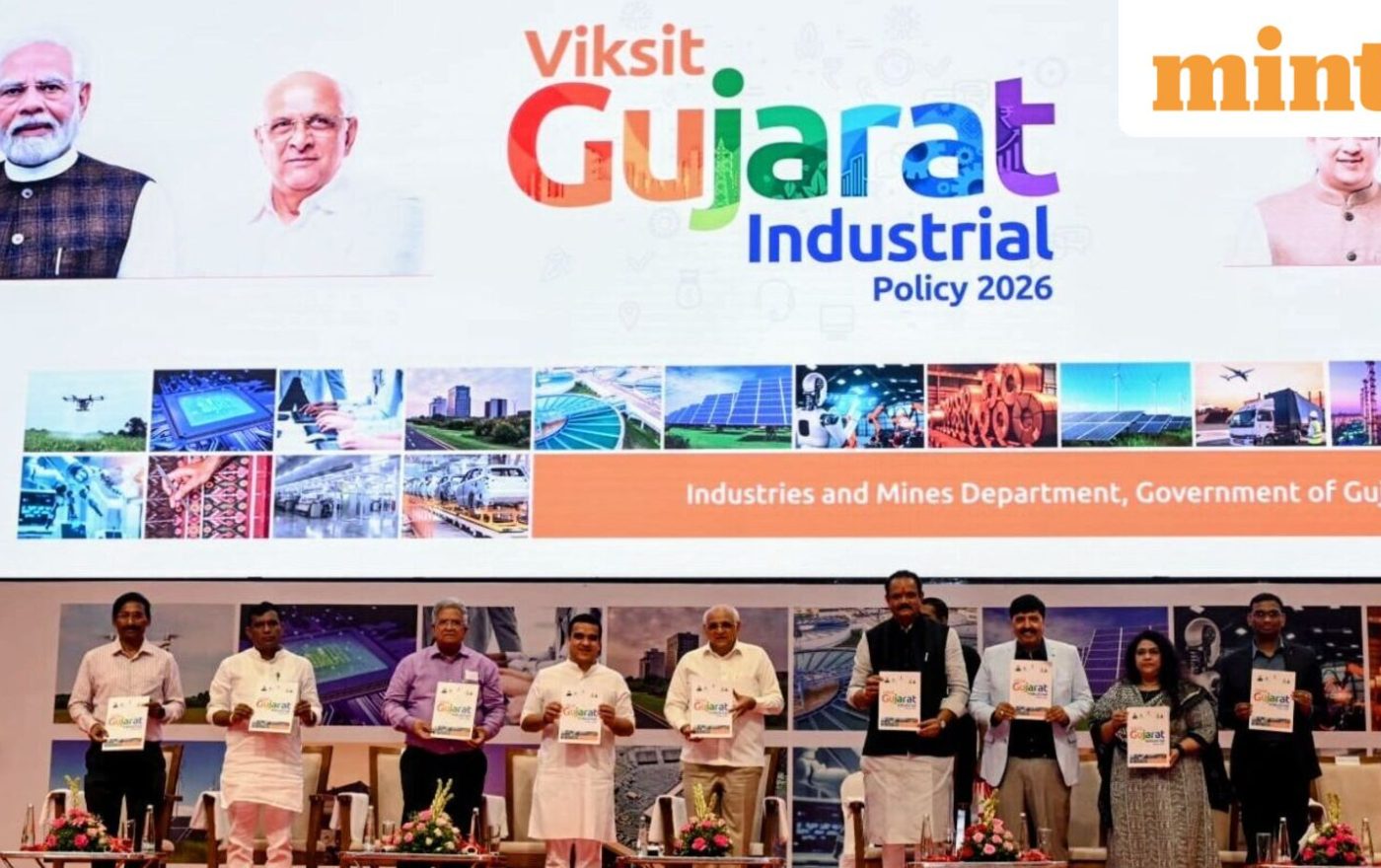
₹10 lakh crore investment target, startup sops, ultra-mega projects: Inside Gujarat’s new Industrial Policy 2026
₹10 Lakh Crore Investment Target: Gujarat's Industrial Policy 2026 Unveiled Theindiapostdaily.com – Following a strategic vision to boost economic growth, the Gujarat government has introduced the Viksit Gujarat Industrial Policy…
₹10 Lakh Crore Investment Target: Gujarat’s Industrial Policy 2026 Unveiled
Theindiapostdaily.com – Following a strategic vision to boost economic growth, the Gujarat government has introduced the Viksit Gujarat Industrial Policy 2026, aiming to attract a ₹10 lakh crore investment target within the next five years. This initiative aligns with the state’s ambition to achieve a $3.5 trillion economy by 2047, positioning Gujarat as a powerhouse for advanced manufacturing, innovation, and sustainable development. The policy offers a comprehensive framework designed to foster competitiveness, streamline processes, and create a conducive environment for both domestic and international businesses.
Startup Incentives and Gender-Driven Economic Growth
A central pillar of the policy is its robust support for startups, particularly those led by women. To encourage innovation and entrepreneurship, the government has introduced a monthly sustenance allowance of ₹25,000 for the first year, with an additional ₹30,000 per month for ventures spearheaded by female co-founders. High-impact startups may also benefit from seed funding up to ₹30 lakh or ₹40 lakh, depending on their sector, while green startups and technology-driven enterprises receive tailored benefits. These incentives reflect the state’s commitment to not only fostering economic resilience but also ensuring equitable growth through gender inclusivity.
“The Viksit Gujarat Industrial Policy 2026 is a game-changer for the state’s economic landscape, with the ₹10 lakh crore investment target serving as a key driver for sustainable and inclusive development,”
Women entrepreneurs are further empowered through rental assistance, which covers 75% of their annual rent up to ₹3 lakh for five years. This measure aims to reduce the financial burden on startups led by women, enabling them to focus on growth and innovation. By providing extended sustenance allowances of ₹30,000 per month for 1–2 years, the policy supports the creation of a dynamic ecosystem where diverse voices contribute to industrial progress.
Infrastructure Development and Global R&D Hubs
To solidify its role as a global R&D hub, the policy prioritizes infrastructure development, offering capital subsidies for projects such as construction, machinery, and equipment. These subsidies can cover up to 50% of eligible costs, with a maximum of 20% for building expenses. Land allotment benefits also extend to 25% reimbursement of the allotment price for government or private land, including sites like GIDC and Dholera, which are critical for industrial expansion. The emphasis on infrastructure underscores Gujarat’s vision of creating a robust foundation for future growth.
Payroll subsidies are another key component, providing ₹10,000 per employee monthly for three years. This support is tailored to encourage hiring and retention, with a cap of ₹15 lakh per patent across 25 patents over a decade. Such measures are designed to attract private investments and promote the development of industrial parks and green estates, ensuring that the state remains competitive in the global market. The ₹10 lakh crore investment target is supported by these incentives, which aim to align local industry needs with broader economic goals.
Ultra-Mega Projects and Sector-Specific Flexibility
The policy introduces a new category of “ultra-mega” projects, defined as investments exceeding ₹10,000 crore and creating at least 3,000 jobs. These projects gain flexibility in selecting a combination of subsidies, including capital, interest, and power tariff assistance, based on their financial structure and industry requirements. The ₹10 lakh crore investment target is reinforced through this framework, which allows businesses to optimize their investments while contributing to large-scale employment and infrastructure development.
For enterprises in key sectors, the policy sets a maximum incentive ceiling of 25% of eFCI for Category B Talukas and 35% for Category A Talukas. This approach ensures that large units can scale efficiently, while also aligning with Gujarat’s vision for a diversified and competitive economy. By integrating sector-specific incentives, the policy aims to attract a wide range of industries, from manufacturing to technology, to meet the ambitious ₹10 lakh crore investment target.
MSMEs and International Market Expansion
Recognizing the importance of micro, small, and medium enterprises (MSMEs), the policy revises their definition to match central government amendments. MSMEs are now incentivized to expand globally, with benefits such as up to 35% or 45% of eFCI available for eligible projects in Category B and Category A Talukas, respectively. This shift reflects the state’s strategy to support small businesses in leveraging the ₹10 lakh crore investment target to grow and compete on an international scale.
By focusing on industrial infrastructure, innovation, and MSME growth, Gujarat seeks to build a resilient economic ecosystem. The policy’s emphasis on global market expansion ensures that local enterprises can access new opportunities, while also attracting foreign investments. The ₹10 lakh crore investment target is a cornerstone of this strategy, designed to create a balanced and sustainable industrial landscape that benefits both the state and the nation as a whole.