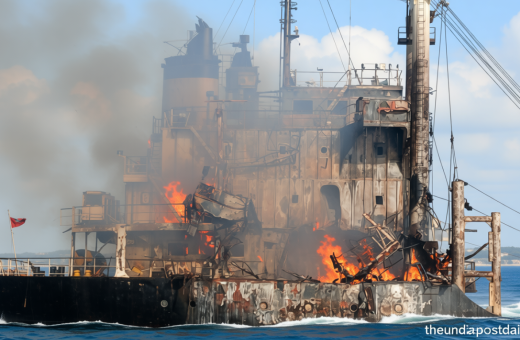
Mortal remains of Indian sailor who died aboard tanker off Oman coast brought to port
Indian Sailor's Mortal Remains Repatriated After Death Off Oman Coast Theindiapostdaily.com – The mortal remains of Indian sailor Nishant Uirthanathan have finally been brought to port following his untimely demise…

Indian Sailor’s Mortal Remains Repatriated After Death Off Oman Coast
Theindiapostdaily.com – The mortal remains of Indian sailor Nishant Uirthanathan have finally been brought to port following his untimely demise onboard a tanker near Oman’s coast. The 35-year-old seafarer, who succumbed to medical complications while serving on the MT Celestial, was transferred to the Port of Duqm, where he will be processed for repatriation to Tamil Nadu. The Forward Seamen’s Union of India (FSUI) has underscored the incident as a pivotal moment in highlighting maritime safety concerns and the welfare of seafarers in international waters.
The Indian Embassy in Muscat confirmed that Uirthanathan’s remains were removed from the vessel and sent to a hospital for further evaluation. The embassy has expressed deep condolences to his family, stressing the importance of swift repatriation procedures. Officials are working closely with local authorities to ensure the remains are handled with dignity, reflecting India’s commitment to supporting its maritime workforce during crises.
Medical Negligence Allegations and Crew Response
“The delay in addressing the sailor’s condition has raised serious questions about onboard medical protocols,” stated the FSUI in a recent social media post. “His deteriorating health was not acted upon promptly, despite repeated SOS signals from the crew.”
The union emphasized that Uirthanathan’s illness, which escalated over two days, was compounded by a three-day administrative delay in securing medical evacuation. Crew members, as captured in a viral video, were seen providing him with food while he appeared visibly weakened, sparking debates about the adequacy of emergency response measures on board. The incident has reignited calls for stricter guidelines to protect seafarers’ health during long voyages.
As the mortal remains of Indian sailor are prepared for final journey, the FSUI is urging maritime authorities to conduct a thorough review of the MT Celestial’s operational standards. The union has also launched a campaign to raise awareness about the importance of onboard medical preparedness, emphasizing that such tragedies could have been prevented with timely intervention.
Refrigeration Issues and Preservation Efforts
“The lack of proper refrigeration on the vessel has raised concerns about the preservation of the mortal remains of Indian sailor,” the FSUI added. “Crew members were forced to use cold water bottles to slow decomposition, highlighting the challenges faced during emergency situations.”
Details of the preservation process reveal that Uirthanathan’s body was wrapped in plastic sheets to maintain its condition during the waiting period. This method, while temporary, underscores the logistical challenges in ensuring the dignity of deceased crew members. The FSUI is now demanding better facilities for storing remains onboard until they can be repatriated, particularly in remote areas where medical support is limited.
The incident also serves as a reminder of the critical role refrigeration plays in maintaining the integrity of remains during transport. With the mortal remains of Indian sailor now in the hands of the Ministry of Health, further steps will be taken to ensure a respectful and efficient repatriation process, aligning with international standards for handling such cases.
Broader Context: A Pattern of Maritime Tragedies
Uirthanathan’s death comes amidst a series of maritime incidents that have drawn attention to the vulnerabilities of seafarers. Earlier this year, a U.S. strike on a tanker off Oman’s coast resulted in the loss of three Indian crew members, triggering widespread criticism of military operations in the region. Opposition leaders have since called for a review of India’s maritime policies, particularly in relation to the safety of its sailors during conflicts.
India’s Ministry of External Affairs has reiterated its concerns over the use of lethal force against civilian vessels, especially in light of the previous incident. This latest tragedy adds to the growing narrative of seafarer welfare, with experts advocating for improved communication channels and emergency response systems to prevent similar losses in the future. The mortal remains of Indian sailor now symbolize a collective call for accountability and reform in global maritime practices.