Google CEO and Stanford alumnus Sundar Pichai faces student protests at University’s commencement ceremony | Video
Sundar Pichai, Google CEO and Stanford Alumnus, Confronts Student Protests at Commencement Ceremony Unexpected Interruption During Speech Theindiapostdaily.com – Sundar Pichai, the CEO of Google and a Stanford University alumnus,…
Sundar Pichai, Google CEO and Stanford Alumnus, Confronts Student Protests at Commencement Ceremony
Unexpected Interruption During Speech
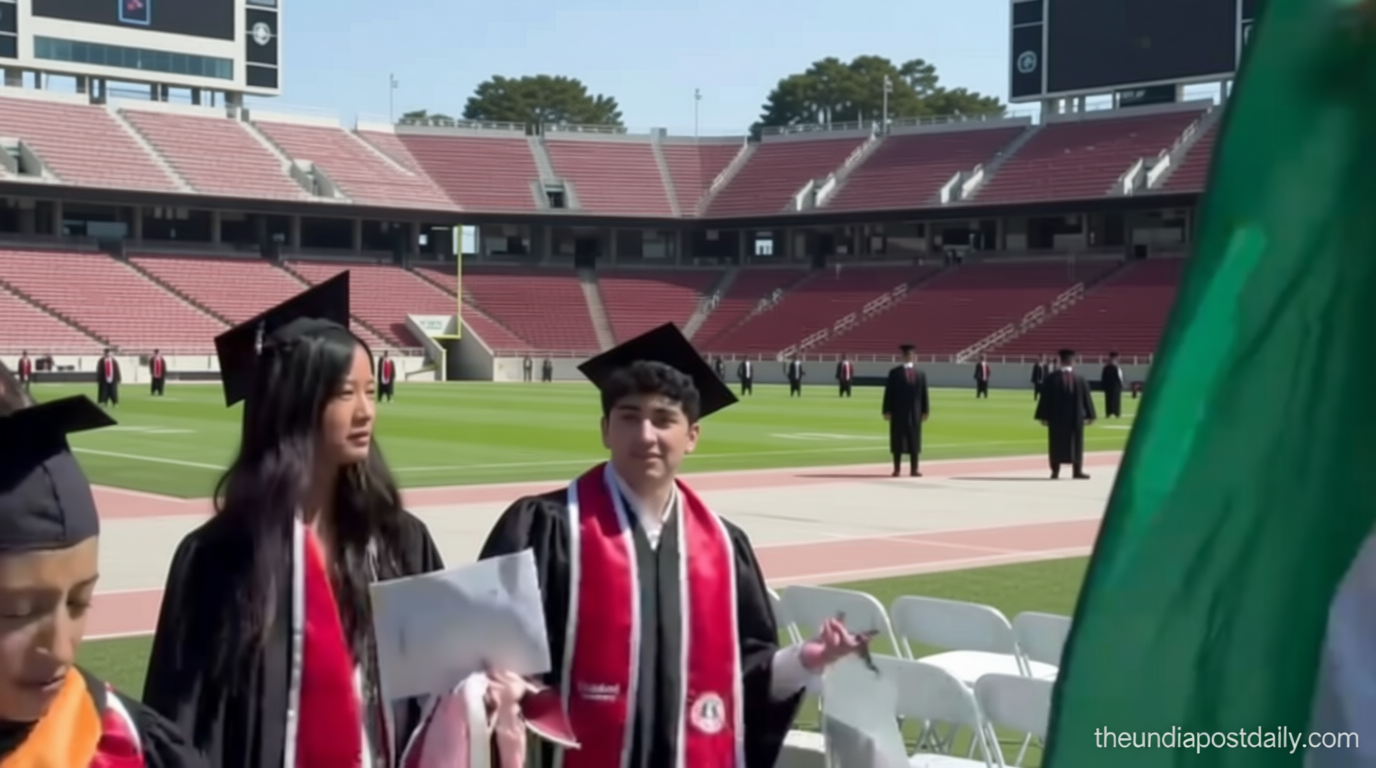
Theindiapostdaily.com – Sundar Pichai, the CEO of Google and a Stanford University alumnus, found himself at the center of a surprising disruption during the university’s commencement ceremony on June 14. As he delivered his keynote address to graduating students, a group of approximately 50 protesters exited the Stanford Stadium mid-speech, chanting “Free Palestine” in solidarity with the ongoing conflict in Gaza. The incident, captured in viral social media clips, highlighted growing tensions between corporate leadership and student activism at the prestigious institution.
Project Nimbus and Alleged Support for Israel
The protests were directly linked to Project Nimbus, a $1.2 billion initiative in cloud computing and artificial intelligence that the Israeli government has awarded to Google and Amazon. Stanford Students for Justice in Palestine (SJIP) had previously criticized the project for its potential role in bolstering Israeli military operations. The group’s decision to walk out during Pichai’s speech underscored their belief that the technology giant’s involvement in the project contradicts its commitment to global social justice. SJIP members argued that the funding supports infrastructure used in the Gaza war, prompting them to take a stand during the university’s annual celebration.
“This is only the second commencement speech I’ve ever given. The first was literally in my backyard,” Pichai remarked, his tone reflecting a blend of personal reflection and professional composure. Despite the interruption, he maintained his focus on themes of resilience and progress, framing the event as an opportunity to inspire graduates to face challenges with optimism.
Background of the Google-Sanford Connection
As a Stanford alumnus, Pichai’s return to the campus for the 135th commencement ceremony was notable. He graduated with a master’s degree in Materials Science and Engineering in 1995, a period when the university was already a hub for tech innovation. His speech, which emphasized adaptability and forward-thinking, was carefully crafted to align with his role as a leader in the tech industry. However, the protesters’ presence challenged the narrative of unity, drawing attention to the divide between corporate interests and student advocacy.
Reactions and Aftermath
The protest sparked immediate reactions from both students and university officials. While some graduates expressed support for Pichai’s vision, others joined the demonstrators in criticizing the tech giant’s ties to Israel. The event’s organizers faced scrutiny over their choice to invite Pichai, with critics arguing that the keynote speaker should have aligned more closely with the campus’s values. Meanwhile, Pichai’s decision to ignore the question from a BBC journalist about the protest added to the controversy, leaving his stance on the issue ambiguous.
Following the ceremony, the protesters gathered for an alternative event titled “The People’s Commencement.” The gathering featured Mahmoud Khalil, a pro-Palestinian activist who had been detained by U.S. immigration authorities for over 100 days in 2024 during his participation in Columbia University demonstrations. Khalil’s speech, which contrasted sharply with Pichai’s message of optimism, called for continued pressure on corporations to address their involvement in the conflict. The dual events underscored the polarized atmosphere surrounding the university’s choice of speaker.
Broader Implications for Corporate Influence
The incident at Stanford has reignited broader discussions about the influence of corporate leaders on academic institutions and public discourse. Pichai’s keynote, while highlighting technological progress, was juxtaposed with the protesters’ demand for accountability. Critics argue that such events risk normalizing corporate power, while supporters see them as a platform for dialogue between industry and academia. The contrast between Pichai’s polished speech and the raw emotion of the protest offers a compelling case study in the balance between innovation and activism.
With over 300,000 followers on social media, Pichai’s speech was widely broadcast, amplifying the impact of the disruption. The viral footage of the protesters in academic regalia, paired with his uninterrupted remarks, created a powerful visual narrative. Meanwhile, the university’s decision to host the alternative event demonstrated its willingness to accommodate diverse viewpoints, even as it faced backlash for the initial choice of speaker. As the debate continues, the event is remembered as a pivotal moment in Stanford’s history of student-led activism and corporate engagement.