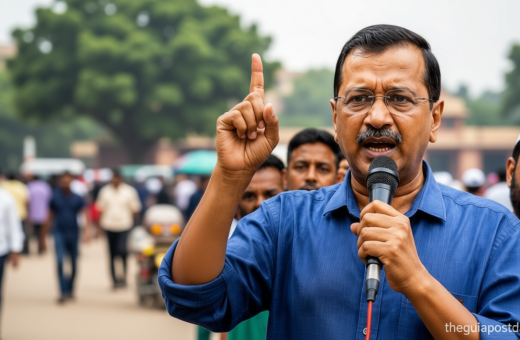
After Anthropic blocks access to Mythos, Fable 5, Zoho’s Sridhar Vembu says ‘Bharat must find its own way ahead’
After Anthropic Blocks Access to Mythos, Sridhar Vembu Calls for India’s Tech Sovereignty After Anthropic blocks access to Mythos - Following the U.S.

After Anthropic Blocks Access to Mythos, Sridhar Vembu Calls for India’s Tech Sovereignty
Theindiapostdaily.com – Following the U.S. government’s recent export control order, which restricts access to Anthropic’s advanced AI models Fable 5 and Mythos 5 for all foreign nationals, Indian tech leaders and online communities have debated the implications. The directive, effective immediately, suspends access not only for non-U.S. citizens but also for foreign employees of Anthropic, including those working in India. This move has raised concerns about the global reach of American AI dominance and its potential impact on India’s technological autonomy. The restriction underscores a growing emphasis on controlling access to critical AI systems, positioning them as strategic assets in international competition.
Vembu’s Emphasis on National Security and Sovereignty
Sridhar Vembu, former CEO of Zoho Corp, took to social media to express his views on the export controls. He framed the decision as a pivotal moment in the tech sector, asserting that national security and sovereignty are now deeply tied to control over cutting-edge AI technologies. “Technology is the ultimate weapon,” Vembu stated, arguing that access to advanced models like Mythos and Fable 5 has become a battleground for global power. His remarks highlight a broader sentiment that countries must safeguard their technological infrastructure from external influences, especially when those systems are integral to strategic decision-making.
A Shift Toward Self-Reliance in AI Development
Vembu’s critique extends beyond the immediate restrictions, targeting the trajectory of globalization. He suggested that the move signals the end of unbridled tech collaboration, urging India to embrace self-reliance in AI innovation. “Globalisation is dead, and Bharat must find her own way ahead,” he wrote, advocating for the development of smaller, locally crafted AI models. This approach, he argued, would reduce dependency on foreign systems and ensure that India’s digital future remains within its control. By prioritizing domestic AI solutions, the country could better align its technological capabilities with its geopolitical goals.
“With a bit of effort, we can make them work,” Vembu added, questioning companies that limit access to their technology. “Why pay money to people who don’t even want to sell to you?” His argument resonates with Indian developers and policymakers, who view the restrictions as a catalyst for rethinking reliance on U.S.-based AI platforms. The move has sparked discussions about how to accelerate the creation of indigenous AI systems that meet the demands of India’s growing tech ecosystem.
Social Media Reactions and Concerns Over Censorship
Online discourse has been polarized, with users expressing both apprehension and criticism. Some likened the event to “9/11 for techbros,” emphasizing its symbolic weight in the tech world. Others speculated that the decision was linked to Anthropic’s upcoming IPO, suggesting it might be a strategic move to bolster its market position. A third perspective highlighted the irony: “No killer robots for the Pentagon. US gov: Then no model for anyone. Gold medal in mutual pettiness. Nobody wins.”
Censorship worries have also emerged. One user remarked, “And the government censorship of AI models begins, just like I warned. Anthropic’s Fable 5 is now essentially outlawed, since even Anthropic cannot guarantee the nationality of user accounts. This is the US government beginning its effort of mass censorship of AI models. Before long, they will ban China-based open source models, too. Mark my words.” These comments reflect fears that the restrictions could set a precedent for broader control over AI technologies, potentially affecting not just India but also global open-source innovation.
Anthropic’s Defense and the Implications for Global AI Standards
In response, Anthropic defended its decision, stating that no security testers had discovered a “universal jailbreak” to bypass its safeguards against hackers. The company argued that a narrow potential vulnerability in its systems shouldn’t justify halting deployment for millions of users. “We disagree that the finding of a narrow potential jailbreak should be cause for recalling a commercial model deployed to hundreds of millions of people,” the firm said. It warned that applying this standard broadly would “essentially halt all new model deployments for all frontier model providers.”
“The restrictions are a temporary measure to ensure the security of our models,” Anthropic clarified, while acknowledging the broader geopolitical tensions surrounding AI. The firm emphasized that its decision was part of a global effort to balance innovation with risk management, particularly in an era where AI systems are increasingly central to international power dynamics. However, critics argue that such measures could stifle progress and give the U.S. an edge in shaping the future of AI governance.
The Broader Geopolitical Context of AI Regulation
The U.S. export control order comes amid Anthropic’s ongoing legal disputes with the Trump