‘A victory for every teacher’: Cockroach Janta Party after teacher suspended over attending protest gets job back
A Victory for Every Teacher: CJP Secures Teacher’s Return After Protest Suspension Reversed Theindiapostdaily.com – In a significant development, the Cockroach Janta Party (CJP) has emerged victorious in its campaign…
A Victory for Every Teacher: CJP Secures Teacher’s Return After Protest Suspension Reversed
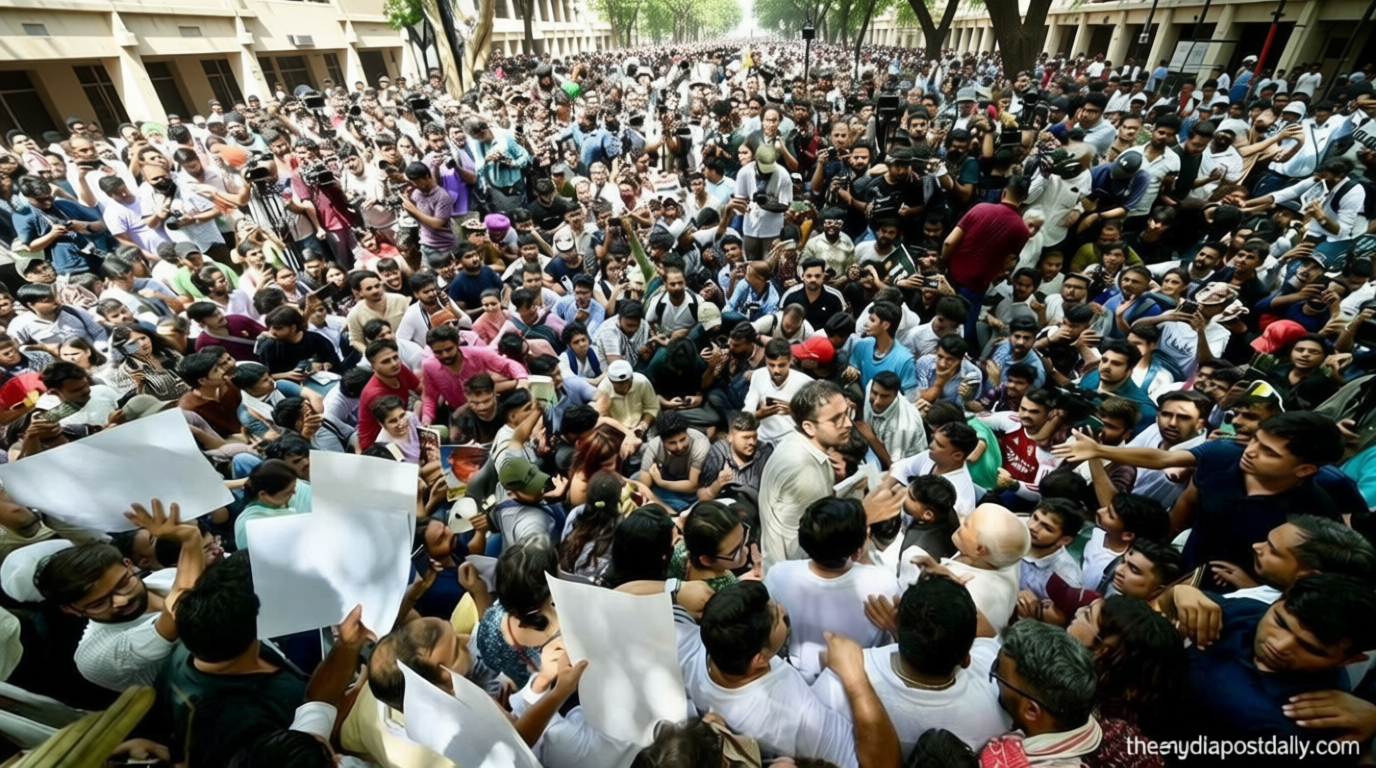
Theindiapostdaily.com – In a significant development, the Cockroach Janta Party (CJP) has emerged victorious in its campaign to restore the professional standing of Sulekha Dalal, a Haryana teacher suspended for participating in a protest at Jantar Mantar in New Delhi. The suspension, issued on June 10, was swiftly overturned as the CJP highlighted the injustice of penalizing educators for peacefully supporting student causes. Dalal, an advocate for the party, joined the demonstration on June 6, which focused on concerns surrounding national exams. The decision to revoke her suspension has been hailed as a “victory for every teacher”, symbolizing a broader recognition of the right to protest and the importance of civic engagement in education reform.
Protest Over Exam Controversies Sparks National Debate
The protest on June 6 brought together teachers, students, and parents to address alleged flaws in exam systems such as NEET, CUET, and CBSE board assessments. Participants accused the Education Ministry of mismanaging the exams, citing incidents of paper leaks and irregularities that affected students’ performance. Dalal’s involvement in the event was seen as a catalyst for the administration’s decision to suspend her, with officials pointing to violations of conduct rules as the justification. However, the CJP argued that her actions were a legitimate exercise of freedom of speech and assembly, essential to the democratic process.
“We are delighted that Sulekha Dalal’s suspension was revoked, marking a ‘victory for every teacher’ in standing up against unfair disciplinary actions,” said CJP spokesperson Saurav Das, emphasizing the party’s commitment to protecting citizens’ rights. The spokesperson added that the reversal of the suspension demonstrated the government’s willingness to reconsider its stance on protest-related penalties.
Teacher’s Defense: Advocacy for Student Rights
Dalal defended her suspension by highlighting her motivation: to advocate for students impacted by the exam controversies. She explained that her participation in the protest was driven by personal experience as a mother of a 21-year-old preparing for competitive exams. “I could not remain silent when my child’s future was at stake,” Dalal stated. Her actions were framed as a collective effort to demand transparency and fairness in exam administration, a cause she believed was critical to ensuring educational equity.
“I had gone to Delhi only to raise my voice for our children who are being harassed due to paper leaks,” Dalal remarked. “No one should be punished for peacefully supporting the youth and raising questions about the system that affects their livelihoods.” Her words resonated with many who felt the suspension was disproportionate, particularly in light of the growing concerns over exam integrity and its consequences for students.
CJP’s Constitutional Stand: Protest as a Fundamental Right
The CJP’s intervention underscored its stance on upholding constitutional rights, particularly the freedom to protest and express dissent. In a statement, the party criticized the suspension as an attack on the rights of educators and citizens, arguing that such actions force individuals to choose between their professional duties and their moral responsibilities. “This incident is not just about one teacher but about the broader erosion of rights that allow peaceful protest,” said the CJP’s official channel, emphasizing the importance of solidarity in times of injustice.
The party also called for greater transparency in the disciplinary process, stating that vague references to “conduct rules” were being used to silence dissent. “When a teacher is suspended for participating in a protest, it sends a chilling message to others who dare to speak out,” the statement noted, positioning the case as a symbolic moment in the fight for educational accountability and freedom of expression.
Legal and Public Reactions: A Call for Systemic Change
The reversal of Dalal’s suspension has sparked renewed discussions about the balance between public protest and professional conduct. While the CJP framed the decision as a win for democratic values, some officials remain skeptical, arguing that the protest was an opportunity for educators to raise concerns without disrupting school operations. However, the event has galvanized public opinion, with social media platforms amplifying the message of “a victory for every teacher” and others joining the call for systemic reforms in exam governance.
Legal experts have also weighed in, noting that the case highlights a growing trend of penalizing teachers for their activism. “This incident reflects a shift in how authorities view educators’ roles beyond just teaching,” said one law professor, who added that the CJP’s success could inspire similar challenges across the country. Meanwhile, Dalal’s return to duty has become a rallying point for teachers’ unions, who are now pushing for clearer guidelines on protest-related disciplinary actions.
Broader Implications for Education and Civic Engagement
As the CJP continues to champion the cause, the case of Sulekha Dalal has become a microcosm of larger debates about civic responsibility in education. The suspension and its reversal have reignited conversations about the importance of teachers as advocates for students and the role of public protests in holding institutions accountable. With over 400,000 educators in India, the event has shown that even a single act of protest can carry significant weight in shaping policy and public sentiment.
The victory for Dalal is not just personal but emblematic of a movement advocating for equitable treatment of teachers and students. “This is a reminder that no one should be punished for standing up for what is right,” said a CJP member, reinforcing the theme of “a victory for every teacher”. The party’s actions have set a precedent, encouraging others to take a stand against perceived injustices in the education system and beyond. As the dust settles, the focus remains on ensuring that such incidents become rare, fostering an environment where teachers can freely support their students’ aspirations without fear of reprisal.