When humanoid robot fell during Kung Fu China demo, losing part of leg – What went wrong? Chinese social media reactions
When humanoid robot fell during a kung fu-themed demonstration in China, the incident quickly drew attention online. Unitree Robotics’ H2-X humanoid lost
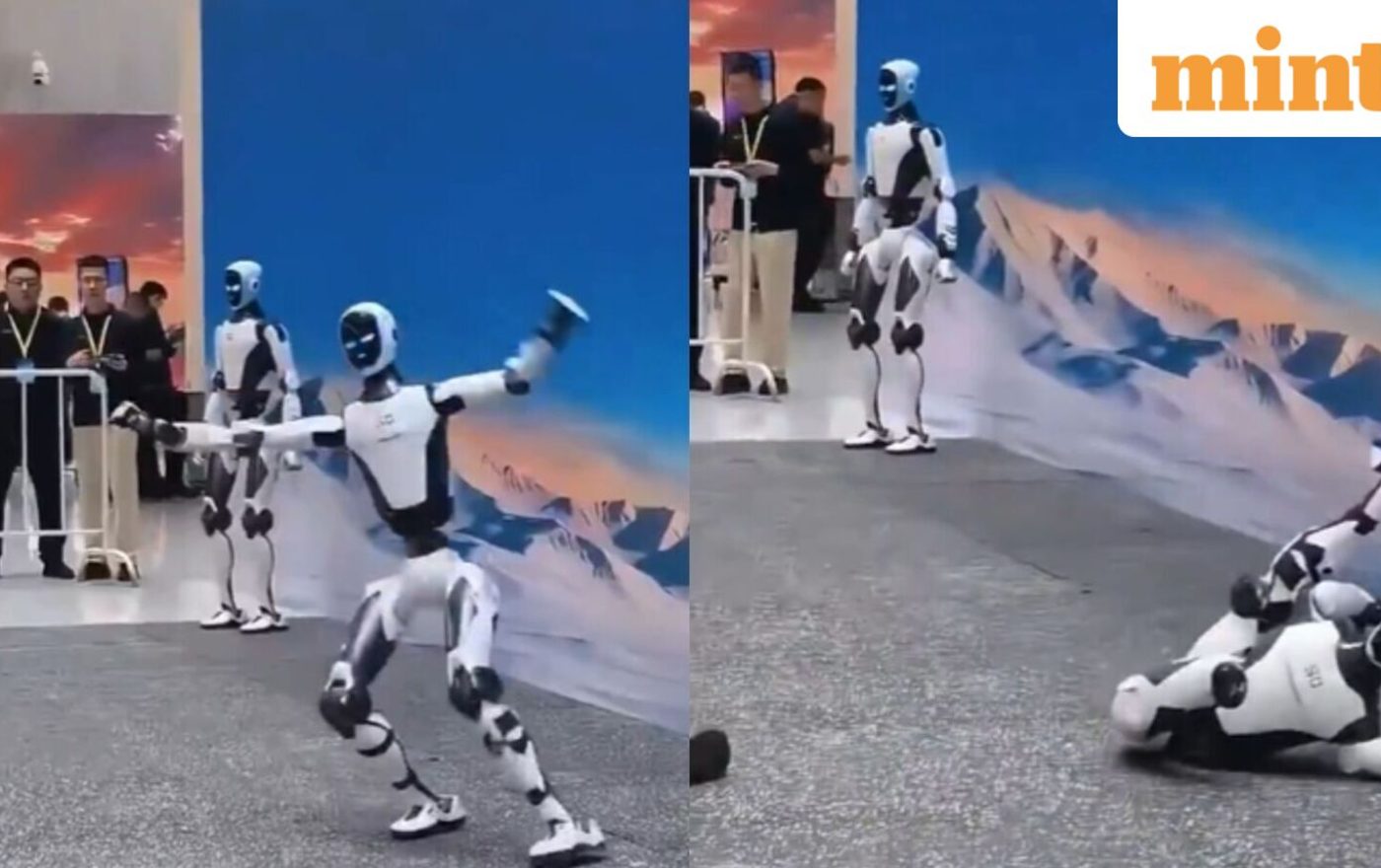
When Humanoid Robot Fell During a Kung Fu Demo
Theindiapostdaily.com – When humanoid robot fell during a kung fu-themed demonstration in China, the incident quickly drew attention online. Unitree Robotics’ H2-X humanoid lost balance while attempting a side flip, and part of one of its legs detached during the fall at an event in Hangzhou, Zhejiang Province.
The mishap happened on 22 October at the 2026 World Physical AI Conference & Unitree Partner Ecosystem Summit. Although the demonstration was designed to show the robot’s agility, the failure highlighted the difficulty of making humanoid machines perform rapid, high-impact movements reliably in public settings.
What happened during the Unitree robot demonstration?
When humanoid robot fell during the side-flip attempt, it appeared to lose stability before landing, placing severe stress on its leg structure. The visible damage became a focal point because the H2-X had been promoted as a capable humanoid platform for physically demanding tasks.
Humanoid robots rely on sensors, motors, software and joints working together in real time. A small error in balance, timing or landing force can create enough pressure to damage mechanical parts, particularly during athletic actions such as flips, kicks and jumps.
Chinese social media reacts to the robot fall
Discussion of the video spread on Sina Weibo, where users offered mixed reactions. Some said the failure showed that developers still need to improve the robot’s motion-control systems and physical durability before similar machines are used more widely.
Others argued that a failed live performance should not overshadow the wider progress being made in humanoid robotics. Commenters pointed to the need for stronger structures, improved movement algorithms, material durability, backup protections and more extensive testing.
The reaction reflected a larger question for the industry: impressive demonstrations can attract attention, but real-world applications require dependable performance. A robot intended to work around people or in changing environments must do more than complete a dramatic movement once.
H2-X was introduced a day before the incident
Unitree unveiled the H2-X on 21 October, one day before the conference demonstration. Promotional material showed the humanoid kicking a car door, lifting the front of a vehicle and performing a flip after jumping from a platform of about four metres.
The company has positioned the robot for potential security and emergency-rescue work. Those uses would require predictable movement, robust hardware and safe operation near people, equipment and unpredictable obstacles.
When humanoid robot fell during the demonstration, it therefore raised questions beyond the spectacle of a stage mishap. The incident also underscored how much testing and engineering refinement may be needed before humanoid robots can take on physically demanding jobs outside controlled demonstrations.
Unitree chief sees a major moment for embodied AI
At the event, Unitree Robotics founder and chief executive Wang Xingxing spoke about the broader future of embodied artificial intelligence. He said robots able to understand and perform real-world tasks could help push the field into a new phase.
“Physical artificial intelligence is showing signs of a breakthrough, most likely within the next one to two years, or two to three years.”
Wang also said embodied intelligence could have its own “ChatGPT moment” as early as next year. He said Unitree is developing an AI system intended to help humanoid robots improve themselves.
Live robot performances have exposed similar problems
The H2-X incident was not the only public setback involving humanoid robots. Live events can be especially challenging because they demand precise timing, quick reactions and movements performed close to audiences or other participants.
In May, a humanoid robot malfunctioned during a Future Era show in Shenzhen while dancing to Michael Jackson’s “Billie Jean.” It tripped over a step, briefly recovered and continued, but fell again in the same area. A human assistant later removed the inactive robot from the stage.
At a sports day in northwest China’s Xinjiang Uygur Autonomous Region, another robot fell while attempting kung fu-style kicks as children entered the field. In a separate incident in Shaanxi Province on Saturday, 21 March, a Unitree robot moving near an audience accidentally struck a young boy in the face while swinging its arms.
FAQ: What does the robot fall mean?
Why did the humanoid robot lose part of its leg?
The available footage showed the H2-X losing balance during a side flip. The impact and unusual force created during the failed landing likely contributed to the visible mechanical damage, though Unitree had not detailed the precise technical cause.
Does the fall mean humanoid robots are not ready for practical work?
Not necessarily. When humanoid robot fell during a live display, it demonstrated the limits of a difficult movement rather than proving that all robots are unusable. However, the event showed why reliability, safety testing and durable design are essential before robots take on demanding public-facing or emergency roles.
Why are kung fu and acrobatic demonstrations difficult for robots?
Acrobatic moves require accurate balance, rapid adjustments and components that can withstand strong forces. Even a minor error in sensing, software control or mechanical performance can cause a robot to fall or damage itself during a landing.