US Army sounds alarm: Why America is preparing for attacks on its own soil
The US Army is preparing for a conflict environment in which American forces may have to withstand attacks inside the United States before they can even begin
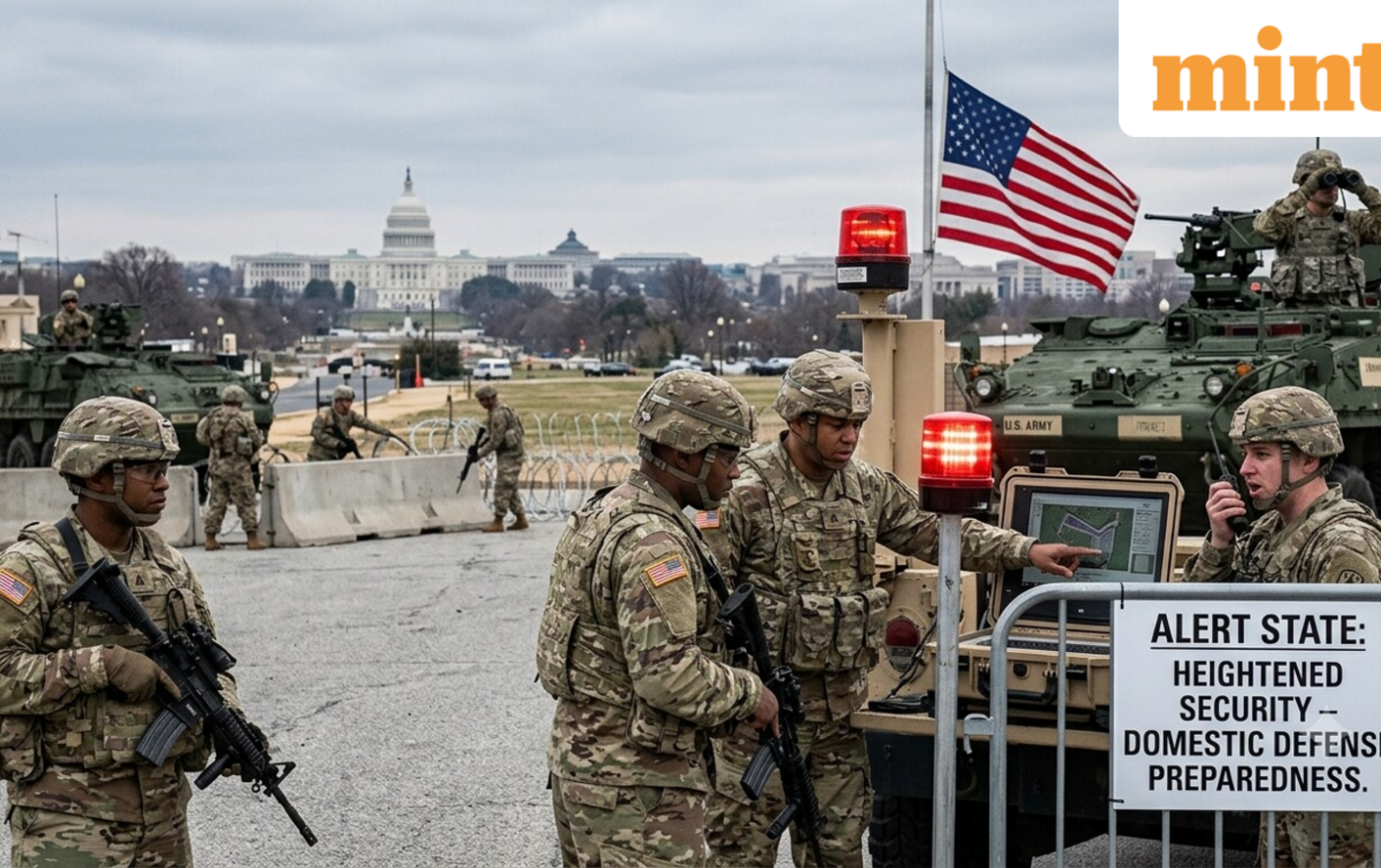
US Army Reassesses Homeland Risks as Future Wars Become More Connected
Theindiapostdaily.com – The US Army is preparing for a conflict environment in which American forces may have to withstand attacks inside the United States before they can even begin moving overseas. Senior military leaders are increasingly focused on the possibility that drones, cyber operations, long-range strikes and rapidly improving surveillance systems could disrupt bases, transport routes and communications networks during a major confrontation.
Gen. Christopher LaNeve, the Army’s acting chief of staff, has said that deploying forces against a major rival—especially China—could prove far more difficult if the systems supporting mobilisation are targeted from the outset. The concern is not limited to combat units. It also extends to the installations, logistics networks and communications links that allow the military to assemble, equip and move personnel and supplies.
“If we’re going against a pacing threat, power projection will be contested,” LaNeve said on Wednesday.
A different challenge from recent conflicts
For much of the wars in Iraq and Afghanistan, US forces operated with substantial confidence that domestic bases, transportation systems and supply arrangements would remain secure. That experience shaped many assumptions about how troops and equipment could be prepared for deployment.
LaNeve said those assumptions are now being reconsidered. A confrontation involving a technologically capable competitor could create disruptions far from any overseas front line, affecting the ability to deploy, communicate and maintain operations.
“During the Global War on Terror, we took a lot of things for granted, because we could,” he said.
The shift reflects a broader recognition that military readiness depends on more than the condition of individual units. Aircraft, ships, rail lines, ports, digital networks, warehouses and command systems can all influence how quickly the United States can respond in a crisis. If any of those elements are interrupted, deployments could be delayed and commanders could face more uncertainty while forces are in motion.
China remains central to mobilisation concerns
China is the primary “pacing threat” referenced by Army leaders, a term used to describe the competitor shaping long-term US military planning. A potential conflict would test whether American forces can operate across vast distances while facing threats to infrastructure and communications.
The Pentagon’s most recent assessment of China’s military capabilities warned that Beijing has placed cyber capabilities within US critical-infrastructure networks. Such access could potentially be used to interfere with American mobilisation in the event of a conflict.
That prospect has increased attention on homeland defence and the security of military facilities. The issue is not simply whether installations can defend against a physical strike. It also involves whether the military can keep operating if civilian infrastructure, data systems or transportation links become unreliable.
For the public, the discussion underscores how modern conflict can reach beyond traditional battlefields. Military planning increasingly considers the resilience of the systems that support armed forces at home, including the ability to adapt when communications are degraded or supply routes are interrupted.
Army framework calls for operating through disruption
The Army’s “How the Army Fights” operational framework is designed to provide clearer guidance for training, combat operations and the use of emerging technology. Its central message is that forces must be ready to deploy and sustain themselves even when key military systems are under pressure.
The framework places emphasis on functioning through degraded communications, disrupted logistics and damage to military infrastructure. Rather than treating those conditions as exceptional, the Army is seeking to build them into routine preparation and planning.
“It was important to get this document out to provide a direction for our Army, a stake in the ground in where we’re moving,” LaNeve said.
The service is also incorporating biological incidents into standard combat training. The goal is to prepare troops for disease outbreaks or deliberate biological attacks that could interfere with military activity. Such events could affect personnel availability, movement and the ability to sustain operations, making them a planning concern alongside cyberattacks and conventional strikes.
Surveillance advances could reshape military movement
Military leaders are also watching the speed of progress in surveillance technology. Air Force Secretary Troy Meink warned that tracking tools could make it increasingly difficult for forces to remain unseen, regardless of where they are operating.
“We are rapidly heading to a point in time where, depending on what your signature is, how fast you’re moving, the enemy is going to have some sense to where you are no matter where you are on the planet,” Meink said.
He suggested that this level of capability could emerge within five years, and potentially sooner, as China and other adversaries improve their ability to follow military assets. If movement becomes easier to detect, forces may need to place greater emphasis on mobility, camouflage, deception and the ability to keep functioning after being located.
The implication is that the challenge of protecting troops will not be limited to avoiding direct attack. Commanders may also have to assume that their locations, movements and operational patterns can be identified more quickly than in previous eras.
Technology cannot replace trained soldiers
War Secretary Pete Hegseth criticised the Pentagon’s record on adapting to new military technologies under the previous administration. He argued that the United States had fallen behind in several fields that could shape future conflict.
“On hypersonics, they took a nap. On space, they took a nap. On weaponization of space, they took a nap. On drones, they took a nap,” Hegseth said.
LaNeve nevertheless stressed that advanced systems should enhance troops rather than become a substitute for basic military competence. Communications tools, drones and other technologies may be valuable, but they can be unavailable, disrupted or destroyed during a conflict.
“Soldiers are our number one platform. It is the Army’s platform,” LaNeve said.
The Army’s emerging approach therefore combines investment in technology with renewed emphasis on fundamental combat skills. The objective is to ensure that troops can continue their missions when digital networks fail, supply chains are strained or high-tech tools are no longer available. As the military plans for more contested conditions, resilience at home and adaptability in the field are becoming inseparable parts of readiness.
Related Reading
Frequently Asked Questions
What is US Army sounds alarm?
US Army sounds alarm is the main topic of this guide. The article explains the context, practical details, and next steps readers should understand.
Why does US Army sounds alarm matter?
US Army sounds alarm matters because readers are looking for a useful answer, not just a short summary. Good content should match search intent and help them decide what to do next.