In a first, Ladakh grows saffron on a large scale: Why are Iranian corms being tested on barren land? Know importance
In a first Ladakh grows saffron on a large scale through a new cultivation experiment in Leh. The initiative is examining whether the high-value spice can
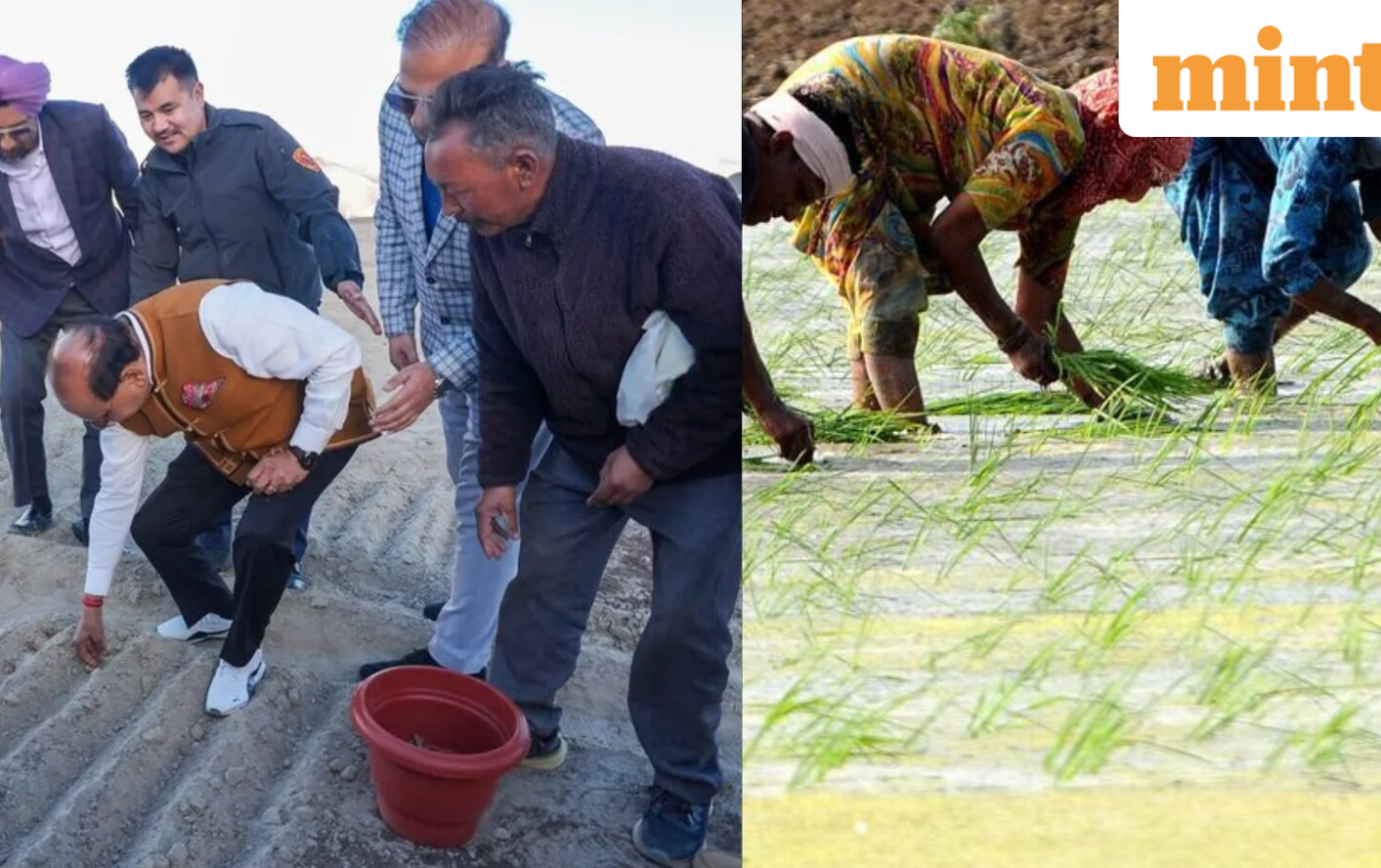
Ladakh Tests Large-Scale Saffron Cultivation on Reclaimed Land
Theindiapostdaily.com – In a first Ladakh grows saffron on a large scale through a new cultivation experiment in Leh. The initiative is examining whether the high-value spice can thrive in Ladakh’s cold desert conditions, where low rainfall, harsh winters and a short farming season limit agricultural choices.
Nearly 90,000 premium saffron corms imported from Iran, weighing about 800 kg, have been planted across 4,000 square metres at Spituk Pharka in Leh. The plantation has been developed on land restored for agricultural use under Project Him Sarovar.
“I am pleased to announce an ambitious experiment of introducing saffron cultivation to Ladakh, for the very first time, on a large scale,” Lieutenant Governor Vinai Kumar Saxena said in a post on X.
Why Ladakh is testing Iranian saffron corms
Saffron grows from corms and requires close attention during planting, flowering, harvesting and post-harvest handling. Its high market value makes it a significant crop to explore in regions where conventional farming faces difficult climatic and geographical conditions.
The Iranian corms were chosen after their potential suitability for Ladakh’s high-altitude environment was assessed. The project follows nearly two years of work by the Ladakh administration and scientific institutions to understand whether saffron cultivation can succeed in the Union Territory.
In a first Ladakh grows saffron as part of an effort to identify new income opportunities for farmers, young people and self-help groups. However, the trial must establish that the crop can adapt well to local conditions and become commercially viable.
Scientific trials expand from Leh to Kargil
Scientific work on saffron cultivation in Ladakh had begun before the large-scale planting in Leh. In March 2025, the administration said the Council of Scientific and Industrial Research–Indian Institute of Integrative Medicine, or CSIR-IIIM, was conducting cultivation trials in the region.
The proposed collaboration with CSIR-IIIM is focused on commercial viability and identifying saffron varieties suited to Ladakh’s growing conditions. These assessments are important because a crop’s performance can differ considerably between locations, even at comparable altitudes and temperatures.
Kargil has also been included in the wider saffron initiative. In September 2025, the Agriculture Department and CSIR-IIIM distributed saffron corms to progressive farmers in the district and provided training on scientific cultivation and post-harvest practices.
By involving farmers in Kargil, the programme is exploring whether saffron could complement agricultural activity in more than one part of Ladakh. The work remains a trial, with results depending on crop growth, yield and long-term economic feasibility.
How Project Him Sarovar supports saffron farming
The Spituk Pharka plantation is linked to Project Him Sarovar, launched in April to strengthen water conservation in Ladakh’s mountainous landscape. The project is designed to capture and retain water from snowfall and glacial melt through the development of water bodies.
A water body at Spituk Pharka was inaugurated in June at an elevation of around 11,500 feet. It is expected to support irrigation and help bring previously unproductive land into cultivation.
Water availability is a central concern for Ladakh’s farmers. Limited precipitation, severe weather and a narrow cultivation window make irrigation infrastructure essential for expanding farming activity. The saffron experiment therefore also tests whether water conservation and land restoration can create practical new agricultural opportunities.
What successful saffron cultivation could mean for Ladakh
If the crop establishes well, In a first Ladakh grows saffron could become a milestone for agricultural diversification in the region. A viable saffron crop may offer farmers an additional high-value option in an area where climate and terrain restrict many conventional crops.
For now, the outcome will depend on scientific evaluation, the performance of the Iranian corms, irrigation support and the ability of growers to manage cultivation and post-harvest processing. The Leh plantation and Kargil trials are expected to provide the evidence needed for future decisions.
FAQ: Ladakh’s saffron cultivation trial
Where is saffron being grown in Ladakh?
The large-scale plantation is located at Spituk Pharka in Leh, on land restored through Project Him Sarovar.
How many saffron corms were planted?
Nearly 90,000 Iranian saffron corms, weighing around 800 kg, were planted over 4,000 square metres.
Why is the trial important for Ladakh farmers?
The trial could help determine whether saffron can become a commercially viable, high-value crop that diversifies local agricultural incomes.
Is saffron cultivation also being explored in Kargil?
Yes. The Agriculture Department and CSIR-IIIM distributed saffron corms and provided cultivation and post-harvest training to progressive farmers in Kargil in September 2025.