Texas hasn’t elected a Democrat to US Senate since 1988: Two polls show Republican candidate trailing in midterms
Texas Democrats have not won a US Senate contest since Lloyd Bentsen secured re-election in 1988, but early polling for the 2026 midterms suggests the party
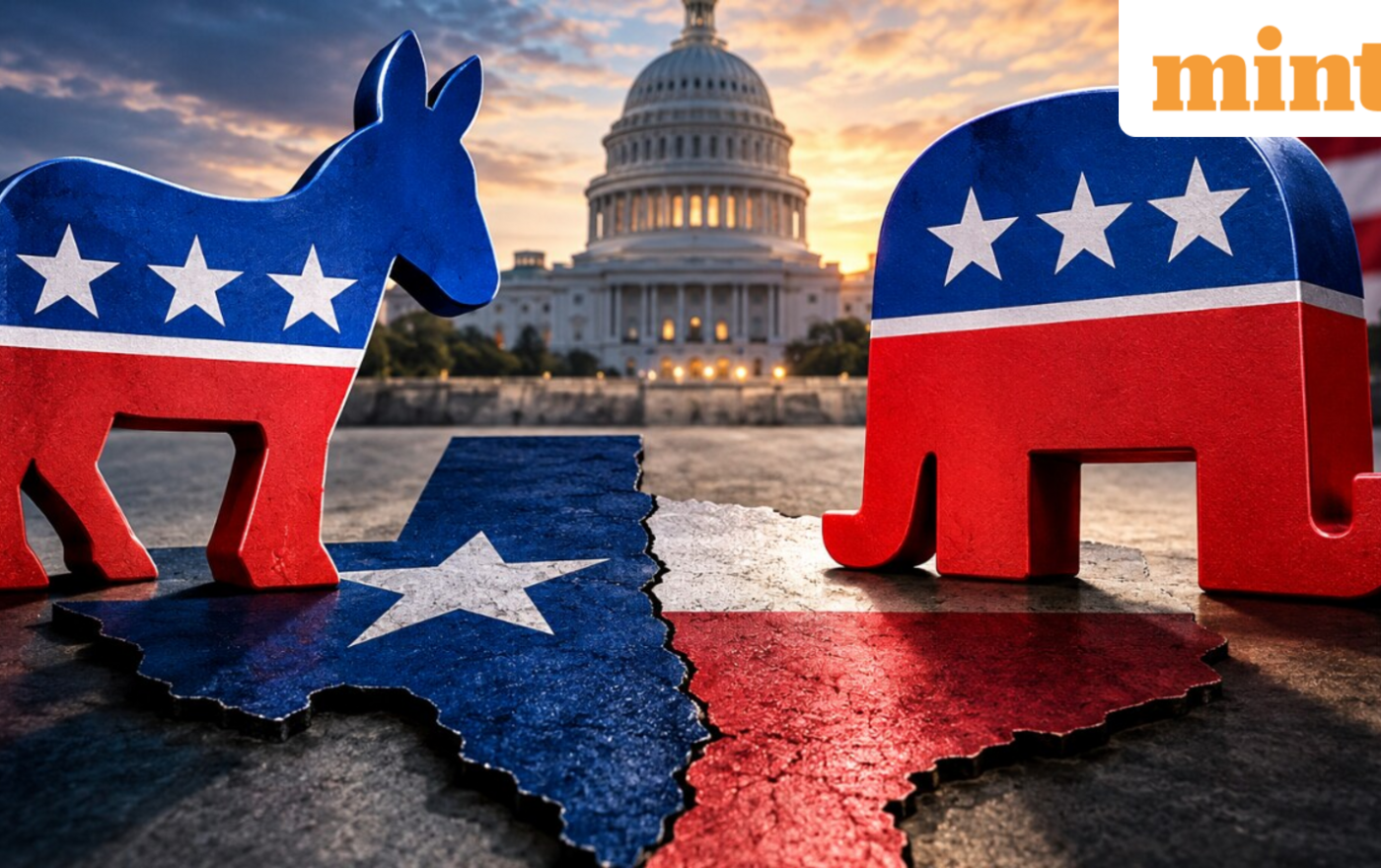
Talarico Holds Narrow Edge in Texas Senate Race as Paxton Faces Voter Resistance
Theindiapostdaily.com – Texas Democrats have not won a US Senate contest since Lloyd Bentsen secured re-election in 1988, but early polling for the 2026 midterms suggests the party may have an opening. Democrat James Talarico is running ahead of Republican Ken Paxton in two recent surveys, a notable shift in a state where statewide Republican victories have been the norm for decades.
The results do not establish that Texas is becoming a Democratic state. Instead, they point to a race shaped by Paxton’s poor personal standing, fractures among Republican voters, Talarico’s appeal with several important groups, and widespread concern about household finances.
A tight contest among likely voters
A survey of Texas likely voters conducted from September 24 through September 28 gave Talarico a 51% to 49% advantage over Paxton. Because the poll’s margin of error is three percentage points, the two-point difference indicates an extremely close race rather than a settled outcome.
The Democrat’s position was stronger among registered voters, where he held a seven-point lead. That marked an improvement from July, when his advantage among that group stood at three points.
A second survey, conducted from September 21 to September 30 by The New York Times and Siena University, placed Talarico six points ahead. Taken together, the polls have intensified attention on whether Democrats can finally end their long statewide losing streak in Texas during the 2026 election cycle.
For either party, the path forward remains demanding. Texas has a large and politically diverse electorate, and turnout will be especially important in determining whether early voter sentiment carries through to Election Day. A small polling lead can disappear quickly when partisan loyalty, campaign spending and voter participation begin to play a larger role.
Personal ratings create a major contrast
The candidates’ favorability figures reveal one of the clearest reasons for the competitive race. Talarico posted a net positive rating of eight points among likely voters. Fifty-two percent viewed him favorably, while 44% viewed him unfavorably.
Paxton faced a substantially different picture. His favorable rating stood at 40%, compared with an unfavorable rating of 58%, producing a net negative score of 18 points. That gap matters because statewide races often require candidates to win not only reliable supporters but also independents, moderates and voters who may be uneasy about their own party’s nominee.
Republicans were six times as likely to hold an unfavorable view of Paxton as Democrats were to view Talarico unfavorably. The finding suggests Paxton’s problem is not limited to opposition-party voters. His image may also complicate efforts to consolidate the Republican coalition in a state that has traditionally rewarded GOP candidates.
Republican divisions could shape the outcome
The race also shows signs of tension within the Republican electorate. Non-MAGA Republicans were more than five times as likely as MAGA Republicans to support Talarico, with 22% backing the Democrat compared with 4% among MAGA Republicans.
Another warning sign for Paxton appeared among voters who supported Republican Senator John Cornyn in the March primary. One-fifth of those likely voters now support Talarico. In a narrowly divided contest, defections of that size could be significant, particularly if Democrats retain their core support while attracting a portion of Republicans dissatisfied with their party’s nominee.
Paxton’s challenge is therefore broader than energizing conservative voters. He also must reduce opposition from within the GOP and persuade Texans who do not identify strongly with either party. The durability of those divisions will be one of the most closely watched features of the campaign.
Moderates, younger voters and Hispanic Texans favor Talarico
Talarico’s advantage extends beyond Democratic voters. Sixty-five percent of moderates supported him, giving him a substantial lead among a group that can prove decisive in close statewide contests.
He also performed strongly with Hispanic voters, receiving 64% support. Among Texans younger than 35, Talarico led with 62%, while 79% of Black voters backed him. These groups provide a potential foundation for a Democratic coalition, although converting support into turnout will remain essential in a midterm election.
Paxton’s strongest support came from White evangelical Christians, White men without college degrees, rural voters and Texans aged 65 and older. Those constituencies remain central to Republican strength in Texas, and their turnout could offset Democratic gains elsewhere.
The demographic pattern underlines why the contest remains competitive rather than predictable. Talarico has shown appeal among groups that could expand the Democratic vote, while Paxton retains important advantages with voters who have long formed the backbone of Republican statewide victories.
Trump’s standing adds another complication
Donald Trump won Texas by nearly 14 percentage points in 2024, demonstrating the state’s continuing Republican lean at the presidential level. Yet his current approval rating in Texas is negative in the survey of likely voters: 44% approved of his performance and 55% disapproved.
The polling showed an uneven relationship between Trump attitudes and the Senate contest. Fifteen percent of voters who disapproved of Trump still supported Paxton. By comparison, 9% of Texans who approved of Trump backed Talarico. A September survey from Texas Southern University also placed Trump’s approval rating seven points below water in the state.
Trump remains influential in Texas politics, but the numbers suggest that support for the president does not automatically settle the Senate race. Paxton will need to maintain his connection with Republican voters while addressing concerns among Texans who may support the GOP in presidential elections but remain skeptical of his candidacy.
Cost of living becomes a central campaign issue
Economic pressure is another important dividing line. Seven in 10 Texans identified the cost of living as extremely important to their Senate decision. That level of concern gives both campaigns a strong incentive to focus on everyday expenses and financial security.
More voters said they were falling behind financially than said they were getting ahead, by 35% to 16%. Texans who felt they were falling behind favored Talarico by 32 points. Those who said they were advancing financially backed Paxton by 48 points.
Talarico also led among voters who considered the cost of living, artificial intelligence and Trump extremely important to their choice. Paxton held a 20-point advantage among voters who viewed immigration as extremely important.
The election is still well ahead, and early surveys are only a snapshot of current voter attitudes. But the numbers show why this Texas Senate race has attracted unusual attention: a Democratic candidate has a measurable lead in a state where his party has spent nearly four decades trying to reclaim a Senate seat.
Related Reading
Frequently Asked Questions
What is Texas hasn t elected a Democrat?
Texas hasn t elected a Democrat is the main topic of this guide. The article explains the context, practical details, and next steps readers should understand.
Why does Texas hasn t elected a Democrat matter?
Texas hasn t elected a Democrat matters because readers are looking for a useful answer, not just a short summary. Good content should match search intent and help them decide what to do next.