CJP’s Oct 2 Mumbai protest: What are its demands besides Gyanesh Kumar’s resignation?
The Cockroach Janta Party (CJP) has announced plans to press for the resignation of Chief Election Commissioner Gyanesh Kumar through a protest scheduled for
CJP sets out demands ahead of Mumbai protest over Election Commission
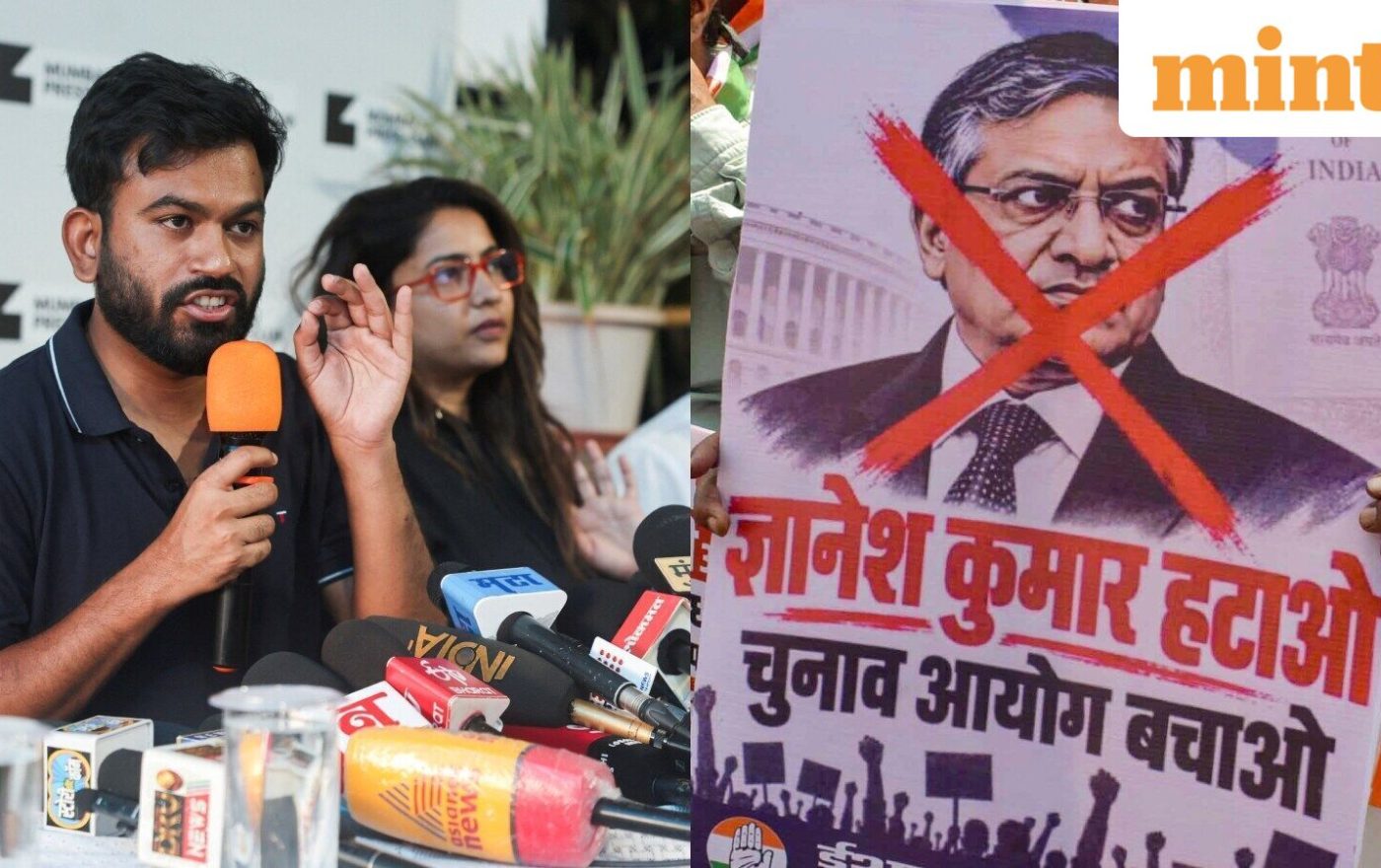
Theindiapostdaily.com – The Cockroach Janta Party (CJP) has announced plans to press for the resignation of Chief Election Commissioner Gyanesh Kumar through a protest scheduled for October 2 at Shivaji Park in Mumbai’s Dadar area. The action is part of a broader campaign in which the group is also seeking changes to electoral-roll procedures and the legal framework governing the Election Commission.
CJP leader Abhijeet Dipke outlined the party’s position during a media briefing at the Mumbai Press Club on Thursday. He said the organisation would widen its agitation across India if its demands were not addressed.
Three demands placed before the Election Commission
Dipke, along with CJP members Saurav Das and Ashutosh Ranka, set out three principal demands on September 25. The first calls for Gyanesh Kumar to leave office and for criminal proceedings to be initiated against him.
The party’s second demand is that the Special Intensive Revision, or SIR, process should be paused and that the voter list from January 2025 should be restored. Its third demand seeks withdrawal of the 2023 legislation related to the Election Commission, alongside reforms to the institution.
The CJP has argued that the Election Commission, under Kumar’s leadership, is not acting in the country’s interest. Its campaign has emerged amid claims of differences inside the Election Commission and criticism over the panel’s functioning.
The Election Commission has rejected suggestions that it is internally divided. In its response, it said all three election commissioners shared a common position on its decisions, including matters connected with the SIR exercise.
Uncertainty over Shivaji Park gathering
It remains unclear whether the planned Mumbai event can go ahead at Shivaji Park. Mumbai Police previously said on X that it could not authorise a gathering at the venue because of a 2013 Bombay High Court order.
“Permission has been denied because Mumbai Police is not empowered to grant permission for any gathering at Shivaji Park.”
The police advised the applicant to explore another location, pointing to potential issues involving crowd control, traffic disruption and noise.
Dipke has described the denial of permission as an attempt to curb the movement. He said the CJP would begin a “Jail Bharo Andolan” in Mumbai on Gandhi Jayanti if it was prevented from exercising its right to protest.
“If we are denied the right to protest, CJP will launch a Jail Bharo Andolan in Mumbai on Gandhi Jayanti.”
The dispute over the venue places the proposed demonstration at the centre of a larger question: how political groups can make their demands visible while authorities manage public order in one of India’s busiest cities. A refusal at a particular venue does not itself settle the political dispute, but it can shape the scale, location and public impact of a protest.
Campaign may extend to several states
Dipke said the CJP’s campaign would continue until Kumar resigns. He named Goa, Karnataka, West Bengal, Uttar Pradesh, Bihar and Jharkhand as states where further protests are planned. If Kumar remains in office, the group intends to stage a protest at Jantar Mantar in Delhi from the end of October.
He also called for a more transparent method of appointing the Chief Election Commissioner, with civil society involved in the process. The demand links the immediate call for Kumar’s resignation to a wider argument about public confidence and oversight in election administration.
For voters, the dispute has brought attention to the Special Intensive Revision of electoral rolls. Electoral rolls determine who is eligible to vote in a constituency, making their preparation and revision central to the conduct of elections. The CJP’s call to return to the January 2025 list reflects its objection to the present SIR process, while the Election Commission has maintained agreement among its members on decisions tied to that exercise.
Delhi and Mumbai actions add to political pressure
A separate protest at Jantar Mantar in Delhi has also been proposed for October 2 by social activists and student groups. That gathering is focused on concerns surrounding the Election Commission’s functioning and the SIR of electoral rolls. Permission from Delhi Police had not yet been granted.
Mumbai is expected to see another election-related mobilisation days later. The Maharashtra Navnirman Sena and Shiv Sena (UBT) are scheduled to hold a morcha against the Election Commission on October 4.
Opposition parties in the INDIA bloc are preparing their own campaign from October 2 through October 8. Congress president Mallikarjun Kharge said after a meeting of the alliance that district-level “Save Democracy” marches and demonstrations would be organised outside district magistrates’ offices during that period.
The overlapping actions underscore how disputes involving election administration, voter-roll revision and institutional accountability have become a growing focus of political mobilisation. The immediate question in Mumbai is whether the CJP can secure a lawful venue for its October 2 programme; beyond that, the group has indicated that its protest campaign will move to other states and potentially to the national capital.
Related Reading
Frequently Asked Questions
What is CJP s Oct 2 Mumbai protest?
CJP s Oct 2 Mumbai protest is the main topic of this guide. The article explains the context, practical details, and next steps readers should understand.
Why does CJP s Oct 2 Mumbai protest matter?
CJP s Oct 2 Mumbai protest matters because readers are looking for a useful answer, not just a short summary. Good content should match search intent and help them decide what to do next.