Russia-Ukraine war: Moscow’s decree forces pvt businesses to opt for air-defense systems to defend against drone attacks
Ukraine’s expanding drone campaign is pushing the consequences of the war far beyond Russia’s front lines, with private businesses now being drawn into the
Russian Companies Turn to Air Defences as Drone Threat Reaches Deep Into the Economy
Theindiapostdaily.com – Ukraine’s expanding drone campaign is pushing the consequences of the war far beyond Russia’s front lines, with private businesses now being drawn into the task of protecting industrial sites, warehouses and transport infrastructure.
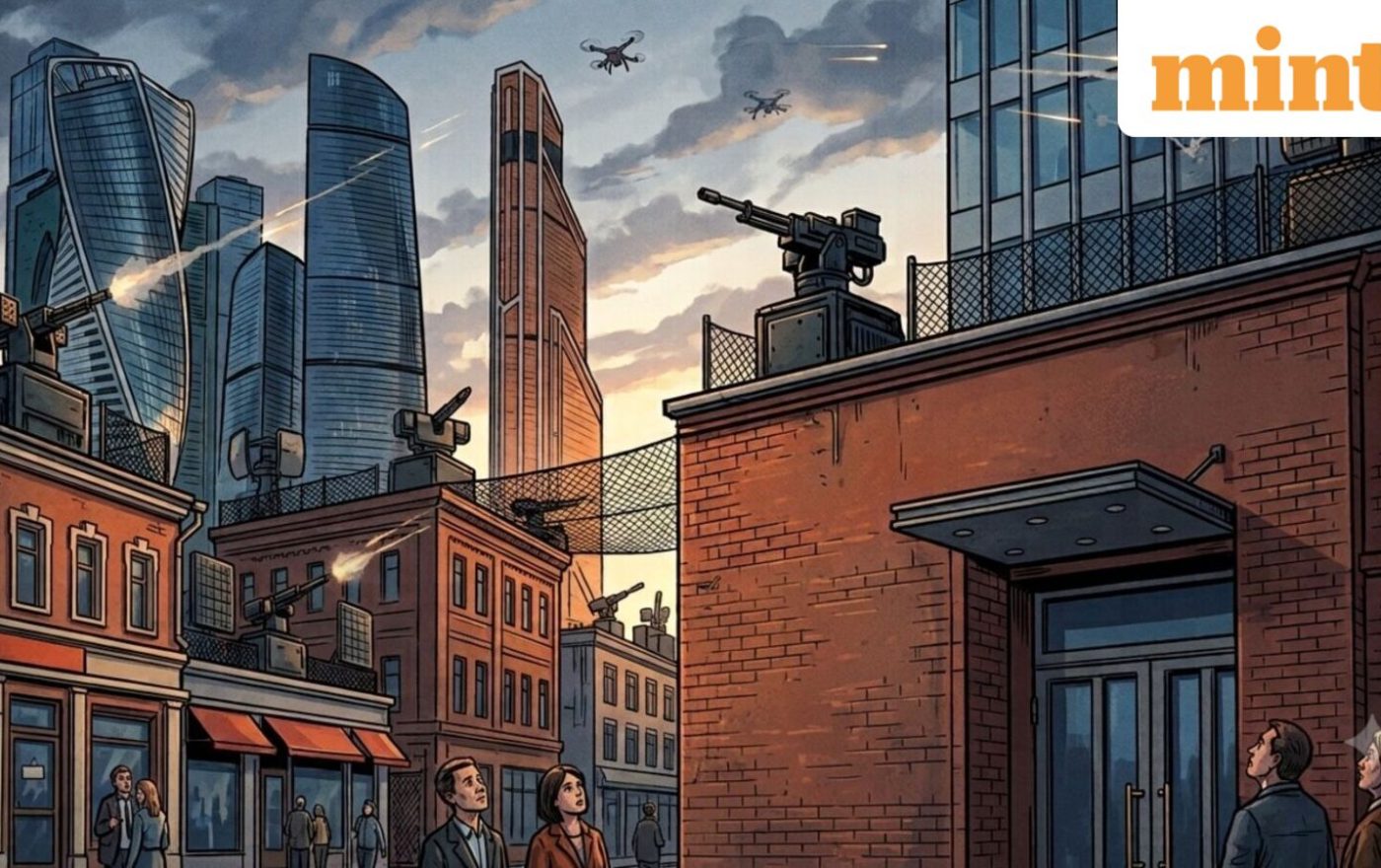
A Kremlin decree issued last month requires companies across Russia to take steps to defend their own facilities from Ukrainian drone attacks. Businesses that do not assume responsibility for such protection could face temporary seizure, the order warned. The policy reflects a significant shift in how Moscow is handling security risks inside the country: private employers are increasingly expected to address threats once viewed primarily as a military responsibility.
The pressure has grown as Ukrainian strikes reach deeper into Russian territory and target facilities with economic and logistical value. Refineries, industrial plants and distribution hubs have all become potential targets, creating new costs and operational concerns for companies far from active combat zones.
Steel producer’s response signals wider change
One of the clearest examples came earlier in 2026, when a Ukrainian drone targeted a major Russian steel producer. Alexei Mordashov, the owner of Severstal, brought in an air-defence system to protect the company’s largest mill on the outskirts of Moscow.
That decision illustrated the growing role of private industry in Russia’s domestic air-defence efforts. Large companies are no longer focused only on conventional business risks such as supply disruptions, staffing pressures or damaged property. They must also consider how to identify, deter and respond to aerial threats.
For Moscow, the challenge is partly geographic. Russia’s enormous territory has historically offered strategic depth against invading armies, including those led by Napoleon and Adolf Hitler. In the age of long-range drones, however, the same scale can make comprehensive protection difficult. Defending every industrial zone, transportation route and major facility across such a vast area places heavy demands on existing air-defence resources.
Leasing systems and building new capabilities
Companies are pursuing different strategies to improve protection. Some are leasing air-defence systems from defence firms, while others are working with engineers to create less costly counter-drone arrangements for individual sites.
One option allows businesses to make monthly payments to the Defence Ministry for access to a system. Other companies are seeking technical help from defence-sector specialists to assemble their own protective equipment. The approach chosen can depend on a facility’s location, the value of its assets and the level of perceived exposure to drone activity.
Spending has risen rapidly. During the first half of 2026, Russian businesses spent more than 440 million rubles on counter-drone systems, a sevenfold increase from the corresponding period a year earlier. The growing market highlights how the conflict is creating new security expenses for commercial operators and reshaping demand within Russia’s defence industry.
The Finance Ministry has also considered tax incentives that could help companies manage the expense of drone protection and repairs after strikes. Such measures would acknowledge that the financial burden is no longer confined to government agencies or the armed forces. Businesses may face costs for surveillance equipment, physical upgrades, security staff, insurance-related losses and interruptions to production or delivery schedules.
New security roles appear in private-sector hiring
The changing threat environment is also altering job descriptions. Security guards and other employees are being assigned duties related to aerial monitoring, while some employers are advertising for personnel who can spot and shoot down drones.
Listings on Avito, a Russian online classifieds platform, include jobs for guards responsible for patrolling sites, watching the sky and responding to suspected drone activity. One position in the Moscow region advertises a starting monthly salary of 240,000 rubles, nearly $3,000, in addition to signing and performance bonuses.
Jobs connected to protecting the Crimean Bridge can offer more than twice that amount. The bridge links Russia to the Crimean peninsula, which Moscow annexed in 2014. Some vacancies require workers to enter one-year contracts with the Defence Ministry, while stating that they will not be sent to frontline combat areas.
The broadening of these roles shows how security work is changing under wartime conditions. What was once a conventional guard position may now involve observation of the airspace above a facility, communication with authorities and the use of specialised counter-drone tools.
Postal workers included in expanded defence planning
The Kremlin’s approach extends beyond industrial employers. Earlier this month, the decree said postal workers would be permitted to carry weapons for use against drones. It did not identify the types of weapons they could carry.
The provision underlines the extent to which Moscow is seeking to distribute defensive responsibilities among civilian and commercial institutions. It also raises practical questions over training, oversight and coordination when people outside the military are asked to play a role in responding to aerial attacks.
Ukraine increases pressure with drone production
Kyiv has sharply expanded drone manufacturing, giving its forces greater ability to conduct attacks well inside Russian territory. Since March 2026, Ukrainian drones have carried out roughly 200 strikes on Russian refineries and hit about 36 logistics centres.
Among the logistics sites affected were facilities linked to Ozon and Wildberries, two of Russia’s largest online retailers. Attacks on such locations can have effects beyond the immediate physical damage, potentially disrupting supply routes, delaying deliveries and forcing companies to reconsider how they protect key operations.
As drone warfare develops, the line between military security and commercial continuity is becoming less distinct. Russia’s new policy places more of the immediate defensive burden on private entities, while businesses confront a costly and unfamiliar requirement: protecting their operations from a conflict that is increasingly visible inside the country’s economic centres.
Related Reading
Frequently Asked Questions
What is Russia Ukraine war?
Russia Ukraine war is the main topic of this guide. The article explains the context, practical details, and next steps readers should understand.
Why does Russia Ukraine war matter?
Russia Ukraine war matters because readers are looking for a useful answer, not just a short summary. Good content should match search intent and help them decide what to do next.