PM Modi flags climate inequality, says developed nations’ carbon emissions 6 times more | Top quotes
PM Modi flags climate inequality by arguing that responsibility for the climate crisis cannot be discussed without considering per-capita emissions. Prime
PM Modi Flags Climate Inequality Over Emissions
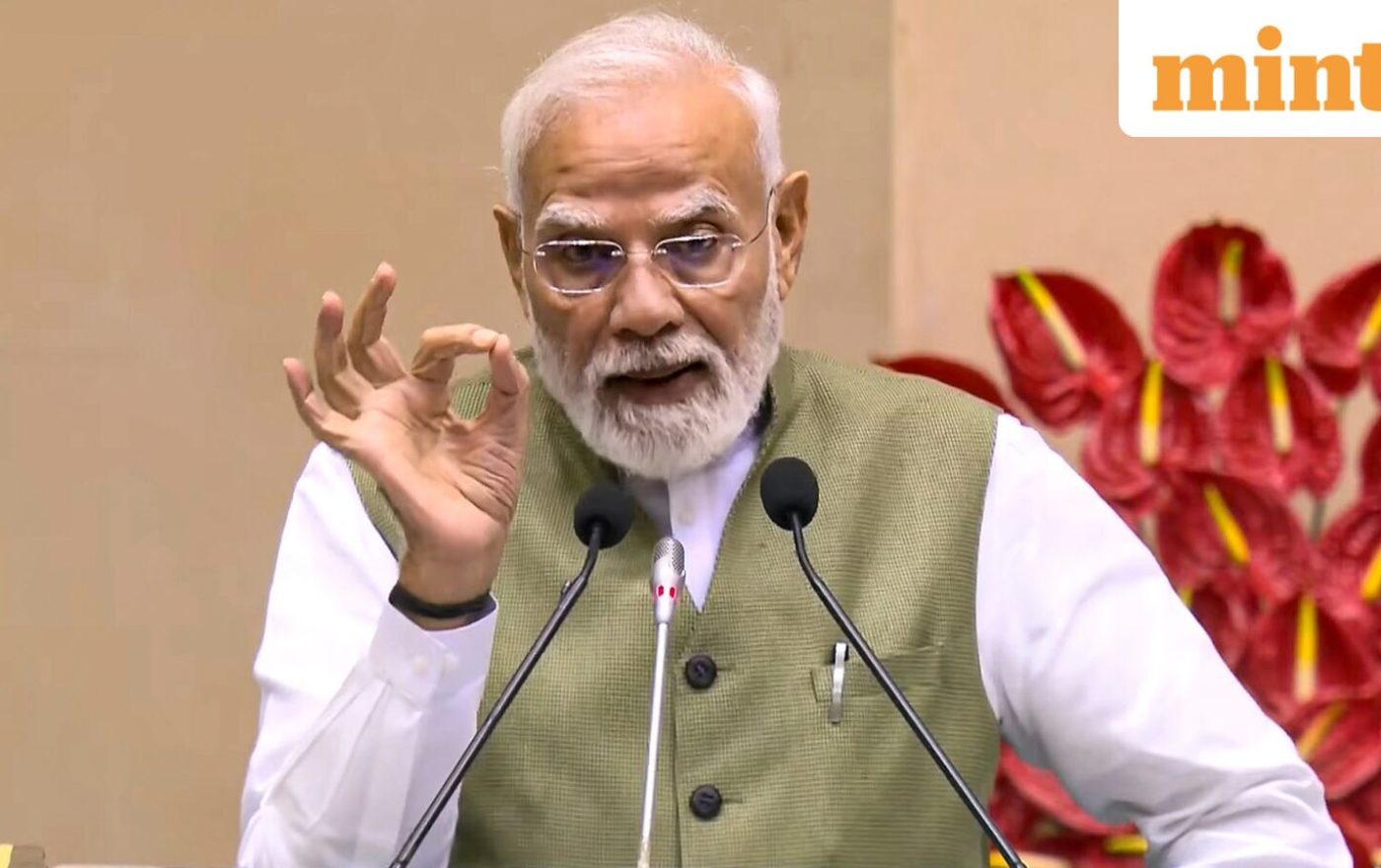
Theindiapostdaily.com – PM Modi flags climate inequality by arguing that responsibility for the climate crisis cannot be discussed without considering per-capita emissions. Prime Minister Narendra Modi said developed countries produce around six times more carbon emissions per person than India, even as developing nations are often blamed for environmental damage.
Speaking at an international environment and climate conference, Modi said India is pursuing economic development alongside environmental protection. He pointed to renewable energy, electric mobility, rail electrification, water conservation and clean-energy technologies as evidence of this approach.
“We all know that the responsibility for carbon emissions has often been wrongly placed on developing countries. While the historical truth is that even today, India’s contribution to per capita carbon emissions is less than half of the global average,” Modi said.
India’s Case on Per-Capita Carbon Emissions
Modi said India regularly raises the difference between its emissions record and that of developed economies at global forums. He urged citizens to speak confidently about the country’s relatively low per-capita carbon emissions and its role in climate action.
“And I would say to every Indian: You too say this forcefully,” he said.
The prime minister’s comments focused on the principle that countries with higher historical and per-person emissions should carry a greater share of climate responsibility. PM Modi flags climate inequality in this context while highlighting India’s efforts to expand clean power without slowing development.
Solar Power and Rooftop Energy Growth
Modi said India has strengthened its renewable-energy capacity while working toward sustainable growth. He described India as the only G20 country to achieve its Paris COP21 commitments ahead of schedule, adding that its progress in non-fossil energy and solar capacity is being noticed internationally.
“This is the power of New India. Non-fossil fuels, solar energy capacity, and the stoppage of carbon emissions…India’s performance on all such metrics is being discussed across the world,” he said.
India had around 2 GW of solar capacity 12 years ago, according to Modi. That figure has now crossed 160 GW, reflecting the rapid expansion of solar electricity as power demand grows across households, businesses and public services.
He also highlighted the PM Surya Ghar Muft Bijli Yojana, a programme intended to increase rooftop solar adoption. More than 50 lakh homes have received rooftop solar panels through the scheme, he said.
“Under this mission, over 50 lakh houses now have rooftop solar panels. This is a number larger than the total number of houses in several countries,” he said.
Modi said households participating in the programme have received nearly ₹80,000 in government assistance. Rooftop solar allows families to generate electricity at home and can make residential consumers active participants in the clean-energy transition.
Wind, Hydro and Nuclear Energy Plans
The prime minister said India’s wind-power capacity has tripled over the past 12 years, while hydropower capacity has also expanded. He added that the country is moving faster to increase nuclear energy generation, which produces electricity without direct carbon emissions during operation.
Modi criticised efforts to halt nuclear projects through legal challenges, saying that clean-energy initiatives should receive support. He said the government is opening opportunities for private-sector participation in these fields.
“And people who give big lectures on environment, when I take forward the nuclear energy work, they will go to courts to stop it,” the prime minister said.
According to Modi, India’s non-fossil energy capacity has risen by 400 per cent. The broader strategy combines renewable sources with other low-carbon energy options to meet the country’s rising electricity needs.
Electric Vehicles and Hydrogen Transport
Modi also connected climate policy with changes in transport. He said India is progressing on green hydrogen and clean mobility, noting that the country’s first hydrogen train had run only days earlier. He described it as the world’s longest hydrogen train and said it marked a new stage for cleaner transportation.
Electric-vehicle sales have increased significantly as well. Before 2014, annual EV sales in India were about 3,000, Modi said. Last year, nearly 25 lakh electric vehicles were sold, showing the growing role of battery-powered transport in the country.
PM Modi flags climate inequality while presenting these investments as part of India’s response to global warming. His argument is that development and climate action can advance together when clean technology, public infrastructure and lower-emission energy receive sustained support.
Frequently Asked Questions
What did PM Modi say about developed countries’ emissions?
Modi said developed countries produce roughly six times more carbon emissions per person than India. He argued that developing countries should not bear disproportionate blame for the climate crisis.
How much solar capacity did India have according to Modi?
He said India’s solar capacity increased from approximately 2 GW 12 years ago to more than 160 GW.
What is the PM Surya Ghar Muft Bijli Yojana?
It is a programme aimed at expanding rooftop solar installations in Indian homes. Modi said more than 50 lakh homes had received rooftop solar panels through the initiative.
What support do households receive for rooftop solar?
Modi said each participating household has received nearly ₹80,000 in additional government assistance.