H-1B visa update: Trump extends $100,000 fee by another year. Here’s what it means for Indians
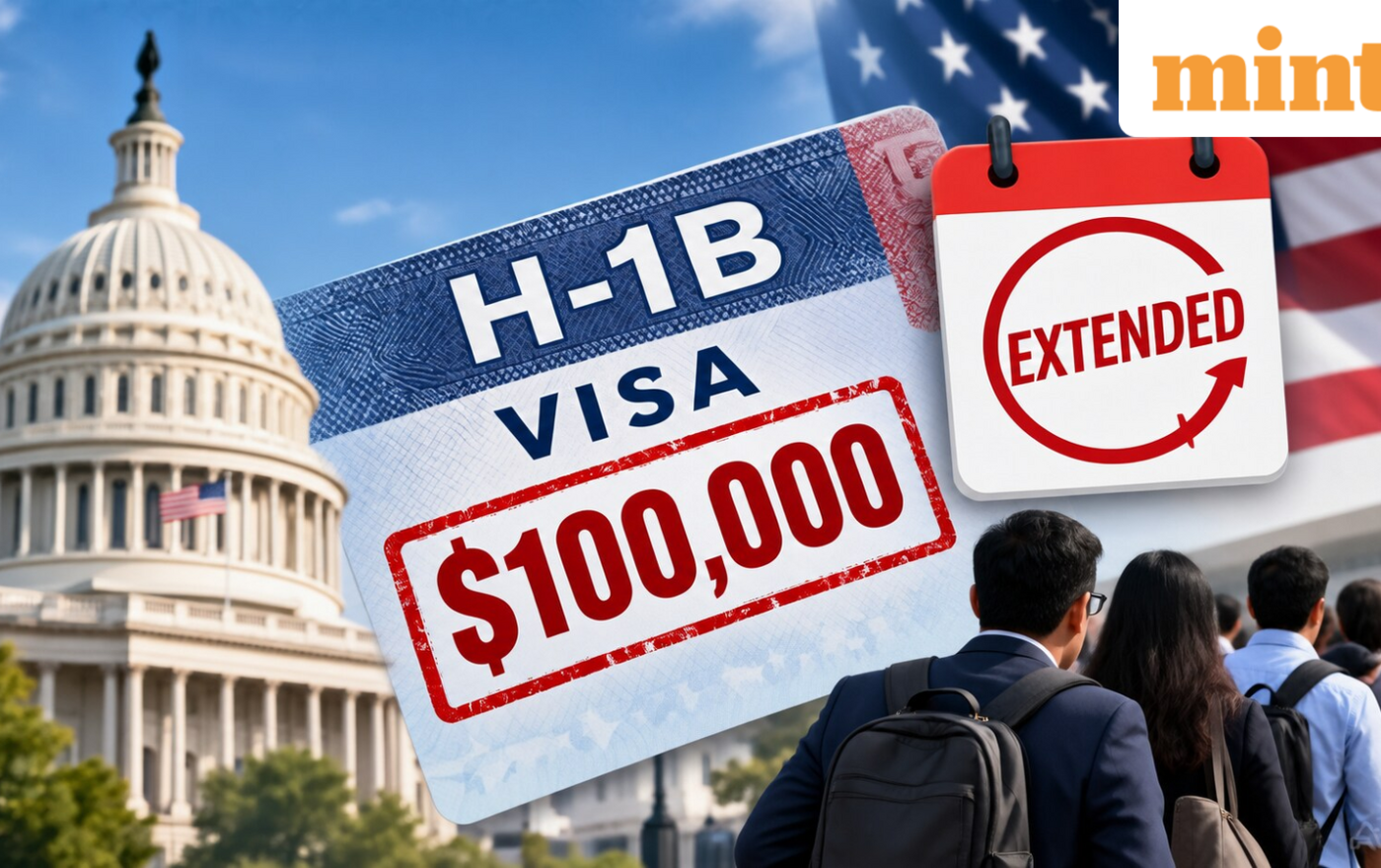
US President Donald Trump has extended by one year a policy tied to a $100,000 payment for certain H-1B non-immigrant visa cases, keeping the measure in
Trump Extends H-1B Fee Policy Through September 2027
Theindiapostdaily.com – US President Donald Trump has extended by one year a policy tied to a $100,000 payment for certain H-1B non-immigrant visa cases, keeping the measure in effect until September 21, 2027. The decision has particular importance for Indian professionals, who make up the largest share of approved H-1B beneficiaries.
The White House said the extension applies to Proclamation 10973, issued on September 19, 2025, under the title Restriction on Entry of Certain Nonimmigrant Workers. The administration said the measure was introduced in response to what it described as major misuse of the H-1B programme.
“The restrictions enacted by the 2025 Proclamation have proven to be highly effective but the underlying conditions necessitating the restrictions persist.”
The proclamation will now continue until 12:00 a.m. Eastern Daylight Time on September 21, 2027. Limited exemptions remain possible for individual workers, employers, or sectors that the US government considers to be in the national interest.
What the H-1B Programme Does
The H-1B visa allows US employers to recruit foreign professionals for specialised jobs, including roles in technology and other skilled fields. It has long been a major route for companies seeking talent from abroad, particularly from India and China.
Before the proposed increase, the relevant H-1B fees generally ranged from $2,000 to $5,000. Trump has criticised the programme and has argued for making the much higher $100,000 charge permanent.
The administration’s original fee-related order was released in September 2025 and had been due to expire this month. Its continuation means employers considering new hires who need to enter the United States may need to factor in a far larger potential cost.
Administration Cites Shift Toward Higher-Paid Applicants
The White House presented the extension as evidence that the policy is changing the makeup of H-1B registrations. It said registrations from the largest information-technology staffing and outsourcing companies have dropped by 92% since the payment requirement and a new weighted selection system were introduced.
It also said a greater share of applications now involve people with advanced qualifications and more highly paid job offers. More than 700 petitions have included the $100,000 payment, the proclamation stated.
“Finally, there has been a positive shift in FY 2027 H-1B registration and selection data toward higher-skilled and higher-paid workers, with registrations for beneficiaries with at least a U.S. Master’s degree rising from 45.1 percent of total registrants for FY 2026 to 66.1 percent for FY 2027.”
The H-1B programme was created by Congress in 1990. Supporters in business have argued that it helps US companies fill specialised positions when qualified domestic workers are difficult to find. Critics, meanwhile, have said that some employers have used H-1B visas to bring in foreign employees at lower wages than American workers might receive.
Why the Extension Matters for Indian Professionals
Indian nationals are central to the H-1B system. US Citizenship and Immigration Services data for fiscal year 2024 showed that 71% of approved H-1B petitions involved beneficiaries born in India. China accounted for roughly 12%.
For that reason, any change in visa costs, selection rules, processing standards, or entry restrictions can have an outsized effect on Indian technology professionals and the companies that employ them. The impact may also extend to recruitment plans, job offers, relocations, and the timing of cross-border assignments.
The $100,000 payment is not applicable to every H-1B worker. It did not cover foreign citizens already in the United States on student visas, a group that represents a substantial portion of new H-1B recipients. It also did not apply to renewals of existing H-1B visas.
The greatest uncertainty concerns Indian workers outside the United States who receive an H-1B opportunity that requires them to enter the country. For them, the fee could materially affect whether an employer proceeds with sponsorship, depending on the case and whether an exception is available.
Technology Companies Face Broader Hiring Questions
The H-1B programme remains especially important to technology companies that recruit internationally. Changes in how applicants are reviewed and processed have already influenced hiring and expansion strategies. Some major H-1B users, including Google parent Alphabet, have moved to expand operations in India.
The extended policy also comes alongside a separate effort by the US Department of Homeland Security. Last month, the department began pursuing a more expansive proposal that would impose a fee of roughly $103,000 on all H-1B petitions subject to the annual visa cap.
That proposal would go further than the earlier initiative because it could apply to nearly everyone receiving a new H-1B visa, rather than focusing only on people outside the country. Its scope could therefore reshape the cost calculations for a much wider range of employers and applicants.
Fee Still Faces Legal Challenges
Despite the White House extension, the future of the $100,000 payment remains unsettled in the courts. A federal judge in Massachusetts struck down the government’s implementation guidance in June, and the government appealed the ruling.
A Boston-based appeals court is reviewing the June decision, which found the Trump administration’s higher fee unlawful and stopped the government from collecting it. Another court is separately examining whether a judge was right to dismiss a challenge to the policy.
Until those legal disputes are resolved, employers and prospective H-1B applicants may face continued uncertainty. The administration has extended the policy on paper through 2027, but court decisions could determine how broadly, and for how long, the fee can actually be enforced.
Related Reading
Frequently Asked Questions
What is H 1B visa update?
H 1B visa update is the main topic of this guide. The article explains the context, practical details, and next steps readers should understand.
Why does H 1B visa update matter?
H 1B visa update matters because readers are looking for a useful answer, not just a short summary. Good content should match search intent and help them decide what to do next.