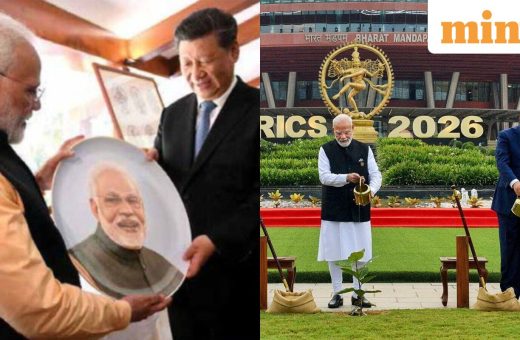
BRICS adopts New Delhi Declaration, stresses on conflict prevention efforts, voices concerns on unilateral tariffs
BRICS members agreed on the New Delhi Declaration on Saturday, giving India an important diplomatic result at the close of the summit’s first day. The joint

BRICS Reaches Consensus on New Delhi Declaration After Intensive Talks
Theindiapostdaily.com – BRICS members agreed on the New Delhi Declaration on Saturday, giving India an important diplomatic result at the close of the summit’s first day. The joint text highlights the need to prevent conflicts and raises concerns about unilateral tariffs, reflecting shared priorities among the participating countries despite difficult negotiations.
Prime Minister Narendra Modi confirmed that the declaration had been adopted during the two-day BRICS summit being hosted by India. The agreement was reached only after negotiations continued behind closed doors to address divisions over language connected to the conflict in West Asia.
Consensus Required a Delicate Compromise
Iran and the United Arab Emirates had initially held differing views on the formulation related to the continuing regional conflict. Their disagreement threatened to delay or prevent a common outcome, as BRICS operates through consensus rather than a majority voting system.
That structure gives every member a decisive role in finalising a declaration. A single country can block a collective statement if it believes the wording does not adequately reflect its position. The eventual approval of the New Delhi Declaration therefore points to a compromise that all members were able to accept.
The talks continued until the final phase of discussions, underlining the sensitivity of the issues before the group. Reaching a joint position amid competing regional interests was especially significant because the conflict in West Asia remains a major concern for governments across the region and beyond.
Focus on Conflict Prevention
The declaration’s emphasis on preventing conflicts places diplomacy and dialogue at the centre of the group’s stated approach. Conflict prevention generally involves efforts to reduce tensions before they widen into prolonged confrontation, including political engagement, communication between parties and support for peaceful settlement.
For BRICS, a shared call for such efforts provides common ground even when members do not hold identical positions on every international crisis. The wording adopted in New Delhi suggests that the group sought to express concern over instability while maintaining language broad enough to secure support from all participants.
The outcome also illustrates a recurring challenge for multilateral forums: members may agree on the importance of peace while differing sharply over the causes of a conflict, the responsibilities of parties involved and the wording appropriate for a final statement. The declaration’s adoption shows that those differences did not prevent the summit from producing a collective document.
Warning Over Unilateral Tariffs
Alongside security concerns, the New Delhi Declaration voices unease about unilateral tariffs. Such tariffs are trade duties imposed by one country without being jointly agreed through a multilateral process or negotiated arrangement with affected partners.
Tariffs can influence the price of imported products, alter supply chains and create uncertainty for companies trading across borders. Concerns over unilateral measures are therefore relevant to countries seeking predictable international commerce and stable economic ties.
By including the issue in its declaration, BRICS connected geopolitical tensions with broader questions about the global economy. The reference signals the importance members place on trade policies that do not create sudden barriers or intensify commercial disputes.
The combined focus on conflict prevention and trade restrictions reflects the way political and economic pressures can overlap. Armed conflict can disrupt energy markets, shipping routes and investment decisions, while tariff disputes can complicate trade relationships and affect growth prospects. A joint declaration does not itself resolve those challenges, but it establishes the shared positions that members were prepared to endorse.
India’s Summit Diplomacy
For India, securing agreement on the declaration was a notable achievement at a meeting where complex international issues had to be addressed among countries with distinct interests. Hosting the summit placed New Delhi in a central role in steering discussions and seeking language acceptable to every participant.
The first-day agreement also allows the summit to proceed with a common political framework in place. It demonstrates that BRICS members were able to preserve unity on the final text even after disagreements emerged during negotiations.
The New Delhi Declaration will be closely watched for how its themes are carried forward in future diplomatic engagement. Its adoption reinforces the group’s intention to speak collectively on conflict prevention and the economic consequences of unilateral trade action, while the difficult path to consensus highlights the limits and importance of multilateral negotiation.
Related Reading
Frequently Asked Questions
What is BRICS adopts New Delhi Declaration stresses?
BRICS adopts New Delhi Declaration stresses is the main topic of this guide. The article explains the context, practical details, and next steps readers should understand.
Why does BRICS adopts New Delhi Declaration stresses matter?
BRICS adopts New Delhi Declaration stresses matters because readers are looking for a useful answer, not just a short summary. Good content should match search intent and help them decide what to do next.