US strikes Iranian tankers after attempted missile attacks on its Navy warship: Report
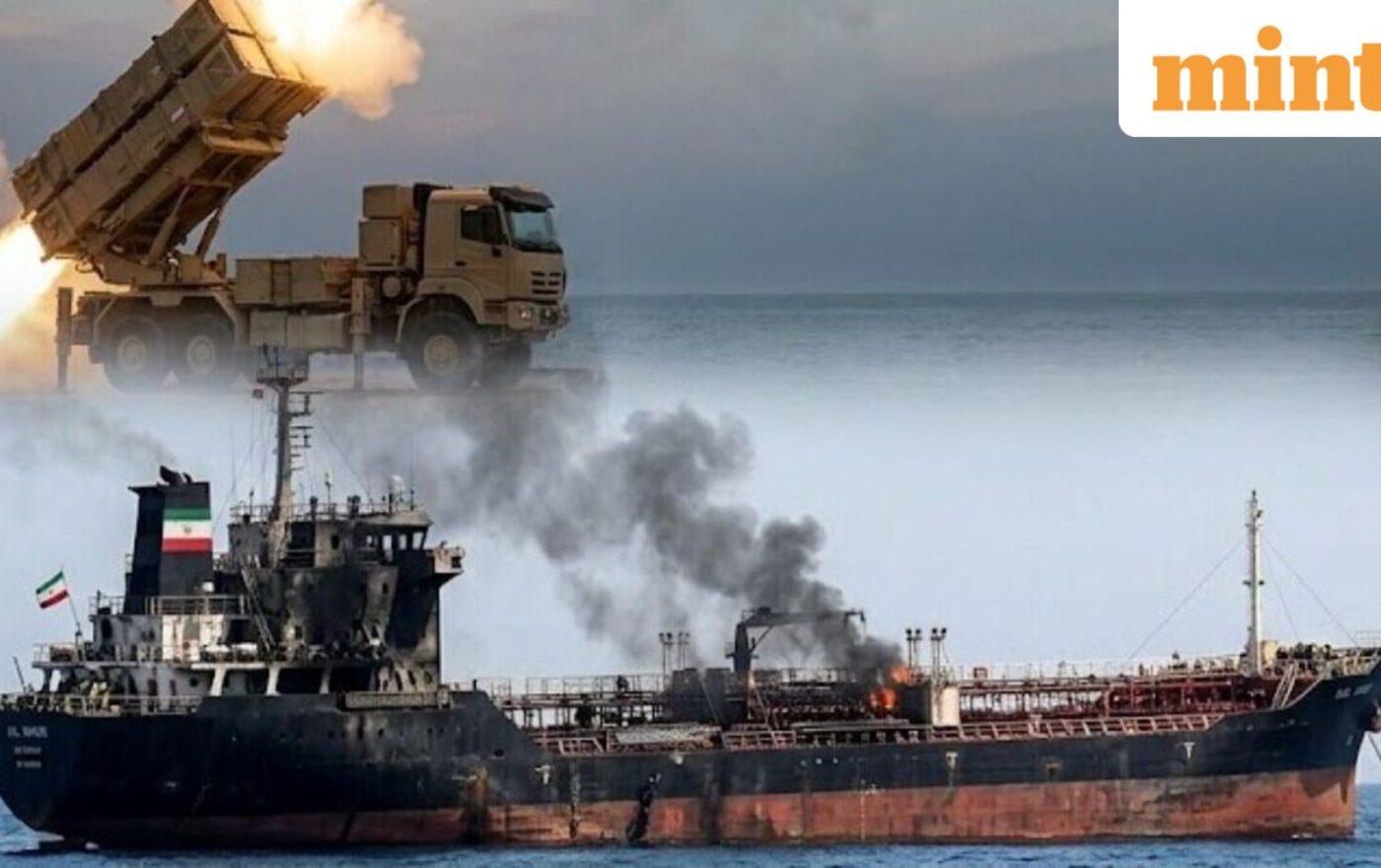
US strikes Iranian tankers after a fresh salvo of missiles was aimed at an American Navy warship, according to a US official who spoke on condition of
US Strikes Iranian Tankers After Missile Attempts
Theindiapostdaily.com – US strikes Iranian tankers after a fresh salvo of missiles was aimed at an American Navy warship, according to a US official who spoke on condition of anonymity. The escalation, confirmed on Tuesday, September 8, sent shockwaves through Gulf shipping lanes at a moment when Tehran had already been broadcasting urgent advisories to commercial vessel crews, effectively declaring their ships legitimate targets in a retaliatory cycle.
Revolutionary Guard Orders Crews to Abandon Ships
The Islamic Republic’s naval arm issued a categorical directive to all oil-carrying vessels anchored or berthed near Kuwaiti and Bahraini ports: vacate immediately. The message left no ambiguity — whether a ship sat at anchor or was moored alongside a berth, its crew was told to leave, with an explicit threat that the vessels “will be targeted.” The urgency of that warning marked a sharp pivot from naval posturing to direct kinetic action against commercial shipping infrastructure.
Separately, Iranian state media reported that an American projectile hit a small tanker roughly four miles from Kharg Island, the terminal handling the bulk of the country’s crude exports. Tasnim news agency stated no casualties resulted from the impact. Multiple blasts were also heard across the island itself, and two explosions were logged at the southern port of Jask. Independent verification was unavailable at the time of publication.
Kharg Island sits in the northern Persian Gulf and serves as the primary loading point for Tehran’s petroleum shipments. A hit in its immediate vicinity signals that the chokepoint through which the Islamic Republic moves the majority of its oil revenue now falls within the operational envelope of American precision munitions.
Drone Shootdown Claimed Over the Strait
The Revolutionary Guard also announced it had intercepted and destroyed an MQ-1 drone flying over the Strait of Hormuz, attributing the kill to a newly deployed air-defence system within Iran’s integrated network. Tehran did not identify the operator, though the MQ-1 platform is fielded by only a handful of nations. If accurate, the interception would represent a notable shootdown over one of the world’s most congested maritime corridors.
Ali Abdollahi, chief of staff of the Iranian Armed Forces, warned that any further American attack on Iranian tankers after this round would trigger strikes against US military installations throughout the region. His remarks followed what Tehran characterized as an evacuation notice dispatched to vessel crews ahead of the anticipated hits — a sequence suggesting the Islamic Republic had anticipated the escalation and was preparing its response in parallel.
Both capitals are now competing for greater operational control over the Strait of Hormuz, the narrow waterway through which approximately one-fifth of global oil consumption transited before the current conflict disrupted flows. Control of that corridor translates directly into leverage over energy markets, shipping insurance rates, and the economic lifelines of Gulf states. The latest round of hits and shootdowns compresses that competition into open military contestation.
Oil markets reacted swiftly. International benchmark Brent crude briefly touched $99.46 per barrel on Tuesday, adding fiscal and political pressure on the Trump administration with the November midterm elections approaching. Sustained prices near that level would compound inflationary pressures already weighing on American voters.
In parallel with the kinetic escalation, the US Treasury announced a new sanctions package aimed at every remaining Iranian airline not previously caught by earlier designations. The department identified 36 entities for their role in sustaining the aviation sector — a domain Washington accused of functioning as a conduit for weapons transfers, personnel movement, and illicit cargo. The move extends economic pressure into a domain that had remained comparatively untouched by prior rounds of penalties.
Even as shells and missiles flew, Tehran insisted a diplomatic track remained alive. Foreign Minister Abbas Araghchi indicated that talks mediated through Oman were showing “significant progress,” though no concrete timetable was announced.
Frequently Asked Questions
Where did the US missile hit near Kharg Island? The impact struck a small tanker roughly four miles from Kharg Island, Iran’s primary crude-oil export terminal in the northern Persian Gulf. No casualties were reported.
What happened to the MQ-1 drone over the Strait of Hormuz? The Iranian Revolutionary Guard claimed it shot down an MQ-1 drone using a newly deployed air-defence system. The operator was not officially identified, though the platform is operated by only a small number of countries.
How did oil markets respond? Brent crude briefly reached $99.46 per barrel on Tuesday, September 8, adding pressure ahead of the US midterm elections and compounding existing inflationary concerns.
What sanctions did Washington impose alongside the strikes? The US Treasury designated 36 entities tied to Iranian airlines, expanding economic pressure into the aviation sector, which Washington described as a channel for weapons transfers and illicit cargo.