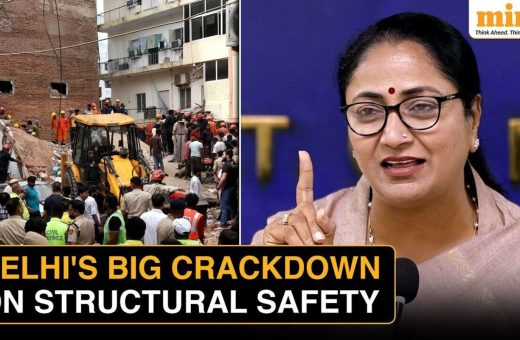
Satya Niketan PG collapse: Delhi to seal all illegal buildings above 4 floors; strict action against erring officials
The Satya Niketan PG collapse killed at least five graduate students when a five-storey hostel in South Delhi's Satya Niketan area gave way on Sunday, hours
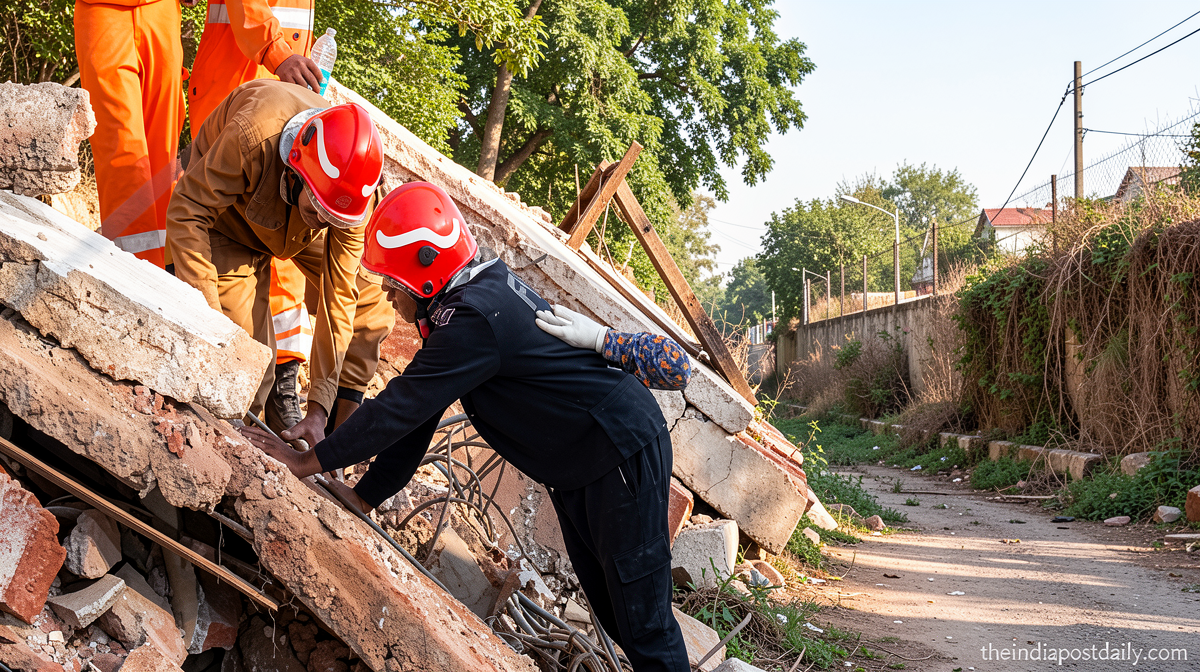
Satya Niketan PG Collapse: Delhi Orders Sealing of Illegal Buildings
Theindiapostdaily.com – The Satya Niketan PG collapse killed at least five graduate students when a five-storey hostel in South Delhi’s Satya Niketan area gave way on Sunday, hours after sustained monsoon rains. In the wake of the disaster, the Municipal Corporation of Delhi announced a citywide enforcement sweep: every unpermitted structure rising above four floors will be sealed immediately, and any official found to have facilitated its construction will face termination.
Enforcement Orders and On-Ground Response
Mayor Pravesh Wahi made his position unmistakable within hours, posting on X that no party involved would escape accountability.
“The culprits of the Satya Niketan building incident in Delhi will not be spared under any circumstances. All illegal constructions with more than four floors will be immediately sealed, and strict action will be taken against the guilty officials, leading to their immediate dismissal. These orders will be implemented with immediate effect.”
MCD Deputy Commissioner (South) Rakesh Kumar confirmed that sealing crews were already deployed across the neighbourhood. A neighbouring structure housing a girls’ hostel was inspected, judged structurally unsound, evacuated, and sealed pending demolition. Occupants were shifted to the closest community hall. Kumar added that further inspections and punitive measures would follow once the rubble was fully cleared.
How the Structure Failed
Neighbours told investigators that days of torrential rain had flooded the building’s basement, generating hydrostatic pressure against the foundation. At the same time, repair work reportedly in progress inside the structure may have weakened critical load-bearing members. For a building already operating well beyond its sanctioned envelope, the combined stresses proved unsurvivable.
Kumar cautioned that confirming whether active renovation was underway at the moment of failure would require complete excavation of the debris field. Until that work is finished, the precise chain of structural events remains under investigation.
A senior MCD official told investigators that the structure had never been issued a sanctioned building plan. The basement itself was an unauthorised addition. The official explained that retrofitting a sub-level into an occupied, standing building is effectively impossible to approve because of the inherent engineering hazards involved.
“Permission for changes in the basement of a standing structure cannot be granted. It is hazardous. It is the failure of the field staff to detect the activity.”
Beyond the basement, the fifth storey breached Floor Area Ratio limits. In a resettlement colony, where standard unit plans cap expansion to prevent overcrowding, adding an entire level above the permitted envelope constituted a clear regulatory violation. Officials noted that dozens of similar unpermitted postgraduate hostels and student accommodations have multiplied in the immediate vicinity over the past decade, forming a pattern of non-compliance that field inspectors repeatedly failed to flag.
Freehold Rights and the Expansion Boom
Understanding the broader context is essential. In 2011, the Delhi government extended freehold rights to residents of resettlement colonies, allowing them to own their allotted plots outright. Intended to deliver tenure security, the policy is widely credited with accelerating speculative construction. Once residents held title, adding floors, converting residential flats into commercial hostels, and sub-dividing basements became routine. Enforcement did not scale at the same pace, and the built environment in many colonies now routinely exceeds the sanctioned plan by one, two, or even three storeys.
Delhi’s postgraduate hostel economy compounds the problem. With scarce affordable housing for graduate students, a thriving informal market has emerged in which landlords convert residential units into PG accommodations, often stacking extra floors to maximise bed count. The collapsed structure, erected on roughly 55 square yards where only a ground-plus-one unit was legally permitted, had operated in that grey zone for nearly three decades before the rains exposed the consequences.
Frequently Asked Questions
How many students died in the collapse? At least five graduate students were confirmed dead beneath the rubble. Rescue and recovery operations continued after the initial hours of the incident.
What is MCD doing about other illegal buildings? The corporation has ordered the immediate sealing of every unpermitted structure exceeding four floors across Delhi. Officials complicit in permitting or overlooking such constructions face dismissal.
Why did the building fall? Preliminary indications point to a combination of water accumulation in the unauthorised basement and possible structural weakening from interior repair work, acting on a building already beyond its sanctioned load limits.
What role did the 2011 freehold policy play? By granting outright plot ownership to resettlement-colony residents, the policy removed a layer of administrative friction around expansion. Many residents subsequently added floors or converted units into commercial hostels without obtaining revised building permissions.
Will tenants of nearby buildings be affected? An adjacent girls’ hostel was evacuated and sealed after being found structurally unsound. Its occupants were relocated to the nearest community hall while demolition preparations proceed.