Toll fraud: ED busts 100 plazas using ‘Mobdata’ & ‘Any’ apps to siphon crores from non-FASTag vehicles
Toll Fraud: ED Busts 100 Plazas via Rogue Apps The Enforcement Directorate has dismantled what it describes as one of the largest toll fraud operations ever
Theindiapostdaily.com –
Toll Fraud: ED Busts 100 Plazas via Rogue Apps
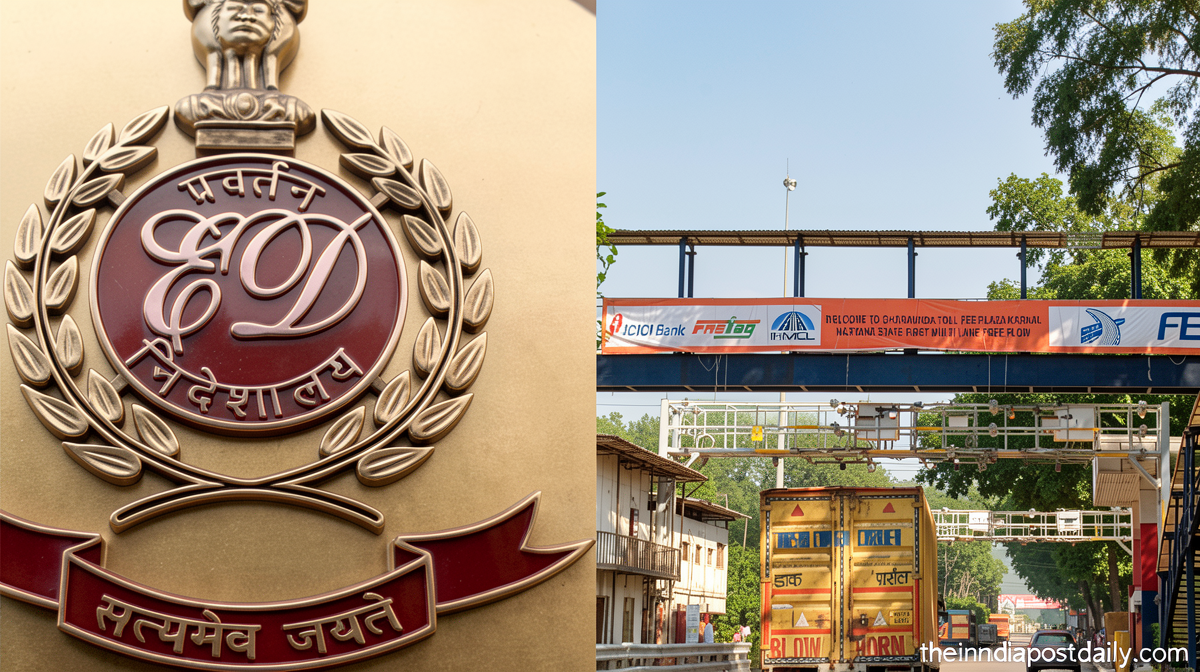
The Enforcement Directorate has dismantled what it describes as one of the largest toll fraud operations ever traced in India. Approximately one hundred NHAI-authorised highway plazas were found running parallel, unauthorised mobile applications that diverted crores of rupees in cash from drivers without FASTag stickers. The coordinated scheme kept every rupee collected outside the government’s official accounting, triggering multi-state raids, asset freezes, and a sweeping forensic audit of seized devices.
How the Scheme Worked
India’s electronic toll collection relies on FASTag, a passive RFID sticker affixed to a vehicle’s windshield. When a tagged car passes a gantry, the tag is read automatically and the fee is debited from the driver’s linked bank account, with the transaction logged in NHAI’s centralised system. Vehicles without a FASTag are directed to a manual lane where cash payment is expected.
That manual-lane gap is precisely where the perpetrators inserted their scheme. Plaza operators deployed two rogue mobile applications — identified by the ED as “Mobdata” and “Any” — to generate counterfeit receipts for non-FASTag vehicles. Because these apps sat entirely outside NHAI’s reporting architecture, the cash changed hands at the plaza, was recorded only in private ledgers, and never reached the exchequer. Intermediaries and the entities to whom NHAI had entrusted collection duties pocketed the difference, accumulating crores over an extended period.
Raids, Seizures, and Asset Freezes
On September 2, the central agency launched simultaneous searches across multiple states. Fourteen premises were raided in a single coordinated sweep spanning Uttar Pradesh, Rajasthan, Madhya Pradesh, Jammu and Kashmir, West Bengal, and the Delhi-NCR region. The operation was timed to capture physical and digital evidence before records could be altered or destroyed.
From those raids the ED recovered approximately ₹1.03 crore in cash, along with account books, bank documents, and a cache of digital devices. In a parallel move, eight bank accounts tied to the operations were frozen, locking the flow of funds while the investigation proceeds.
“Forensic examination of digital devices seized from the accused revealed that this mechanism was used on around 100 toll plazas, and unauthorised toll receipts running in crores from the digital records have been recorded,” the ED said in a statement.
Origin and Scope of the Probe
The investigation traces its legal roots to a case registered under the Prevention of Money Laundering Act. The agency took cognisance of a First Information Report filed in January 2025 by Mirzapur district police in Uttar Pradesh. That FIR initially flagged large-scale irregular collection at the Atraila Shiv Gulam plaza and pointed to a wider network operating across the country.
What began as a local complaint about one plaza quickly expanded. The ED noted that its ongoing examination indicates the active involvement of several intermediaries and NHAI-entrusted entities in deploying the rogue applications. Further forensic work is underway to map the full architecture of the network and identify every node that participated in the diversion.
Why the Scale Matters
India’s national highway network stretches beyond 50,000 kilometres, and highway revenue is a critical funding stream for maintenance, expansion, and debt servicing of those corridors. NHAI outsources collection to private entities under strict contractual and reporting obligations. When roughly one hundred plazas — a substantial fraction of the country’s infrastructure — were found running shadow applications, the implications extend well beyond a single enforcement action. The episode raises pointed questions about the adequacy of real-time monitoring at the gantry level: if transactions can be generated on a phone and never surface in the centralised system, the gap between what a vehicle pays and what the government records becomes invisible until a forensic audit catches up.
FAQ
What exactly happened in this toll fraud case? The ED found that operators at roughly 100 NHAI-authorised plazas used two unauthorised apps (“Mobdata” and “Any”) to generate fake receipts for non-FASTag vehicles, keeping the cash outside government accounts.
How much money was recovered? Approximately ₹1.03 crore in cash was seized during the September 2 raids, and eight linked bank accounts were frozen.
Which states were affected? Raids hit premises in Uttar Pradesh, Rajasthan, Madhya Pradesh, Jammu and Kashmir, West Bengal, and the Delhi-NCR region.
What should drivers do to avoid paying at manual lanes? Ensure your FASTag is active and visible on the windshield. If your tag is inactive, contact your FASTag provider before travelling so you can use the automated lane and avoid cash payment entirely.