US Army Secretary Dan Driscoll quits amid reported tensions with Hegseth; third major Pentagon exit since April
The White House confirmed Monday that US Army Secretary Dan Driscoll will step down from his post, ending a four-month tenure defined almost entirely by open
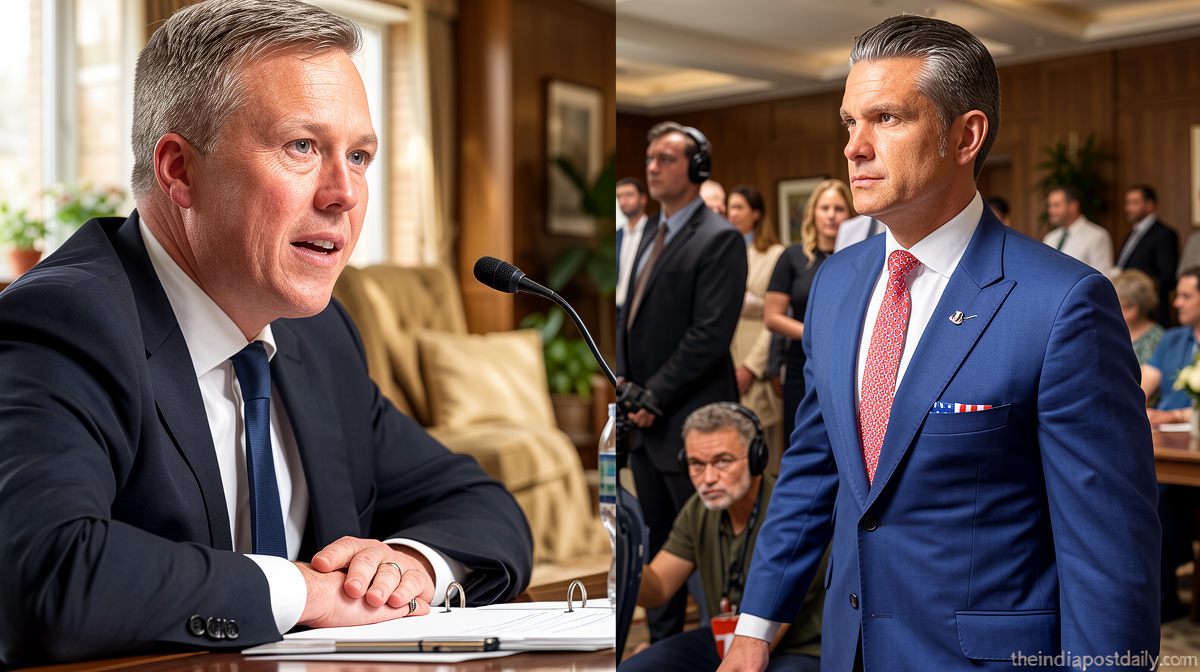
US Army Secretary Dan Driscoll Resigns
Theindiapostdaily.com – The White House confirmed Monday that US Army Secretary Dan Driscoll will step down from his post, ending a four-month tenure defined almost entirely by open friction with the Defense Secretary. His formal exit is expected within days, capping what has become the most volatile stretch of Pentagon leadership turnover in years.
The role he occupied—civilian chief of the Army—sits where congressional budget power, weapons procurement, and daily force management collide. It demands political capital on Capitol Hill and operational credibility among uniformed commanders simultaneously. Confirmed to the position in February 2025, Driscoll had cultivated a modest but genuine bipartisan following before the administration’s internal dynamics made his continued presence untenable.
How the Rift Unfolded
Whispers about a coming break between Driscoll and Defense Secretary Pete Hegseth circulated quietly through the capital for months, sharpening after Hegseth dismissed Army Chief of Staff General Randy George earlier this year. The removal caught the Army’s civilian leader completely off guard and, according to people familiar with the situation, deepened his sense of isolation inside the department’s command structure.
A senior administration official, speaking on condition of anonymity, put the dynamic in stark terms: Hegseth had long viewed the Army’s civilian head as an internal threat and had worked toward his removal. What complicated that effort was the secretary’s well-documented closeness to Vice President J. D. Vance, which made any overt confrontation politically expensive for the War Secretary.
By the prior week, Driscoll had privately told a small circle of government allies he intended to be out of the building by Labor Day. He then traveled to the White House to discuss the timing and logistics of his departure. The specifics of what was settled at that meeting were not disclosed publicly.
Third Major Departure Since February
The exit marks the third high-profile departure from the Defense Department since the conflict with Iran opened on 28 February. In April, Navy Secretary John Phelan was pushed from his post, and General Randy George was stripped of command over the Army’s professional corps. Taken together, the three departures have hollowed out the leadership layer meant to stabilize the department through simultaneous wartime operations and domestic political pressure.
Each departure removes not just an individual’s institutional memory but also the congressional, interagency, and allied relationships that took years to build. For a department already stretched by Middle East operations and diplomatic engagement on the Eastern Front, the cumulative effect is a leadership vacuum no single appointment can quickly fill.
Ukraine Talks and Procurement Reform
The president’s designation of Driscoll to participate in direct negotiations aimed at ending the Russia-Ukraine war—ongoing since February 2022—gave the Army’s civilian chief a vantage point on the broader national-security calculus most Pentagon officials never occupy. For a single-service secretary, such a diplomatic assignment was unusual and signaled that the administration valued his judgment on force posture and negotiation leverage.
On the procurement front, the secretary had pressed the Army to adopt leaner, faster acquisition practices, arguing the service could buy cheaper, more nimble weapons without sacrificing lethality. He did not soften his language when addressing the defense industrial base. In remarks delivered last year he stated:
(The) defense industrial base broadly, and the primes in particular, conned the American people and the Pentagon and the Army.
That candor earned respect among reform-minded officers and budget hawks on Capitol Hill while making him a target for contractors and their congressional allies who profit from multi-billion-dollar platform programs.
White House press secretary Anna Kelly issued a statement Monday praising the tenure, noting the secretary had been “highly effective in advancing President Trump’s agenda to Make America Strong Again at the Department of the Army by providing outstanding leadership during historic military operations, restoring an emphasis on readiness.”
Frequently Asked Questions
When did the tenure begin, and how long did it last?
The secretary was confirmed to the post in February 2025. His resignation brings the tenure to a close after barely four months in office.
What directly triggered the departure?
Reported tensions with Defense Secretary Pete Hegseth, compounded by the earlier removal of Army Chief of Staff General Randy George, made the secretary’s continued presence in the Pentagon unsustainable. He informed allies of his intent to leave before Labor Day and subsequently met at the White House to finalize the exit.
Who are the other recent Pentagon departures?
Navy Secretary John Phelan was pushed from his post in April, and General Randy George was stripped of his command of the Army’s professional corps earlier in the year. Together with the Army secretary’s exit, these constitute the third major departure since the Iran conflict opened on 28 February.