Quote of the Day by Nobel laureate Rabindranath Tagore: ‘Don’t limit a child to your own learning…’
"Don't limit a child to your own learning, for she was born in another time." Theindiapostdaily.com – "Don't limit a child to your own learning, for she was born in…
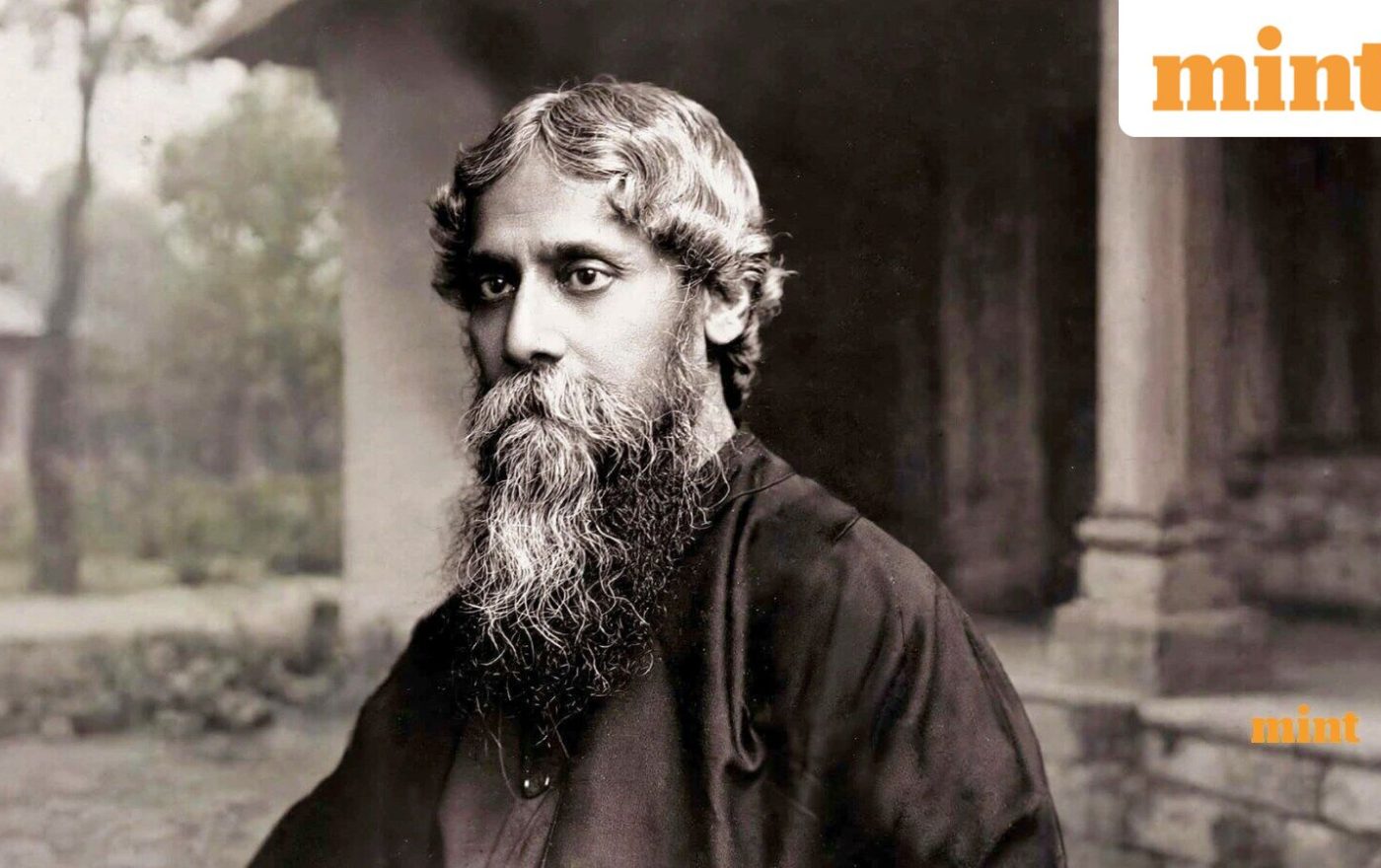
“Don’t limit a child to your own learning, for she was born in another time.”
Theindiapostdaily.com –
“Don’t limit a child to your own learning, for she was born in another time.” — Rabindranath Tagore
The Man Behind the Words
Rabindranath Tagore (1861–1941) was born into a prosperous Brahmin household in Calcutta. After a short stint studying law in England in 1878, he returned home and devoted his life to writing, music, philosophy, and pedagogy. He went on to become a Nobel laureate, a playwright, a composer, and one of the most consequential thinkers of the twentieth century.
Tagore harbored a deep aversion to the rigid structures of Western schooling. He channeled that frustration into building an institution at Shantiniketan, situated in the impoverished rural interior of Bengal. What began as a school eventually grew into a university. Its pedagogy followed the ashrama model: freedom, natural trust, cooperation, and joy formed the foundational principles. Instructors were not figures of authority doling out information. Instead, every lesson at Shantiniketan relied on direct observation and independent inquiry rather than textbook recitation.
In 1919, following the Jallianwala Bagh massacre, Tagore renounced his British knighthood in protest against colonial violence. He never accepted inherited structures without scrutiny. Whether in politics or in pedagogy, he held that the living present outweighed received tradition.
Dissecting the Quote
The sentence carries two separate assertions, each demanding its own scrutiny.
The first assertion is the directive itself: do not confine a child to what you alone have learned. The operative word here is “limit.” Tagore is not declaring your knowledge worthless. He is asserting that your knowledge has an edge. Every body of learning possesses one. You absorbed what your era demanded, through the methods your era permitted, filtered through the lens your generation supplied. That accumulation is genuine and valuable. Yet it is not exhaustive, and it is not fixed.
The second assertion supplies the rationale: the child was born into a different time. This clause is simple to read and easy to dismiss. It does not merely note an age gap between adult and child. It makes a structural claim about reality. The world a young person inherits is fundamentally distinct. Its challenges differ. Its instruments differ. Its openings differ. What proved effective in one era may fail to serve the next.
Joined together, the two assertions constitute a single argument: a child’s tomorrow does not resemble your yesterday. Instructing her exclusively in what you know amounts to preparing her for a world that has already ceased to exist.
What the Quote Challenges
The passage targets a specific form of authority — not expertise, not wisdom, not experience. It targets the claim that reads: “I have learned, therefore I know what you must learn.” That claim feels instinctive. It feels responsible. A parent who transmits everything they possess appears devoted. A teacher who delivers the full weight of accumulated knowledge appears thorough. Yet the quote exposes a buried assumption within that impulse: that one era’s knowledge constitutes the correct preparation for another era’s demands.
Children remain more fully alive than adults who have constructed shells of habit around themselves. Those shells protect what is already known while simultaneously blocking what is newly possible. A child has not yet built that shell. That openness is not a deficit. It is a resource.
The quote also reframes the teacher-student relationship. It urges adults to become facilitators of inquiry rather than restrictive gatekeepers, recognizing that young people may require entirely different skills and knowledge than those relevant to prior generations. The gatekeeper stands at the threshold and controls what enters. The facilitator walks alongside the child, offering direction without enclosure.
Tagore himself observed that children learn with extraordinary ease because they possess a natural gift, whereas adults — acting as tyrants — ignore those gifts and insist children must acquire knowledge through the identical process by which the adults themselves learned. That observation is the direct ancestor of the quote examined here. It is the same argument, stated plainly.
Related Reading
Frequently Asked Questions
What is Quote of the Day by Nobel?
Quote of the Day by Nobel is the main topic of this guide. The article explains the context, practical details, and next steps readers should understand.
Why does Quote of the Day by Nobel matter?
Quote of the Day by Nobel matters because readers are looking for a useful answer, not just a short summary. Good content should match search intent and help them decide what to do next.