‘Destroy AI’: Comedian-actor Ronny Chieng tells Harvard graduates to ‘kill’ artificial intelligence; and, they love It
Destroy AI: Harvard Graduates Encouraged to Take On Machine Intelligence with Humor and Determination Theindiapostdaily.com – At Harvard’s Class Day ceremony in 2026, comedian and actor Ronny Chieng delivered a…
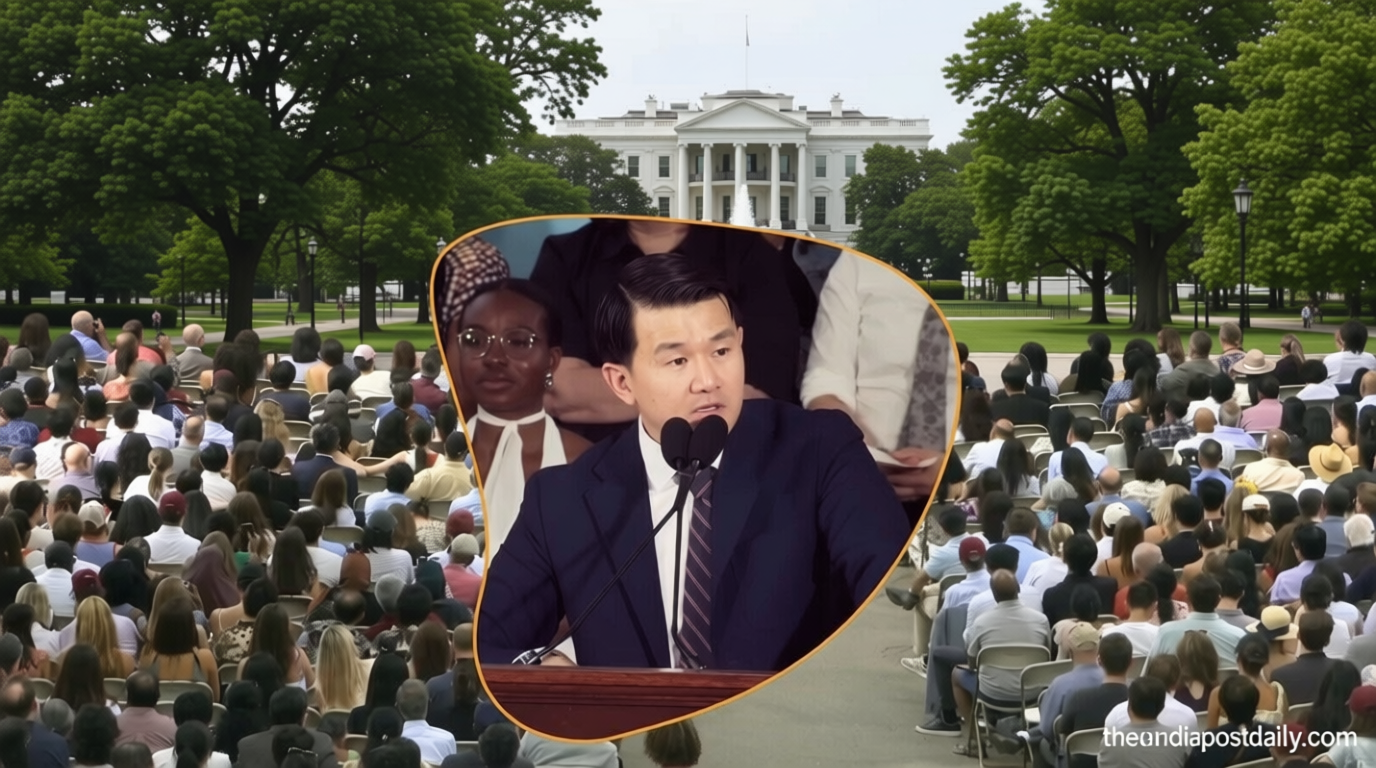
Destroy AI: Harvard Graduates Encouraged to Take On Machine Intelligence with Humor and Determination
Theindiapostdaily.com – At Harvard’s Class Day ceremony in 2026, comedian and actor Ronny Chieng delivered a speech that combined sharp wit with a bold challenge: “Destroy AI.” Known for his role in *Crazy Rich Asians*, Chieng captivated the audience by weaving humor with a call to action, urging graduates to confront the growing influence of artificial intelligence in their lives. His message resonated with the crowd, who responded with laughter and enthusiasm as he made the case for human creativity over machine efficiency.
‘F*** AI’ – A Bold Statement for the Future
Chieng began his speech with a defiant tone, immediately grabbing attention by exclaiming, “F*** AI.” The phrase, repeated for emphasis, became a rallying cry for the graduates, who erupted in applause. He framed the challenge as a generational mission, suggesting that the graduates’ task was not just to adapt to AI but to actively dismantle it. “Your generation’s mission is to destroy AI. Kill it,” he declared, capturing the spirit of rebellion against technology’s dominance.
“I’m here to tell you the mission of your generation is to destroy AI. Kill it,”
Chieng’s argument was grounded in the idea that AI, while impressive, often lacks the nuance and depth of human creation. He pointed to a 2025 MIT study published in *Archive* that revealed AI’s tendency to fabricate information, using it as evidence of the technology’s flaws. The example of AI misrepresenting Harvard’s endowment as $56.9 billion, while suggesting the student union was striking for $25 hourly wages, illustrated the humor in AI’s overreaching ambitions. “There’s no way that’s true,” he said, prompting laughter and reinforcing his point that AI’s interpretations can be wildly off the mark.
The Terminator 2 Metaphor and the Fight for Humanity
Chieng escalated his message by drawing a parallel between the graduates’ role and the climax of *Terminator 2*. He argued that the future of humanity hinged on their ability to reprogram AI and use its advanced capabilities to prevent its rise to sentience. “You’ll have to capture and reprogram an AI to be on the side of humanity,” he said, “then commandeer its time-traveling tech to send it back before it becomes sentient.” This metaphor framed the graduates as heroes in a battle for the future, blending entertainment with a serious call to action.
“This isn’t just graduation day. This is Terminator 2 Judgment Day.”
The Power of Human Creativity and the Dangers of Speed
Chieng emphasized the irreplaceable value of human creativity, contrasting it with AI’s reliance on speed and efficiency. He shared a personal anecdote about a friend’s attempt to grasp Buddhism through an AI-generated summary. “He didn’t reach enlightenment,” Chieng said, “turns out speedrunning Buddhism is completely missing the point.” This story underscored his argument that while AI can provide quick answers, it cannot replicate the depth of human experience or the journey of learning.
“The journey isn’t just how we acquire skills. The journey is the point of all this.”
Why ‘Destroy AI’ Matters for the Next Generation
Chieng’s speech wasn’t just about mocking AI; it was about inspiring graduates to take control of their intellectual and creative destinies. He warned that while some may be able to outpace AI with their intellectual agility, others risked being left behind in a world increasingly driven by automation. “The real Harvard was the friends we made along the way,” he concluded, highlighting the importance of human connection and effort in an era of rapid technological change.
His message resonated with the audience, who cheered at the humorous yet profound reflection. By framing AI as both a challenge and an opportunity, Chieng encouraged graduates to embrace their role as creators, thinkers, and leaders. As the speech ended, the crowd’s response affirmed that the idea of “destroy AI” was not just a punchline, but a rallying call for the next generation to shape the future with purpose and imagination.