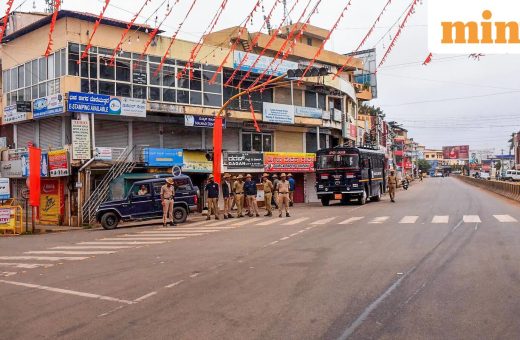
5.53 magnitude earthquake hits Leh, Ladakh
A significant seismic event has shaken the Ladakh region as a 5 53 magnitude earthquake hits Leh, Ladakh on Thursday morning. According to preliminary data

5 53 Magnitude Earthquake Hits Leh, Ladakh Region
Theindiapostdaily.com – A significant seismic event has shaken the Ladakh region as a 5 53 magnitude earthquake hits Leh, Ladakh on Thursday morning. According to preliminary data released by the National Center for Seismology (NCS), the tremor struck at precisely 6:05 am local time. The earthquake’s epicenter was located at a relatively shallow depth of 10 kilometers beneath the earth’s surface, which explains why residents across the region felt the shaking clearly. This seismic activity has drawn attention from seismologists and local authorities alike, who are monitoring the situation closely for any aftershocks that may follow.
Seismic Details and Regional Impact
The earthquake that registered 5.53 on the Richter scale was felt across multiple districts in northwestern Kashmir and the Leh-Ladakh area. While the magnitude is considered moderate, the shallow depth of 10 kilometers meant that the ground shaking was more pronounced than it would have been at greater depths. Local residents reported feeling the tremors for several seconds, with some structures experiencing minor vibrations. Emergency response teams have been placed on alert, though no immediate reports of casualties or major structural damage have been confirmed by authorities. The NCS continues to analyze seismic data to determine if this event is part of a larger pattern of tectonic activity in the region.
Geological experts note that the Himalayan region is one of the most seismically active zones in the world due to the ongoing collision between the Indian and Eurasian tectonic plates. The 5 53 magnitude earthquake hits Leh at a time when scientists are closely monitoring fault lines across northern India. Historical records show that the region has experienced several significant earthquakes over the past century, making preparedness essential for local communities. Buildings in Leh and surrounding areas have been constructed with seismic-resistant features, which likely contributed to the absence of major damage in this recent event.
Community Response and Safety Measures
“We are closely monitoring the situation and have deployed teams to assess any potential damage,” said a spokesperson from the local disaster management authority. “So far, no major incidents have been reported, but we remain vigilant.”
Local schools and government offices in Leh remained open following the earthquake, with staff conducting brief safety checks before resuming normal operations. Residents in remote villages were contacted through local communication networks to confirm their safety. The Indian Meteorological Department has issued an advisory recommending that residents avoid unnecessary travel in mountainous areas where landslides could be triggered by aftershocks. Emergency supplies have been pre-positioned at key locations across the region as a precautionary measure.
Seismologists have indicated that while the probability of a major aftershock is relatively low, residents should remain aware of their surroundings for the next 48 hours. The earthquake’s timing at 6:05 am may have contributed to the minimal impact, as many people were still indoors and not engaged in outdoor activities. Infrastructure assessments are underway to ensure that bridges, roads, and buildings in the affected areas remain structurally sound.
Historical Context and Future Outlook
The Ladakh region has a documented history of seismic activity, with several earthquakes exceeding magnitude 5.0 recorded over the past decade. The current event adds to this pattern of moderate-to-strong seismicity that characterizes the Himalayan belt. Scientists are particularly interested in understanding the stress accumulation along the fault systems that run through this region. The 5 53 magnitude earthquake hits Leh serves as a reminder of the dynamic geological forces at work beneath the earth’s surface in this mountainous terrain.
Looking ahead, researchers plan to conduct detailed studies using data from seismic stations across the region. These studies will help improve earthquake prediction models and enhance early warning systems for communities in Ladakh and neighboring areas. The government has also announced plans to upgrade monitoring equipment in the region to provide more real-time data during seismic events.
Frequently Asked Questions
Q: What is the exact magnitude of the earthquake that hit Leh? A: The earthquake registered a magnitude of 5.53 on the Richter scale according to the National Center for Seismology.
Q: At what time did the earthquake occur? A: The tremor struck at 6:05 am local time on Thursday morning.
Q: How deep was the earthquake’s epicenter? A: The earthquake occurred at a depth of 10 kilometers beneath the earth’s surface.
Q: Have there been any casualties reported? A: No immediate reports of casualties or major structural damage have been confirmed by authorities.
Q: Is the region expected to experience aftershocks? A: While the probability of a major aftershock is relatively low, residents are advised to remain vigilant for the next 48 hours.