As Thailand evaluates BrahMos, here’s a look at the countries buying or seeking India’s flagship missile
As Thailand evaluates BrahMos here, the Southeast Asian nation has emerged as the latest country to explore India's supersonic cruise missile capability
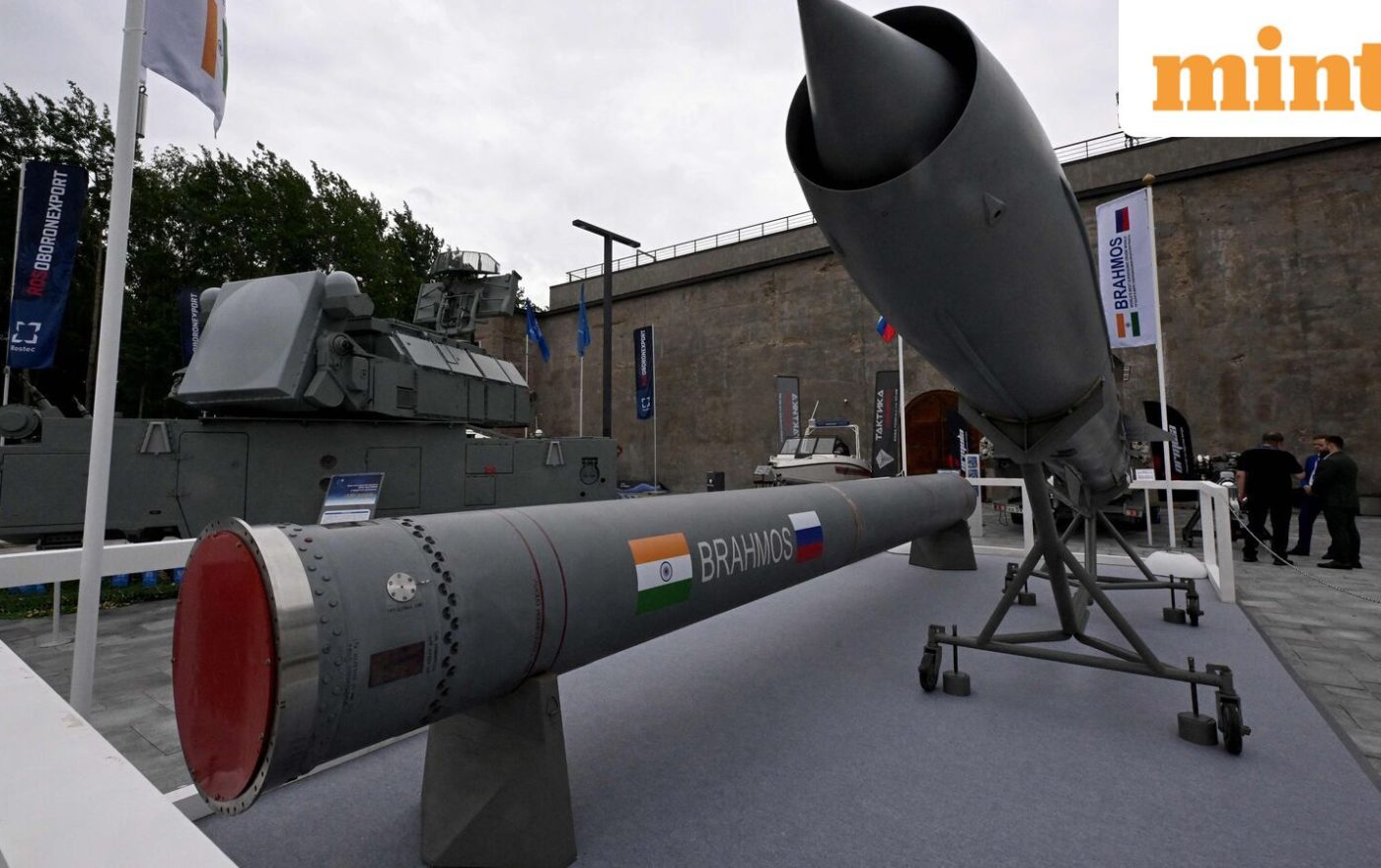
As Thailand evaluates BrahMos here: A Growing Global Interest in India’s Missile System
Theindiapostdaily.com – As Thailand evaluates BrahMos here, the Southeast Asian nation has emerged as the latest country to explore India’s supersonic cruise missile capability. According to a recent report by Malaysia-based Defence Security Asia, Bangkok is considering the acquisition of New Delhi’s flagship defence export, adding to a growing list of nations seeking to strengthen their maritime capabilities. While no formal procurement programme has been announced, the reported evaluation highlights the BrahMos missile’s rising appeal across the region and beyond.
Defence Security Asia reported that Thailand is specifically evaluating the shore-based anti-ship variant of the BrahMos missile. This assessment forms part of broader efforts to modernise Thailand’s navy and strengthen coastal defence across the Gulf of Thailand and the Andaman Sea. The report stressed that discussions remain preliminary, with no contract, delivery timeline, or operational requirement officially announced by either Bangkok or BrahMos Aerospace.
Thailand’s Defence Dialogue Context
Thailand’s reported interest in the missile system comes after the 10th India-Thailand Defence Dialogue held in June. During this dialogue, both countries discussed broader defence cooperation, maritime security, and capability development, although no official BrahMos deal was announced at that time. The current evaluation represents a natural progression of these discussions into concrete procurement consideration.
Global Buyers and Prospective Customers
The Philippines stands as the first foreign buyer of the BrahMos missile system. Manila signed a deal worth approximately $375 million in January 2022 for three shore-based anti-ship missile batteries. This comprehensive package included mobile launchers, radars, command-and-control systems, training programmes, and long-term logistics support for the Philippine Marine Corps’ Coastal Defence Regiment. Deliveries were successfully completed between April 2024 and April 2026, giving Manila a key capability to strengthen coastal defence and anti-access/area-denial operations in the West Philippine Sea.
Vietnam is widely expected to become the next BrahMos operator. In June, BrahMos Aerospace CEO Jaiteerth Joshi confirmed that export negotiations with Vietnam were in the final stages, with only minor government clearances remaining. Speaking at the Shangri-La Dialogue in Singapore, Defence Secretary Rajesh Kumar Singh also stated that India had signed a BrahMos agreement with Vietnam, although detailed implementation timelines have not yet been made public. Reports suggest the package includes coastal missile batteries, training, and long-term maintenance support.
Indonesia has also moved closer to acquiring the missile system through expanding defence ties. According to multiple reports, discussions that began with an agreement in principle earlier this year progressed significantly during Prime Minister Narendra Modi’s visit to Jakarta in July. The Indonesian Ministry of Defence has indicated support for the creation of a Joint Defence Industry Cooperation Committee focusing on technology transfer, joint research, and defence manufacturing. Reports indicate Jakarta may eventually procure more than one BrahMos battery.
India’s defence outreach is now extending beyond Southeast Asia, with Gulf nations showing particular interest in the BrahMos system.
India’s defence outreach is now extending beyond Southeast Asia to include Gulf nations. Reports suggest the United Arab Emirates is in preliminary discussions with New Delhi over the possible acquisition of BrahMos, which would mark the missile’s first export to the Gulf region. The UAE is also reportedly evaluating India’s Akashteera air-defence command-and-control system alongside the missile capability.
According to multiple reports, enquiries have also come from several other countries including Saudi Arabia, Egypt, Brazil, and Chile. The Defence Security Asia report also mentioned Malaysia, Singapore, Brunei, and South Africa among countries where interest has been discussed. This broad international interest demonstrates the growing reputation of India’s defence export capabilities.
Technical Advantages Driving Demand
Developed jointly by India’s DRDO and Russia’s NPO Mashinostroyeniya, the BrahMos is capable of travelling at nearly Mach 2.8-3, carrying a 200-300 kg warhead and striking targets at ranges of up to around 450 km in its latest export variants. Its combination of speed, precision, and mobile deployment makes it particularly attractive for countries seeking to strengthen coastal defence without investing in larger naval fleets.
Frequently Asked Questions
What is the current status of Thailand’s BrahMos evaluation? Thailand is currently evaluating the shore-based anti-ship variant of the BrahMos missile as part of its naval modernisation efforts. Discussions remain preliminary with no formal contract announced yet.
Which country was the first to purchase the BrahMos missile? The Philippines became the first foreign buyer, signing a $375 million deal in January 2022 for three shore-based anti-ship missile batteries.
How fast does the BrahMos missile travel? The BrahMos missile can travel at nearly Mach 2.8-3, making it one of the fastest cruise missiles in the world.
What is the operational range of the export variant? The latest export variants of the BrahMos can strike targets at ranges of up to around 450 km.
Which Gulf nation is considering BrahMos acquisition? The United Arab Emirates is in preliminary discussions with India over the possible acquisition of the BrahMos missile system.