Total Solar Eclipse 2026: Rare celestial event to sweep Northern Hemisphere, but will India witness it?
Skywatchers across Europe, North America, and the Arctic are preparing for one of 2026's most anticipated astronomical events. A rare total solar eclipse will
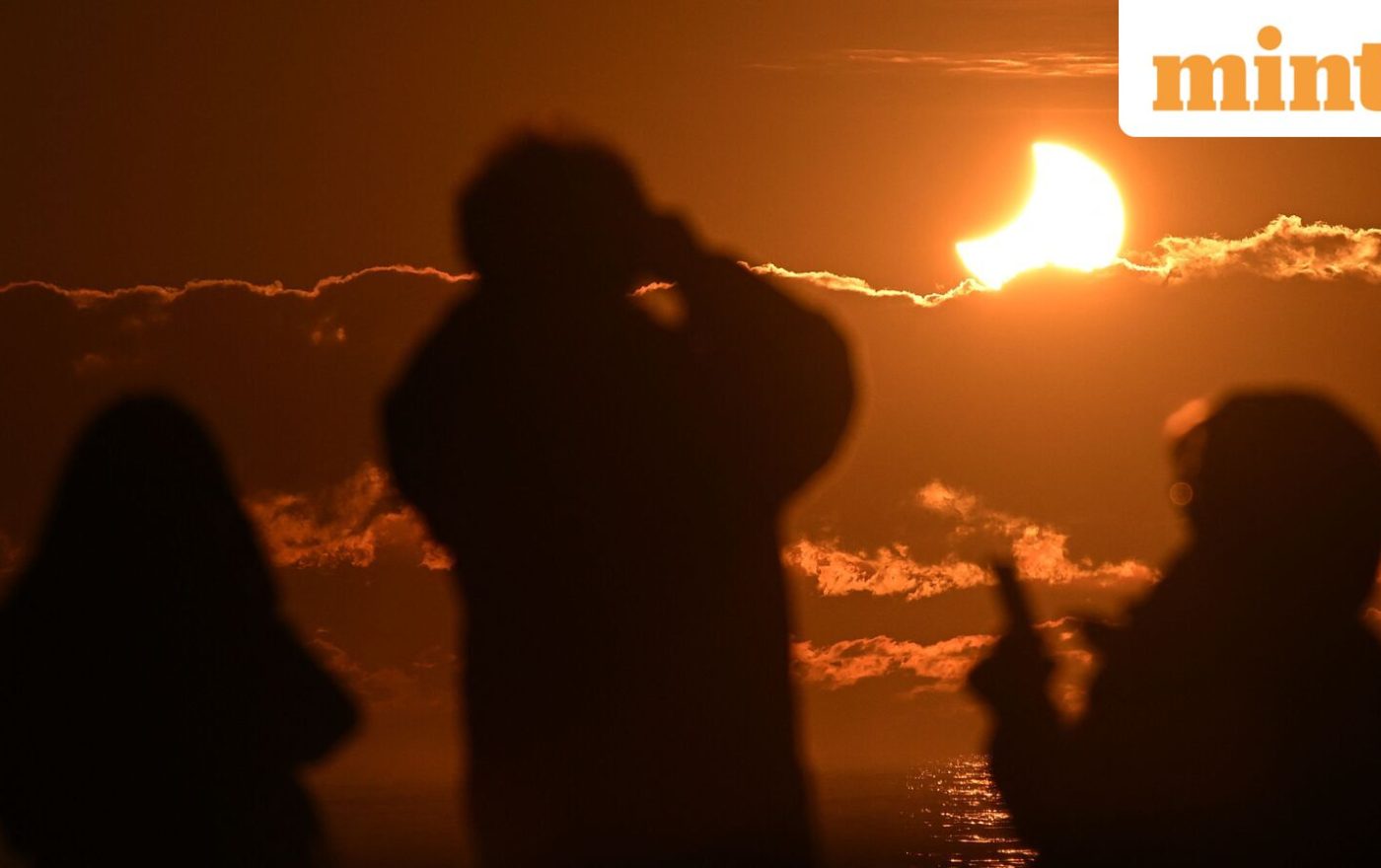
Total Solar Eclipse 2026: What to Expect Across the Northern Hemisphere
Theindiapostdaily.com – Skywatchers across Europe, North America, and the Arctic are preparing for one of 2026’s most anticipated astronomical events. A rare total solar eclipse will race across the Northern Hemisphere on August 12, 2026, offering spectacular views for millions of observers. This celestial phenomenon begins its journey over a remote region of northern Russia before the Moon’s shadow sweeps across the Arctic Ocean.
The path of totality will then extend across Greenland and Iceland, where the eclipse reaches its point of maximum duration just off Iceland’s western coast. From there, the shadow continues toward the Iberian Peninsula, where northern Spain and a small part of Portugal will experience totality shortly before sunset. In Spain, the shadow is expected to travel roughly from the northern city of Oviedo to the island of Mallorca, providing observers with one of the most striking views of the event.
Will India Witness the 2026 Eclipse?
Unfortunately, India will not witness any phase of this eclipse. The precise alignment of the Sun, Moon, and Earth means the eclipse path will not extend over the Indian subcontinent. This leaves Indian observers without either total or partial visibility of the event. While neighboring regions like northwestern Africa will see a partial eclipse, India remains outside the visible range entirely.
Scientists have noted that the eclipse’s path will pass over regions recently devastated by wildfires. These events, they say, have become more likely due to human-driven climate change, adding an interesting layer to this astronomical occurrence. For most locations within the path of totality, complete darkness will last for less than two and a half minutes.
Safe Viewing and Future Eclipses
Astronomers have stressed the importance of safe viewing practices. Observers should wear certified ISO 12312-2 eclipse glasses during every partial phase of the event. Eye protection should only be removed during the brief period of complete totality, when the Sun is entirely obscured by the Moon. Experts also warn that cameras, binoculars, and telescopes must never be used to observe the Sun without specially designed front-mounted solar filters.
Total solar eclipses occur somewhere on Earth roughly once every one to two years, but the narrow path of totality makes them exceptionally rare for any single location. Astronomers estimate that a particular place may wait around 400 years before experiencing another total eclipse.
The 2026 event will also serve as a precursor to another highly anticipated eclipse. On August 2, 2027, a total solar eclipse will cross southern Spain, northern Africa, and the Arabian Peninsula, producing a remarkable maximum totality of six minutes and 23 seconds. Astronomers say a longer total solar eclipse will not occur until 2114.
Spain is also set to witness an annular, or “ring of fire,” eclipse on January 26, 2028, continuing an unusual run of major eclipse events visible from the country. This series of celestial phenomena makes the coming years particularly exciting for astronomy enthusiasts worldwide.
Frequently Asked Questions
When does the total solar eclipse 2026 occur? The eclipse takes place on August 12, 2026, with the path of totality crossing northern Russia, the Arctic, Greenland, Iceland, and parts of Spain and Portugal.
Can India see the 2026 eclipse? No, India will not witness any phase of this eclipse as the path remains outside the Indian subcontinent.
How long will totality last? For most locations within the path, complete darkness will last for less than two and a half minutes, with maximum duration occurring off Iceland’s western coast.
What is the next major eclipse after 2026? The next total solar eclipse occurs on August 2, 2027, crossing southern Spain, northern Africa, and the Arabian Peninsula with a maximum totality of 6 minutes and 23 seconds.