Cabinet clears ₹23.7k-crore GOBARdhan ‘waste-to-energy’ biogas scheme
New Delhi: The Union Cabinet on Thursday approved a ₹23,731-crore scheme to address the biggest hurdles holding back India's compressed biogas (CBG) sector
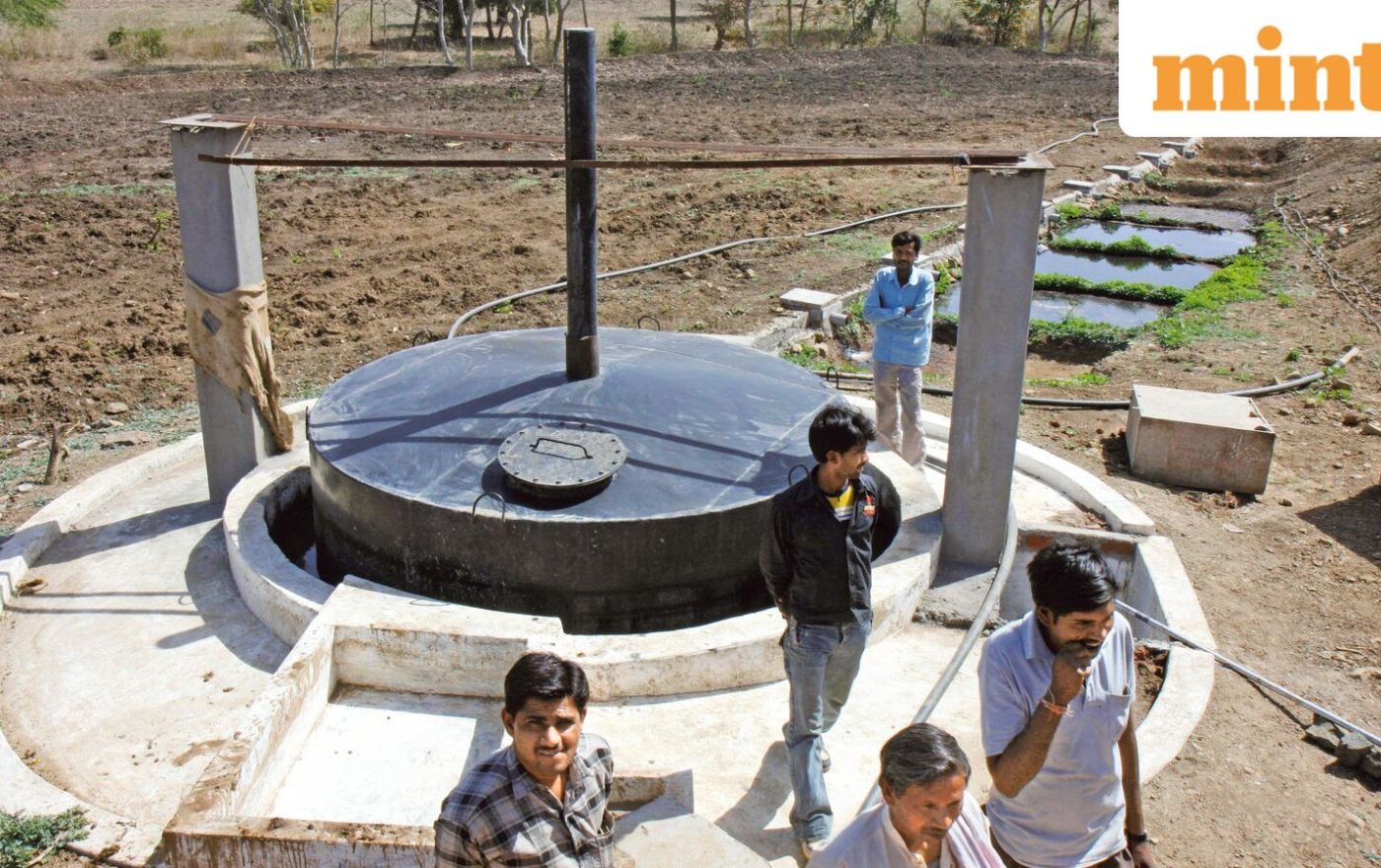
Theindiapostdaily.com – New Delhi: The Union Cabinet on Thursday approved a ₹23,731-crore scheme to address the biggest hurdles holding back India's compressed biogas (CBG) sector. By assuring demand, offering a long-term pricing framework and supporting infrastructure, the government aims to unlock private investment, sharply raise domestic production and reduce dependence on imported fossil fuels.The National Circular Bioenergy Scheme, called GOBARdhan, will create a nationwide waste-to-energy ecosystem.Th Cabinet also approved a proposal for a four-lane highway project in Assam. Together, the decisions involve an outlay of ₹32,701 crore.The GOBARdhan scheme, to be implemented over 10 years from fiscal year (FY27) to FY36, aims to increase domestic CBG production nearly ten-fold by providing assured demand, stable pricing, capital support, pipeline connectivity and easier access to credit."India currently imports around 50% of its natural gas requirement, making domestically produced compressed biogas an important alternative, particularly amid geopolitical uncertainties, including disruptions around the Strait of Hormuz," information and broadcasting minister Ashwini Vaishnaw told reporters.Over the next decade, the government expects the increase compressed biogas output to help reduce natural gas imports and save over ₹40,000 crore in foreign exchange.The government has set a target of 5 million metric standard cubic metres per day (MMSCMD) of CBG output over a decade.
It estimates this will replace around 10 million metric tonnes (MMT) of fossil fuels. According to Vaishnaw, the scheme is expected to create a ₹75,000-crore industry.Administered by the petroleum and natural gas ministry, the scheme seeks to convert agricultural residue, cattle dung, press mud, municipal organic waste and other biomass into clean fuel and organic manure, creating additional income opportunities for farmers and rural entrepreneurs.Towards this CBG target, a six-pronged framework covering the entire value chain was cleared.Under the first component, city gas distribution (CGD) firms will procure CBG to meet the mandatory blending obligation of 3% in FY27, 4% in FY28 and 5% from FY29 onwards in the transport and domestic piped gas segments, creating assured long-term demand for the producers.To improve project viability, it introduced an administered price of ₹2,110 per metric million British thermal unit (MMBTU) with a 10-year pricing framework, offering revenue certainty to investors.Eligible greenfield projects will get a capital assistance of up to ₹2 crore per tonne per day (TPD) of installed CBG capacity. Brownfield expansion projects will also qualify for support.
The assistance extends beyond plant machinery to feedstock aggregation and organic manure processing infrastructure.The scheme also provides financial support for pipeline connectivity linking CBG plants to trunk pipelines and CGD networks, helping lower transportation costs and improve market access.Moreover, a dedicated credit guarantee mechanism will reduce financing risks for banks extending loans to MSME-based CBG projects. The CBG Ecosystem Challenge Fund will support district-level feedstock mapping, aggregation infrastructure, technology adoption, capacity building and awareness programmes.The government said the integrated framework builds on earlier initiatives such as the Sustainable Alternative Towards Affordable Transportation (Satat) programme, the Market Development Assistance scheme for organic manure, the Biomass Aggregation Machinery scheme and financial assistance under the National Bioenergy Programme, which have together enabled over 200 CBG plants across the country.Sanjay Ganjoo, director general at the Indian Federation of Green Energy (IFGE) said, “The package has the potential to do for India's biogas sector what the PLI (production-linked incentive) scheme did for solar manufacturing—transform policy intent into bankable projects.”He said India's challenge has never been about feedstock availability. "The country generates nearly 500 million tonnes of agricultural residue annually, much of which is still burned in the fields, contributing to severe air pollution.
The real bottlenecks have been assured offtake, stable pricing, evacuation infrastructure and efficient feedstock aggregation," said Ganjoo.“With only about 216 CBG plants commissioned against the ambitious CBG blending targets, project viability has been constrained by inadequate synchronization between CBG production and city gas distribution (CGD) networks,” he added. “By supporting both production and distribution infrastructure, the government has addressed the sector's most critical challenges.”The biogas industry cheered the government's move for its holistic appeal. "Its real impact will not be measured in kilogrammes of gas alone.
It will be measured in paddy straw that is baled instead of burnt across whole India; in dung that earns a dairy farmer a second income; in fermented organic manure that rebuilds our depleted soils; and in imported LNG we no longer have to pay for," said A.R. Shukla, president of the Indian Biogas Association."Moving from roughly 300 operating plants towards 5,000 will create lakhs of rural jobs. Industry must now respond with speed, quality and discipline.
We commit our members to that. Waste-to-wealth is no longer a slogan; it is an investable business," Shukla added.At its meeting on Thursday, the Union Cabinet also approved the development of 135.871 km, four-lane access-controlled Guwahati-Tezpur Corridor of NH-15 in Assam. The project will be developed on build-operate -transfer toll mode at a total capital cost of ₹8,970.20 crore.
Related Reading
Frequently Asked Questions
What is Cabinet clears 23 7k crore GOBARdhan?
Cabinet clears 23 7k crore GOBARdhan is the main topic of this guide. The article explains the context, practical details, and next steps readers should understand.
Why does Cabinet clears 23 7k crore GOBARdhan matter?
Cabinet clears 23 7k crore GOBARdhan matters because readers are looking for a useful answer, not just a short summary. Good content should match search intent and help them decide what to do next.