FAA probes safety lapse after passenger jet takes off during Trump’s Marine One approach at Reagan Airport
The Federal Aviation Administration has initiated a formal investigation following an unusual occurrence at Ronald Reagan Washington National Airport, where a
FAA Launches Inquiry Into Aviation Safety Breach at Reagan National Airport
Theindiapostdaily.com – The Federal Aviation Administration has initiated a formal investigation following an unusual occurrence at Ronald Reagan Washington National Airport, where a commercial passenger aircraft received clearance for departure while President Donald Trump’s Marine One helicopter was en route to the facility. This event appears to contradict enhanced safety protocols established in the wake of last year’s tragic midair collision.
While government officials have emphasized that the President faced no threat and the two aircraft maintained safe distances, the episode has sparked renewed questions regarding aviation security within one of America’s most congested and heavily regulated air corridors.
Details of the Incident
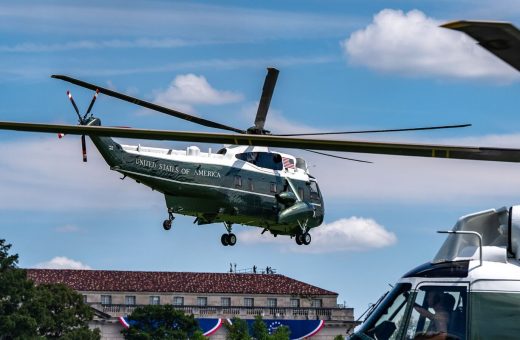
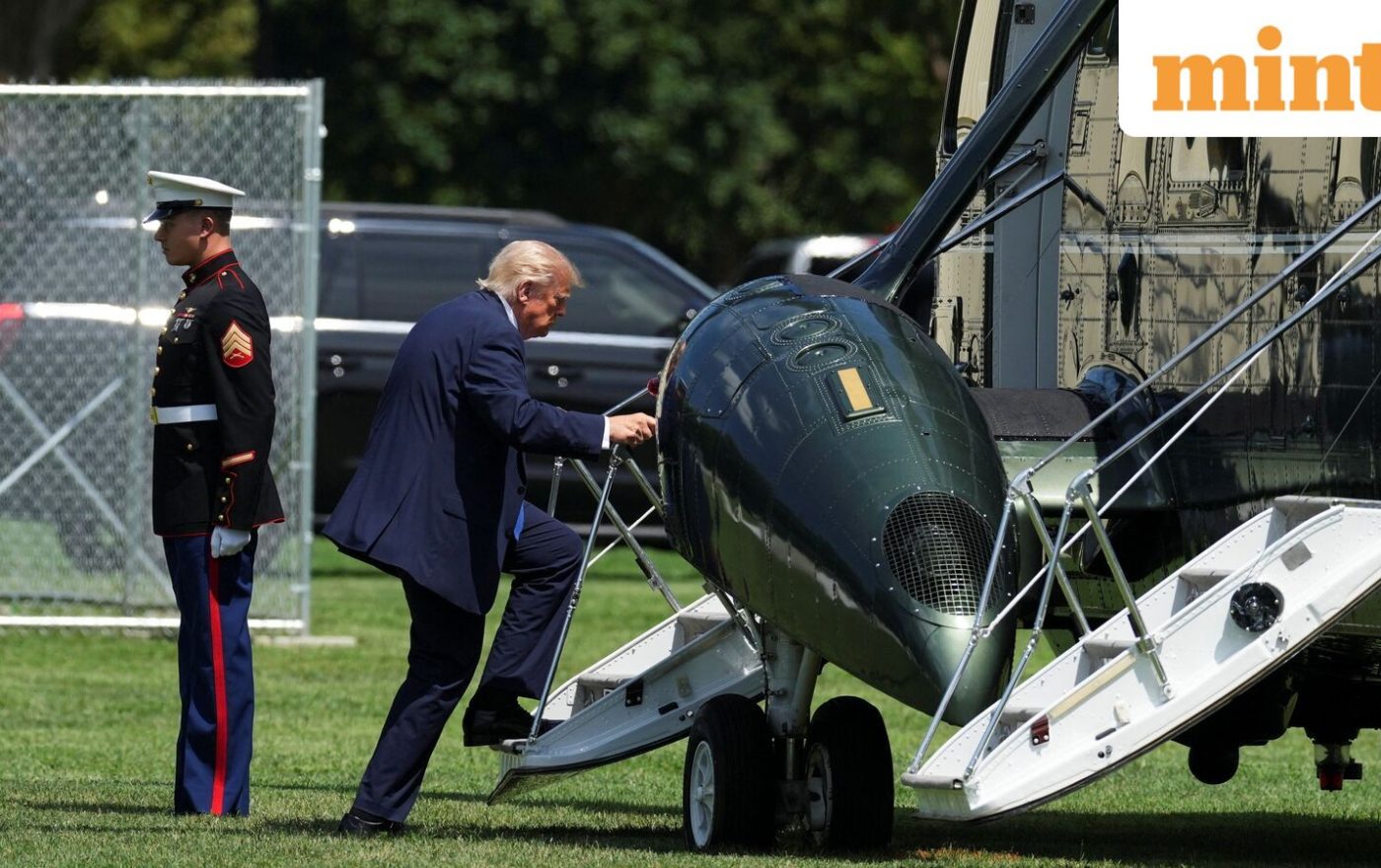
The situation unfolded on Tuesday afternoon, August 4, as Marine One departed the White House with President Trump aboard, beginning the initial segment of his journey to the West Coast at Joint Base Andrews. Simultaneously, a commercial passenger plane was authorized to depart from Reagan National.
According to Reuters reporting, air traffic controllers permitted commercial operations to continue despite an established policy mandating that flights pause whenever presidential or other helicopters navigate through the airport’s airspace. The FAA subsequently verified that a brief separation issue occurred between the two aircraft before they safely increased their distance from each other.
Crucially, the commercial jet had already ascended beyond Marine One’s altitude as the helicopter neared the airport, confirming that the vehicles were never positioned for a potential collision.
Focus of the Investigation
Investigators are examining whether air traffic controllers neglected to implement safety regulations that were put in place following the January 29, 2025 midair collision near Reagan National Airport. That devastating accident, which involved a commercial airliner and a US Army Black Hawk helicopter, resulted in the deaths of all 67 individuals on both aircraft and triggered a comprehensive examination of helicopter operations throughout the Washington, D.C. area.
In response to the tragedy, the FAA enacted several enhanced measures:
- Stopping all commercial takeoffs and landings whenever helicopters pass near Reagan National Airport
- Ensuring helicopters and airplanes do not share the same operational airspace
- Eliminating the practice of controllers relying exclusively on visual separation
- Mandating that military aircraft continuously transmit their positions
Investigators are currently determining why a commercial aircraft was permitted to depart despite these established procedures.
FAA Statement on the Event
The FAA acknowledged that separation standards experienced a brief compromise.
“There was a momentary loss of separation after which the aircraft continued to move away from one another.”
The agency further noted that air traffic controllers maintained communication with both the Marine One pilots and the commercial flight crew throughout the entire incident. The FAA has not yet concluded whether controller error or another element caused the breach.
Assessment of Presidential Safety
The White House firmly stated that the President was never placed in jeopardy. White House spokesman Kush Desai remarked: “Marine One flights are piloted by some of the best aviators in the world, and at no point was the President in harm’s way.”
Similarly, the US Marine Corps dismissed suggestions of a close encounter. Marine Corps spokesman Capt. Jacob Sugg explained that the helicopter crew received standard clearances and was never directed to delay, hold position, or modify its flight path.
According to the Marines, air traffic control approved the requested route and supplied appropriate traffic information throughout the entire flight.
Why Reagan National Remains High Risk
The airspace surrounding Reagan National Airport ranks among the most intricate in the United States. Commercial airliners share these skies with presidential aircraft like Marine One, military helicopters, government planes, law enforcement aviation units, and civilian flights operating in and out of Washington, D.C.
The close proximity of the White House, Pentagon, Joint Base Andrews, and numerous military installations renders the region especially challenging for air traffic controllers to manage safely.
Post-Crash Reforms
The fatal January 2025 collision prompted the FAA to strengthen aviation safety protocols around Reagan National. The new procedures were designed to eliminate situations where helicopters and commercial aircraft occupy nearby airspace simultaneously. The reforms also sought to reduce reliance on visual separation by controllers and improve aircraft tracking through mandatory broadcasting requirements for military flights.
Tuesday’s incident is being scrutinized because it appears inconsistent with those safeguards.
Related Reading
Frequently Asked Questions
What is FAA probes safety lapse after passenger?
FAA probes safety lapse after passenger is the main topic of this guide. The article explains the context, practical details, and next steps readers should understand.
Why does FAA probes safety lapse after passenger matter?
FAA probes safety lapse after passenger matters because readers are looking for a useful answer, not just a short summary. Good content should match search intent and help them decide what to do next.